





Force majeure under UAE law is an important legal concept that arises when an exceptional event outside the control of the contracting parties makes the performance of a contractual obligation impossible or significantly affected.
A contract may be entered into for the construction of a project, supply of goods, provision of services, or another commercial activity. However, an unexpected event may subsequently prevent one of the parties from performing its obligations.
Such events may include war, natural disasters, exceptional government decisions, border closures, transportation disruptions, or other circumstances that directly prevent contractual performance.
However, the occurrence of an exceptional event does not automatically release a party from all contractual obligations. The legal effect depends on the nature of the event, its actual impact on performance, the wording of the contract, and the applicable UAE legal rules.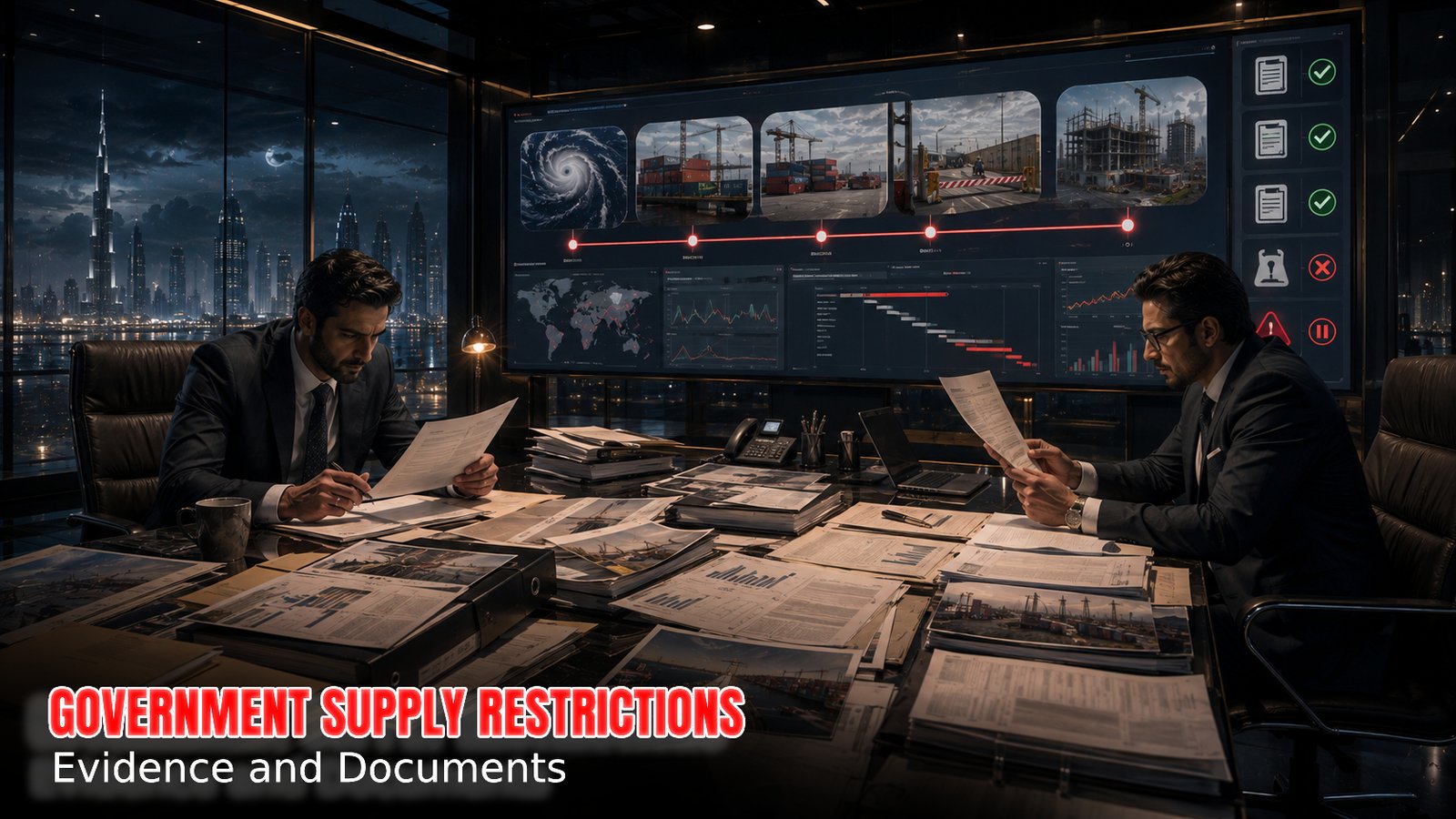
What Is Force Majeure?
Force majeure generally refers to an exceptional circumstance beyond a contracting party’s control that prevents or materially interferes with the performance of a contractual obligation.
The concept becomes particularly important where non-performance results from a cause for which the affected party is not responsible and whose effects cannot reasonably be avoided or overcome.
It is important, however, to distinguish force majeure from ordinary contractual difficulties.
Higher costs, reduced profits, inconvenience, or business difficulties do not automatically constitute force majeure.
What Are the Conditions for Force Majeure Under UAE Law?
The existence of an extraordinary event alone is not enough. The circumstances and contractual relationship must be carefully examined.
1. The Event Must Be Beyond the Party’s Control
The event preventing performance must be outside the control of the party relying on force majeure.
If the failure to perform results from the party’s own negligence, mistake, poor planning, or an avoidable action, relying on force majeure may not be justified.
2. The Event Must Be Unavoidable
The circumstances must be assessed to determine whether the event could reasonably have been avoided or whether its effects could have been overcome.
This assessment depends on the nature of the business, the contractual obligation, and the circumstances existing when the contract was concluded.
3. The Event Must Directly Affect Performance
There must be a genuine connection between the extraordinary event and the failure to perform the contractual obligation.
For example, the mere existence of a war or economic crisis does not automatically make every contract impossible to perform.
The affected party must demonstrate how the event actually prevented performance.
4. The Effects Cannot Reasonably Be Overcome
If the contractual obligation can still be performed through reasonable alternative methods, it may be difficult to establish force majeure resulting in exemption from liability.
Accordingly, each case must be examined according to its particular facts.
Is War Considered Force Majeure in the UAE?
War may, depending on the circumstances, constitute a force majeure event.
For example, if a war results in the closure of borders, suspension of shipping routes, or restrictions on the importation of specific goods, and those circumstances directly prevent the performance of a contractual obligation, force majeure may become relevant.
However, the existence of war alone does not automatically terminate or suspend every contract.
The assessment may consider:
- The date on which the contract was signed.
- The nature of the contractual obligation.
- The place of performance.
- The actual effect of the war.
- Whether alternative means of performance were available.
- The force majeure clause in the contract.
- The steps taken by the affected party to mitigate the consequences.
Force Majeure vs. Hardship
Force majeure should not be confused with contractual hardship or circumstances that merely make performance more difficult.
Force Majeure
Force majeure generally concerns circumstances that prevent or make contractual performance impossible under the applicable legal and contractual framework.
Hardship
Hardship may arise where performance remains possible but becomes exceptionally burdensome or difficult.
For example, a substantial increase in the cost of materials does not necessarily mean that performance has become impossible.
The appropriate legal treatment depends on the facts, contractual provisions, and applicable law.
Types of Impossibility in Contract Performance
The legal consequences may differ depending on the nature of the impossibility.
Total Impossibility
Total impossibility occurs when the contractual obligation can no longer be performed because of the exceptional event.
Depending on the applicable legal rules and contractual provisions, this may affect the continuation of the contract and liability for non-performance.
Partial Impossibility
Partial impossibility occurs when only part of the contractual obligations becomes impossible while the remaining obligations can still be performed.
In such circumstances, it is important to determine which obligations have been affected and whether they can be separated from the remaining contractual obligations.
Temporary Impossibility
Temporary impossibility occurs when performance cannot take place for a certain period but may become possible after the exceptional event ends.
The legal consequences may therefore differ from those arising from permanent impossibility.
What Is the Effect of Force Majeure on a Contract?
The effect of force majeure depends on the nature and extent of its impact on contractual performance.
Potential consequences may include:
- Exemption from liability for non-performance where the legal requirements are satisfied.
- Suspension of certain contractual obligations during the period of impossibility.
- Termination or dissolution of the contractual relationship where continued performance becomes legally or practically impossible.
- Adjustment of the method of performance where permitted.
- Reassessment of obligations directly affected by the event.
There is therefore no single legal consequence that applies automatically to every force majeure situation.
Force Majeure in Construction and Project Contracts
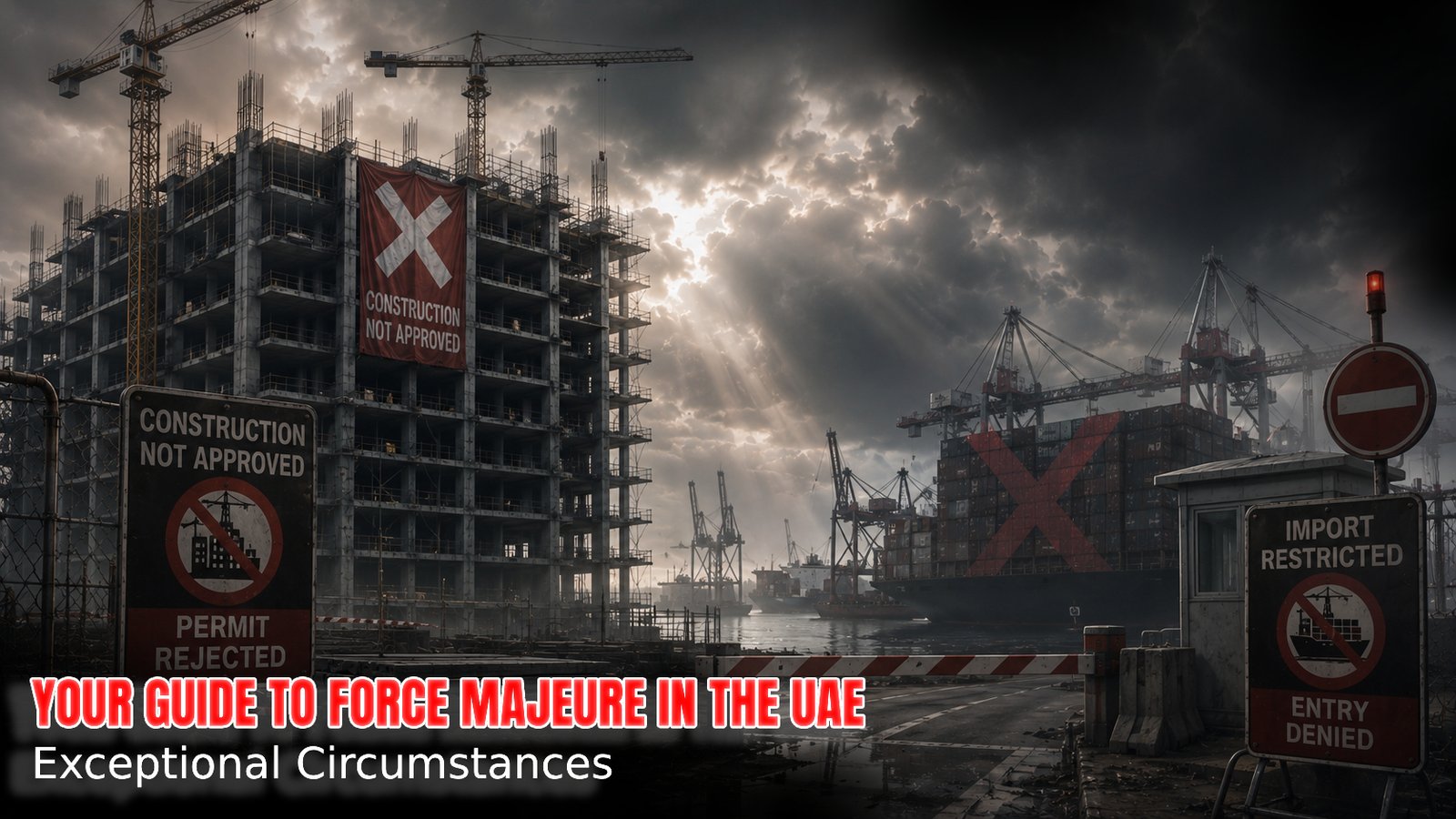
Force majeure is particularly important in construction and project contracts, where performance may depend on materials, equipment, transportation, workers, permits, and access to specific project sites.
Projects may be affected by:
- Wars.
- Natural disasters.
- Government decisions.
- Border closures.
- Supply-chain disruptions.
- Exceptional events preventing access to the project site.
However, a contractor cannot automatically claim exemption from all contractual obligations merely because an extraordinary event has occurred.
It is necessary to determine whether the event actually prevented performance or merely caused delay or increased costs.
Force Majeure in Supply Contracts
Supply agreements may also be significantly affected by extraordinary events.
For example, the inability to import goods, the suspension of transportation services, or government restrictions may prevent a supplier from fulfilling its obligations.
However, the following factors should be examined:
- The source of the goods.
- The place of manufacture.
- The transportation method.
- The specific contractual obligation.
- Whether alternative suppliers were available.
- Whether the contract contains a specific force majeure clause.
Why Is a Force Majeure Clause Important?
Commercial contracts should ideally contain a clear clause addressing extraordinary events.
A well-drafted force majeure clause in the UAE may address:
- The definition of force majeure.
- Events covered by the clause.
- Notification requirements.
- The period of suspension.
- Obligations during the force majeure event.
- Procedures for resuming performance.
- The consequences of a prolonged event.
- The circumstances in which either party may terminate the contract.
Clear drafting can reduce uncertainty and help prevent disputes when an exceptional event occurs.
Notice of Force Majeure
Some contracts require the affected party to notify the other party within a specific period after the force majeure event occurs.
The contract should therefore be reviewed to determine:
- How notice must be delivered.
- The applicable deadline.
- Required supporting documents.
- The recipient of the notice.
- The information that must be included.
Failure to comply with contractual notification requirements may create additional disputes concerning the legal consequences of the event.
Force Majeure vs. Contractual Delay
Not every delay constitutes force majeure.
A party may experience delays because of:
- Poor management.
- Inadequate planning.
- Lack of funds.
- Internal operational problems.
- Staffing issues.
- Supply problems that could reasonably have been anticipated.
Such circumstances may not satisfy the requirements for force majeure.
The legal position may be different where the delay results directly from an exceptional external event that makes performance impossible.
Does Force Majeure Automatically Eliminate Compensation?
Not necessarily.
A party cannot simply claim that an extraordinary event occurred and assume that it is automatically exempt from compensation or other contractual consequences.
The circumstances should be examined, including:
- Whether the event actually occurred.
- Whether there is a direct connection between the event and the failure to perform.
- Whether the consequences could reasonably have been avoided or overcome.
- Whether the contractual and legal requirements have been satisfied.
- Whether any required notification procedures were followed.
The issue of compensation must therefore be assessed according to the particular contract and circumstances.
How Can Force Majeure Be Proven?
Evidence can be extremely important when a dispute arises.
Relevant evidence may include:
- Contracts.
- Correspondence between the parties.
- Force majeure notices.
- Government decisions.
- Official documents.
- Reports issued by competent authorities.
- Shipping and supply records.
- Project interruption records.
- Technical reports.
- Documents demonstrating the direct effect of the event on contractual performance.
The evidence should help establish a clear connection between the extraordinary event and the inability to perform the contractual obligation.
What Should You Do If an Extraordinary Event Prevents Contract Performance?
If an event may qualify as force majeure, the affected party should consider taking action as early as possible.
Review the Contract
Examine the force majeure clause as well as provisions dealing with delay, termination, notification, and dispute resolution.
Document the Event
Maintain all documents demonstrating both the occurrence of the event and its impact on contractual performance.
Notify the Other Party
If the contract requires formal notice, comply carefully with the specified deadline and method.
Mitigate the Impact
Where reasonable alternatives exist, assess whether steps can be taken to reduce the consequences of the event.
Obtain Legal Advice
For major commercial contracts, international agreements, construction projects, or high-value disputes, obtaining legal advice early can help determine the available legal options.
Role of a Lawyer in Force Majeure Disputes
A lawyer experienced in contracts and commercial disputes can assist with:
- Reviewing force majeure provisions.
- Analyzing the event and its effect on contractual obligations.
- Assessing whether the legal requirements are satisfied.
- Preparing legal notices.
- Collecting and organizing evidence.
- Negotiating with the other party.
- Preparing legal submissions and defenses.
- Representing the client before the relevant authorities, arbitration tribunal, or court, depending on the circumstances.
Early legal assessment can be particularly important when the dispute involves major projects, international contracts, or significant financial obligations.
Frequently Asked Questions
Is war considered force majeure under UAE law?
War may constitute force majeure where the applicable requirements are satisfied and the affected party can demonstrate that the war directly prevented or made contractual performance impossible under the circumstances.
Does an increase in contract costs constitute force majeure?
Not necessarily. Increased costs or reduced profitability do not automatically establish force majeure. A distinction must be made between impossibility of performance and increased difficulty or expense.
Can a contract be terminated because of force majeure?
Force majeure may, depending on the circumstances, affect the continuation of a contract. However, termination is not an automatic consequence in every case.
Does temporary impossibility terminate a contract?
Not necessarily. Where performance is temporarily prevented but can resume after the event ends, the legal consequences may differ from permanent impossibility.
Must the other party be notified of force majeure?
If the contract requires notification, the affected party should comply with the specified method and deadline. The relevant contractual provisions should therefore be reviewed before taking action.
Can the parties agree on a specific force majeure clause?
Contracting parties may generally regulate the treatment of extraordinary events through contractual provisions, subject to the applicable law. A clear and carefully drafted clause can help reduce future disputes.

Conclusion
Force majeure under UAE law is an important legal mechanism for dealing with exceptional circumstances that may make contractual performance impossible or significantly affected.
However, the occurrence of an unusual event alone does not automatically establish force majeure.
The nature of the event, its direct impact on performance, whether its consequences could reasonably have been avoided, the contractual force majeure clause, and the applicable legal framework must all be considered.
The consequences may also differ depending on whether the impossibility is total, partial, or temporary.
For businesses and individuals involved in significant commercial contracts, construction projects, supply agreements, or international transactions, carefully drafting the force majeure clause and documenting the effects of an exceptional event can play an important role in protecting contractual rights and reducing the risk of disputes.
Legal Disclaimer: This article is provided for general legal information only and does not constitute legal advice. The legal consequences of force majeure may vary depending on the contract, facts, evidence, and applicable law.
Comments are closed