





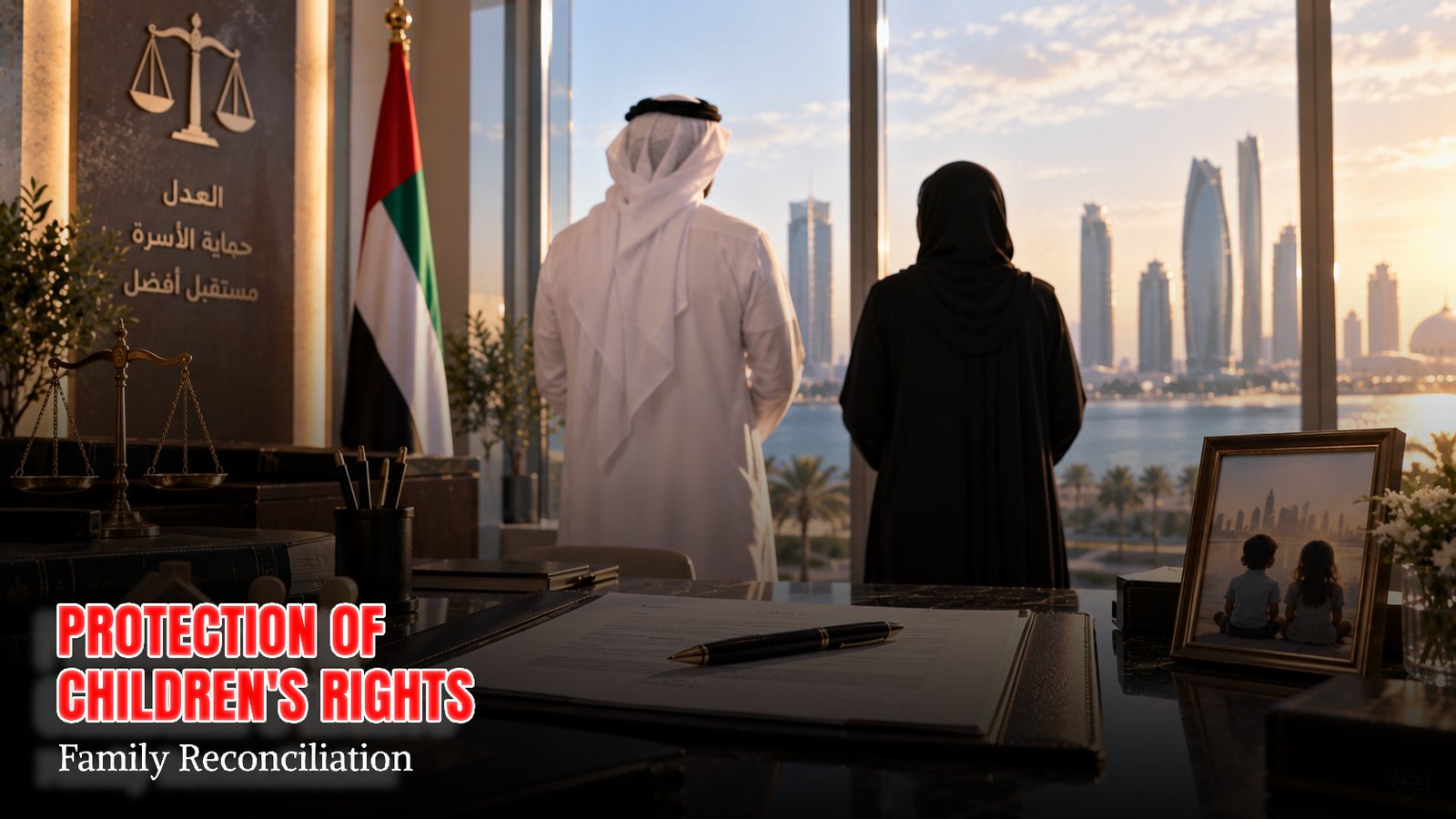
The Post-Separation Charter – Year of Family represents a significant development in the way post-separation parental responsibilities are approached in Abu Dhabi. Under Resolution No. 43 of 2026, the Abu Dhabi Judicial Department approved the Charter to regulate the relationship between parents following separation or during family disputes, with a particular focus on protecting children from the psychological and social consequences of parental conflict.
The central principle of the Post-Separation Charter in the UAE is clear: ending a marital relationship does not end the relationship between parents and their children. Both parents continue to have responsibilities toward their children, including care, education, healthcare, communication and participation in important decisions.
The Charter places the best interests of the child at the centre of family-related decisions and seeks to create a safe, stable and supportive environment for children after separation.
What Is the Post-Separation Charter in the UAE?
The Post-Separation Charter – Year of Family is a framework approved by the Abu Dhabi Judicial Department under Resolution No. 43 of 2026 to regulate the relationship between parents after separation, particularly where disagreements or disputes may affect the children.
The Charter is designed to help fathers and mothers continue fulfilling their parental responsibilities independently of their marital relationship.
It emphasises that a child should not become a party to the conflict between parents and that the end of the marital relationship does not end parental responsibility.
The framework addresses several matters affecting children, including:
- Child custody
- Visitation and communication
- Overnight stays
- Child maintenance
- Education
- Healthcare
- Travel
- Parenting and guidance
- Protection of children from family disputes
- Amicable dispute resolution
The Charter is based on the relevant principles of the Federal Personal Status Law, particularly in matters concerning custody, maintenance, visitation and educational guardianship.
What Is Abu Dhabi’s 2026 Post-Divorce Family Charter?
When people search for the Post-Divorce Charter in Abu Dhabi 2026 or the Post-Separation Charter in the UAE, they are referring to the officially approved “Post-Separation Charter – Year of Family.”
The Charter is not simply about divorce proceedings themselves. Its primary purpose is to establish a framework for how parents should continue communicating, cooperating and fulfilling their responsibilities after separation.
It recognises that children continue to need both parental care, safe communication and a stable environment even after their parents’ marriage has ended.
Why Was the Post-Separation Charter Approved?
One of the major challenges following divorce or separation is the continuation of conflict between parents.
Disagreements concerning custody, visitation, maintenance, education, healthcare or travel can sometimes develop into ongoing disputes, placing children in the middle of parental disagreements.
The Charter therefore seeks to:
- Protect children from parental conflict.
- Promote their psychological and social stability.
- Preserve a safe and stable environment.
- Encourage cooperation between parents.
- Keep the best interests of the child as the primary consideration.
- Maintain the active role of both parents in raising their children.
The initiative forms part of Abu Dhabi’s broader focus on strengthening family stability during the Year of Family.
Does a Father’s Role End After Divorce?
No.
This is one of the fundamental principles behind the Post-Separation Charter.
Divorce ends the marital relationship between the spouses, but it does not end the relationship between a father and his children or between a mother and her children.
Both parents continue to have responsibilities toward their children and are expected to contribute to their upbringing, education, healthcare and wellbeing.
The Charter specifically reinforces the principle that the dissolution of marriage does not eliminate parental responsibility or a child’s need for care, safe contact and stability.
What Are the Main Responsibilities of Parents After Divorce?
The Charter establishes several principles intended to protect children and regulate the relationship between separated parents.
Parents Must Not Disparage Each Other in Front of Their Children
Parents should not insult, criticise or speak negatively about one another in front of their children.
Children should not be used as messengers or intermediaries in parental disputes.
The objective is to protect children from being emotionally drawn into conflicts between their parents.
Parents Should Not Discuss the Reasons for Divorce in Front of Children
The Charter emphasises avoiding discussions about the reasons for the parental dispute or divorce in the presence of children.
This approach is intended to reduce psychological pressure on children and prevent them from feeling forced to take sides.
Parents Should Cooperate in Raising Their Children
Both parents are expected to cooperate in matters involving the moral, religious, behavioural and educational upbringing of their children.
Parental cooperation remains important even when the parents no longer live together.
What About the Child’s Education?
Education is one of the key areas addressed by the Charter.
The custodial parent should keep the other parent informed about important educational matters, including school reports and school activities.
Parents are also expected to cooperate and consult on significant educational decisions affecting their children.
What About Healthcare and Medical Treatment?
Healthcare is another important area covered by the Charter.
Parents are expected to cooperate regarding significant healthcare matters and ensure that necessary information concerning the child’s health is communicated appropriately.
Major medical treatment decisions are among the matters on which parents should consult and cooperate.
What Does the Charter Say About Child Custody?
The Charter addresses parental responsibilities during custody and emphasises that both parents should continue to fulfil their parental roles responsibly.
These responsibilities include:
- Protecting the child’s physical wellbeing.
- Protecting the child’s psychological wellbeing.
- Providing appropriate healthcare.
- Supporting education and upbringing.
- Instilling values and positive principles.
- Supporting the child’s educational development.
- Facilitating the other parent’s right to visitation and communication.
- Informing the other parent of important matters concerning the child.
The overall objective is to ensure continuity of parental care after the marriage ends.
Does the Post-Separation Charter Regulate Visitation?
Yes.
The Charter addresses visitation, communication and overnight stays, providing a framework through which parents can agree on arrangements that serve the child’s best interests.
The purpose is not simply to establish contact between a parent and child, but to ensure that such contact takes place in a safe and stable environment.
The Charter also prohibits using children’s legal rights, including visitation, as a means of pressuring or harming the other parent.
Can Visitation Be Used as Leverage Against the Other Parent?
No.
One of the important principles of the Charter is that children’s legal rights should not become bargaining tools in disputes between parents.
Visitation and communication should be exercised for the benefit of the child rather than as a mechanism to punish, pressure or negotiate with the other parent.
The same principle applies to child maintenance.
What About Child Maintenance After Divorce?
The Charter addresses maintenance within the broader framework of parental rights and responsibilities.
It also prohibits the use of children’s legal rights, including financial support, as a means of pressure, bargaining or harm against the other parent.
However, it is important to distinguish between the Charter’s framework for parental cooperation and the legal rights and obligations established under applicable legislation or court judgments.
The relevant rules on child maintenance, custody, visitation and educational guardianship remain governed by the applicable legal framework.

Does the Charter Cover Travel with Children?
Yes.
Travel involving children in custody is one of the matters that can be addressed through the framework established by the Charter.
The purpose is to provide greater clarity between parents and reduce disputes concerning travel arrangements.
Any travel arrangement must nevertheless remain subject to the applicable legal rules and any relevant judicial orders.
What Does the Charter Say About Children’s Education After Divorce?
The Charter gives significant importance to educational continuity.
The separation of parents should not interfere with a child’s education or prevent either parent from being informed about the child’s academic progress.
The custodial parent should therefore provide the other parent with important information relating to school reports and school activities.
Parents are also encouraged to consult each other on significant educational decisions.
What About Medical Treatment and Healthcare?
Parents are expected to cooperate on important healthcare matters affecting their children.
Relevant health information should be shared where necessary, and major medical treatment decisions should be approached through consultation and cooperation.
This reflects the Charter’s broader objective of ensuring that both parents remain involved in decisions affecting the child’s wellbeing.
Does the Charter Prevent Parents from Speaking Negatively About Each Other?
Yes.
The Charter emphasises that parents should refrain from disparaging each other in front of their children.
They should also avoid discussing the reasons for their disputes or divorce in the children’s presence.
The objective is to protect children from the psychological consequences of parental conflict and prevent them from feeling that they must choose between their parents.
Does the Post-Separation Charter Replace UAE Personal Status Law?
No.
This is an important legal distinction.
The Post-Separation Charter does not replace the UAE Federal Personal Status Law.
Instead, the Charter provides a framework for cooperation and agreement between parents, while matters such as custody, maintenance, visitation and educational guardianship remain connected to the applicable legal rules.
The official announcement specifically confirms that the Charter is based on the rules established under the Federal Personal Status Law.
Is Signing the Post-Separation Charter Mandatory?
The announced implementation mechanism provides that a Family Guidance Counsellor presents the Charter to parents following their separation, allowing them to sign it in full or in part and commit to implementing the provisions they agree upon.
Therefore, it is important not to describe the Charter simply as an automatic mandatory replacement for court orders or statutory rights.
The legal effect of any agreement should be assessed according to the circumstances of the case and the applicable legal framework.
What Happens If the Parents Disagree?
The Charter encourages parents to attempt to resolve disagreements amicably.
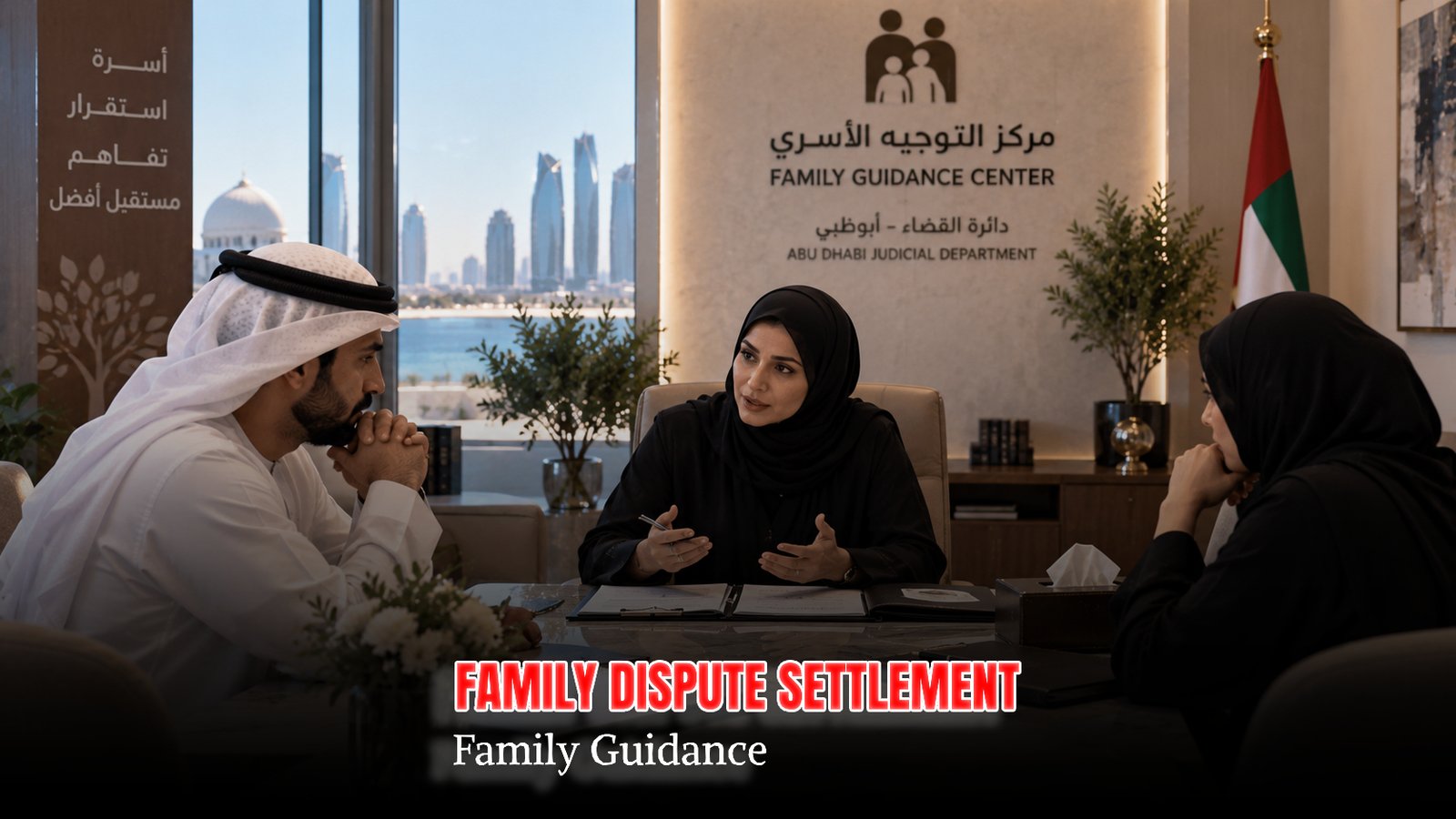
If the parents cannot reach an agreement, the dispute may be referred to the Family Guidance Centre to facilitate reconciliation and help the parties bridge their differences before the matter proceeds to court.
This approach aims to provide parents with an opportunity to resolve family disputes without immediately escalating every disagreement into litigation.
What Is the Role of the Family Guidance Centre?
The Family Guidance Centre has an important role in helping parents resolve disagreements concerning the implementation of the Charter.
The preferred approach is to seek an amicable solution first.
Where this is unsuccessful, the Family Guidance Centre can facilitate reconciliation and attempt to bring the parents closer to an agreement before judicial proceedings become necessary.
This reflects the Charter’s emphasis on dialogue, cooperation and protecting children from prolonged family conflict.
Is the Post-Separation Charter Specific to Abu Dhabi?
Yes, an important distinction should be made.
The Charter was approved by the Abu Dhabi Judicial Department under Resolution No. 43 of 2026. Therefore, it should not be described as a new federal law automatically applying throughout all Emirates in exactly the same procedural manner.
The legally precise description is:
“The Post-Separation Charter approved by the Abu Dhabi Judicial Department.”
This distinction is particularly important when providing legal advice to families, as the applicable procedures may depend on the Emirate, the family’s circumstances and the legal framework governing their case.
What Should Parents Agree on After Divorce?
From a practical perspective, parents should seek clarity regarding matters affecting their children, including:
- Visitation schedules.
- Communication with the children.
- Overnight stays.
- Schooling and education.
- Healthcare and medical treatment.
- Travel arrangements.
- School activities.
- Major decisions affecting the child’s future.
- Agreed financial responsibilities.
- Procedures for resolving future disagreements.
Clear arrangements can reduce the likelihood that everyday decisions will develop into repeated parental disputes.
Why Is the Post-Separation Charter Important?
Divorce does not affect only the spouses.
Children can become the most vulnerable party when parental conflict continues after the marriage ends.
The Post-Separation Charter in Abu Dhabi 2026 seeks to place children at the centre of post-separation family arrangements by encouraging continued parental involvement, cooperation, communication and care.
Its underlying message is straightforward:
The marriage may end, but parenthood does not.
The Charter therefore seeks to transform the post-divorce relationship from continued conflict into structured co-parenting focused on the child’s welfare and stability.
Frequently Asked Questions
What is the new post-divorce charter in Abu Dhabi?
The official name is the “Post-Separation Charter – Year of Family.” It was approved by the Abu Dhabi Judicial Department under Resolution No. 43 of 2026.
What is the Post-Separation Charter in the UAE?
It is a framework designed to regulate parental cooperation after separation, protect children from parental conflict and promote their psychological and social stability.
Does the Charter cover child custody?
Yes. It addresses parental responsibilities during custody and is connected to the applicable rules governing custody, maintenance, visitation and educational guardianship.
Does it regulate visitation?
Yes. It provides a framework for parents to agree on visitation, communication and overnight stays.
Does it cover travel with children?
Yes. Travel involving children in custody is among the matters that parents may address through the Charter, subject to applicable laws and judicial orders.
Can maintenance or visitation be used to pressure the other parent?
No. The Charter prohibits using children’s legal rights, including visitation and maintenance, as tools for pressure, bargaining or harm.
What happens if the parents cannot agree?
They should first attempt an amicable settlement. If they cannot resolve the disagreement, the matter may be referred to the Family Guidance Centre for reconciliation before proceeding to court.
Does a father’s responsibility end after divorce?
No. The Charter expressly reinforces the principle that dissolution of marriage does not end parental responsibility.
Conclusion
The Post-Separation Charter – Year of Family, approved by the Abu Dhabi Judicial Department under Resolution No. 43 of 2026, represents an important development in post-separation family arrangements.
Its central objective is to protect children from the effects of parental conflict while encouraging both parents to remain actively involved in their children’s upbringing, education, healthcare and overall wellbeing.
The Charter addresses important areas including custody, visitation, communication, overnight stays, maintenance, education, healthcare and travel, while encouraging parents to resolve disagreements amicably before resorting to court proceedings.
Most importantly, the Charter reinforces a principle that extends beyond the end of a marriage:
Divorce ends the marital relationship, but it does not end the responsibilities of parenthood.
For parents facing disputes concerning custody, visitation, maintenance, travel or other post-separation matters, obtaining professional legal advice can help clarify their rights, obligations and the appropriate procedure under the applicable UAE legal framework.
Comments are closed