





With the beginning of a new school year, many parents ask an important question: How can I properly support my child and protect them from educational, behavioral, and legal problems?
The answer is not limited to enrolling a child in school or paying tuition fees. True parental responsibility begins from the first day of school. Parents play an essential role in preparing their children psychologically, organizing their daily routines, monitoring their academic progress and behavior, knowing their friends, ensuring their safety while traveling to and from school, and protecting them from digital risks that have become an integral part of children’s and teenagers’ lives.
This responsibility is particularly important in the UAE in light of the country’s legal framework for protecting children and safeguarding their rights and best interests, including the Wadeema Child Rights Law.
In this article, Mohammed Jasem Legal Consultancy provides practical advice for parents and students at the beginning of the school year and explains when certain school-related or online problems may require legal intervention.

How Should Parents Prepare Their Children for the New School Year?
Preparation for school should not begin on the morning of the first school day. It should start several days in advance.
Ideally, parents should begin at least one week before school starts to gradually reorganize their child’s routine by:
- Adjusting sleeping and waking times.
- Preparing school supplies, books, and uniforms in advance.
- Speaking positively about the new school year.
- Listening to the child’s concerns and questions about school.
- Explaining the school’s rules and behavioral expectations.
- Learning how to communicate with teachers and school administration.
- Getting to know the school counselor or the relevant student-support professional.
Parents should also avoid making their first contact with the school only after a problem occurs. Early communication helps parents understand the school’s environment, rules, and procedures for dealing with problems before they become more serious.
What Is the Parent’s Responsibility Toward the Child?
Protecting a child is not the responsibility of the school alone.
Parents remain responsible for caring for their children and protecting them from circumstances that could threaten their safety, health, behavior, or future.
This includes knowing:
- Where does the child spend time after school?
- Who are the child’s friends?
- How does the child use their phone and the internet?
- What type of content does the child watch?
- Is the child experiencing problems at school?
- Has there been a sudden change in the child’s behavior?
- Is the child being bullied, threatened, or blackmailed?
The most effective approach is consistent and calm involvement rather than sudden, strict monitoring that only begins after a problem has already occurred.
A child who feels that their parents listen to and protect them is more likely to report a problem at an early stage.
How Can Parents Prepare Their Children Psychologically for School?
Psychological preparation is just as important as academic preparation.
Some children may feel anxious about moving to a new grade, starting at a new school, meeting new teachers, or making new friends. Parents should therefore give children the opportunity to express their feelings without mocking or dismissing their concerns.
Parents can ask simple questions such as:
What are you most looking forward to at school?
And:
Is there anything about the new school year that worries you?
These simple conversations may reveal concerns that would not appear through direct questions about grades and homework.
It is also helpful to establish a daily routine that includes time for studying, rest, physical activity, and play.
Why Is Regular Sleep Important for Students?
Regular sleep helps children concentrate, learn effectively, and manage their emotions.
Parents should therefore adjust their child’s sleeping schedule several days before school begins rather than making a sudden transition from the holiday routine to the school schedule.
It is also advisable to reduce the use of electronic devices before bedtime and avoid making phones or tablets a permanent part of the child’s bedroom routine at night.
A healthy sleep routine should be treated as a daily habit that helps the child prepare for school, rather than as a form of punishment.
How Can Parents Protect Children on the Way to and From School?
Traffic usually becomes heavier around schools during arrival and dismissal times. Children should therefore be taught basic road-safety rules from an early age.
Important safety measures include:
- Crossing roads only at designated pedestrian crossings.
- Never crossing the road suddenly.
- Waiting until the school bus has completely stopped before getting on or off.
- Never crossing directly in front of or behind a school bus.
- Following the instructions of school-bus supervisors.
- Wearing seat belts when traveling by car.
- Using an appropriate child safety seat.
- Never leaving a young child alone inside a vehicle.
- Following speed limits around school zones.
- Avoiding mobile-phone use while driving.
- Avoiding random or unsafe parking near school entrances.
Protecting children on the road is not only the driver’s responsibility. It begins with teaching children safe behavior and consistently reinforcing those habits.
How Can Parents Protect Their Children from Online Risks?
Phones and social media have become part of students’ daily lives. As a result, child protection can no longer be limited to the home, school, and road.
A problem that begins in a school group chat can develop into:
- Cyberbullying.
- Insults or abusive language.
- Threats.
- Cyberblackmail.
- Sharing images without permission.
- Sharing personal information.
- Creating abusive or offensive accounts.
- Reposting harmful content about others.
Children should understand that what they write or publish online may have legal consequences. Deleting a post later does not necessarily mean that evidence disappears or that potential liability ends.
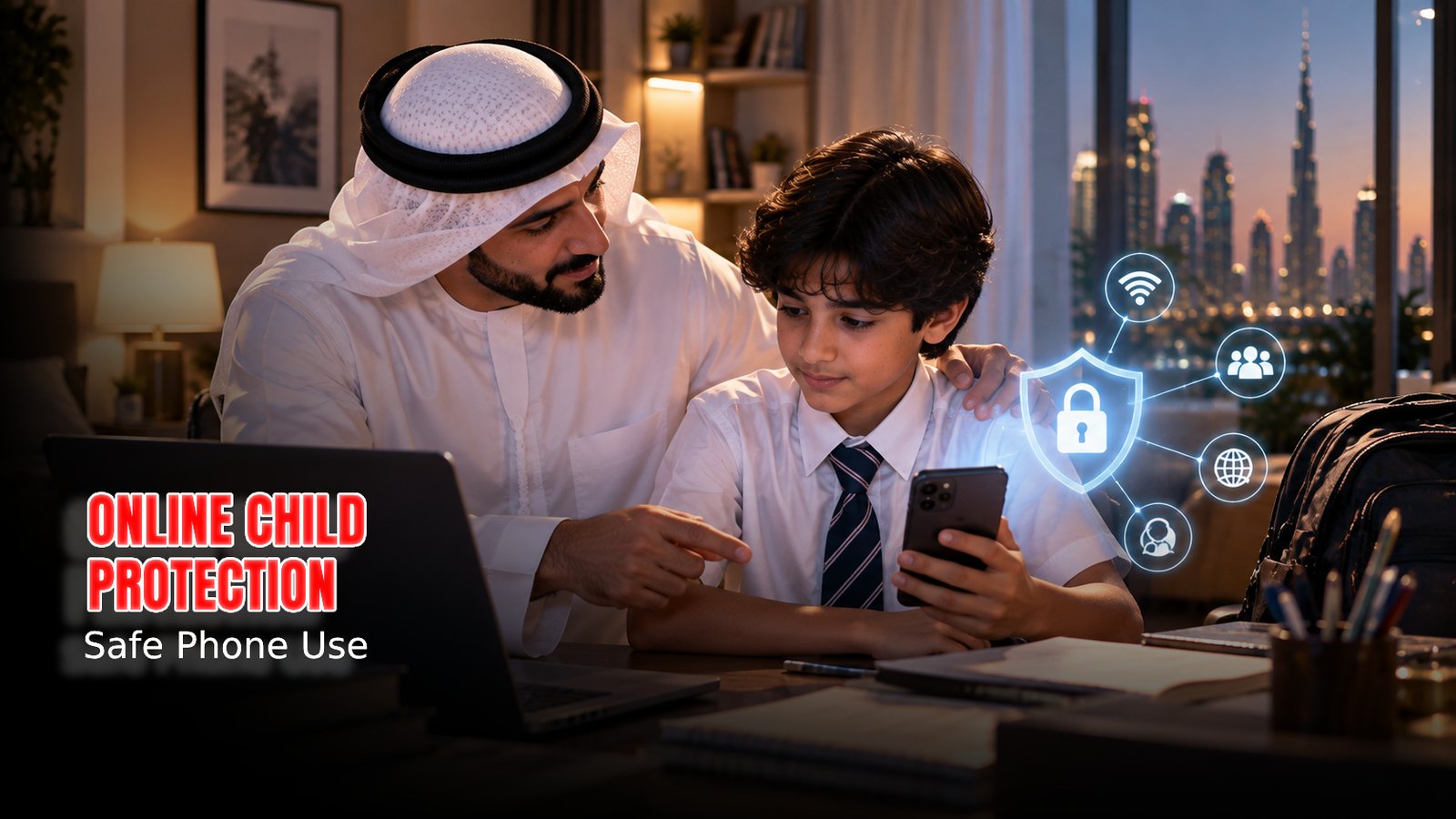
Parents should establish clear rules for phone and internet use.
What Are the Main Rules for Safe Phone Use?
Parents can agree on clear rules with their children, including:
- Do not accept friend requests from strangers.
- Do not send personal photographs or family photographs to unknown people.
- Do not share your location or private information.
- Do not participate in abusive or offensive conversations.
- Do not repost content that harms another person.
- Do not respond to threats or blackmail with threats or retaliation.
- Tell a parent immediately if you experience an online problem.
Most importantly, children should feel that telling their parents about a problem will not automatically result in punishment.
What Study Tips Should Students Follow?
Academic success does not depend on intelligence alone. Consistency and discipline are equally important.
Students should begin working from the first day of school instead of waiting until examinations are approaching.
Useful habits include:
- Recording homework and examination dates in one place.
- Dividing subjects across the week.
- Studying regularly for shorter periods.
- Keeping the phone away while studying.
- Choosing a quiet and organized study area.
- Asking teachers when something is not understood.
- Avoiding the accumulation of unfinished assignments.
- Maintaining regular school attendance.
Repeated absence can affect not only academic performance but also the student’s discipline and relationship with the school.
How Should Students Behave at School?
School is not only a place for academic learning. It is also an environment where students develop their character.
Students should respect teachers, classmates, and school staff and avoid mocking, insulting, or bullying others.
Making fun of someone’s appearance, accent, or academic performance may seem like a joke to one student, but it can cause serious emotional harm to another and, in certain circumstances, may go beyond a school disciplinary matter and raise legal concerns.
When a disagreement occurs, students should not respond with violence or offensive language. Instead, they should report the situation to a teacher or school counselor.
What Should a Student Do If They Are Bullied?
A student who experiences bullying should not attempt to solve the problem through violence or revenge.
Instead, the student should:
- Tell their parents.
- Report the incident to a teacher or school administration.
- Keep relevant messages, photographs, or conversations.
- Record the dates and details of incidents where possible.
- Avoid deleting electronic evidence.
- Avoid responding with insults or threats.
In cases of cyberbullying, messages, conversations, images, and available account information may be important when assessing the matter from a legal perspective.
How Should Students Choose Their Friends?
Friends can have a significant influence on a student’s behavior and academic performance.
Students should choose friends who encourage them to study, follow rules, respect their families and school, and treat others properly.
Students should be cautious of anyone who encourages them to:
- Skip school.
- Smoke.
- Behave aggressively.
- Mock or insult others.
- Violate school rules.
- Hide certain activities from their families.
- Participate in activities that could expose them to legal consequences.
Parents should also know their children’s friends without turning every conversation into an interrogation.
Getting to know friends, welcoming them at home, and understanding the nature of their relationships with the child can often be more effective than imposing unexplained restrictions.
What Are the Signs That a Student May Be Influenced by the Wrong Friends?
There is no single sign that proves a child is being negatively influenced by friends. However, several changes occurring together may require parental attention.
These may include:
- A sudden change in behavior.
- Unusual new expressions or language.
- Excessive secrecy regarding phone use.
- Unexplained absences.
- Declining academic performance.
- A sudden change in the child’s circle of friends.
- Money or belongings that the parents cannot explain.
- Refusing to discuss the people the child spends time with.
- A noticeable change in the child’s relationship with family members.
When these signs appear, calm communication is generally more effective than aggressive confrontation.
Should Parents Prevent Their Children from Having Certain Friends?
Direct prohibition is not always the best solution.
An unexplained or excessive ban may encourage a child or teenager to hide the relationship rather than end it.
A better approach is to explain the specific behavior that concerns the parent and discuss its possible impact on the child’s education, behavior, and future, while providing positive alternatives such as sports, cultural activities, and volunteering.
However, if a relationship threatens the child’s safety or encourages conduct that may violate the law, parents should take stronger action and, where appropriate, coordinate with the school or relevant authorities.
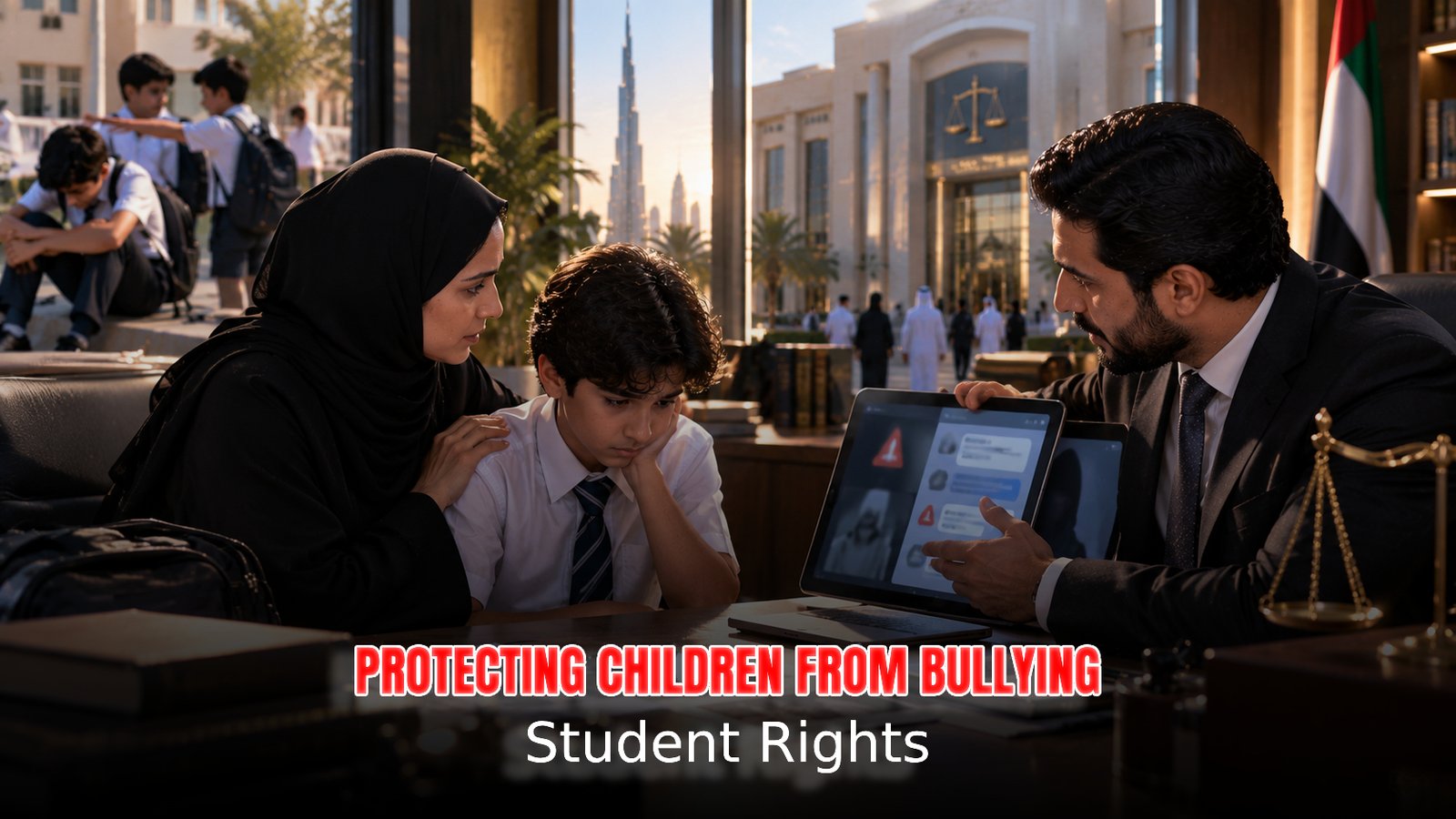
What Should Parents Do If Their Child Is Bullied?
The first step is to listen to the child without blaming them or minimizing the problem.
Parents should then consider:
- Understanding exactly what happened.
- Documenting dates, messages, and photographs.
- Reporting the matter formally to the school.
- Communicating with the school counselor.
- Following up on the school’s response.
- Discouraging the child from retaliating.
- Seeking legal advice if the situation develops into threats, physical harm, blackmail, or a cybercrime.
Parents should also avoid emotionally confronting the other student or their family, as uncontrolled escalation may make the situation more complicated.
What If My Child Is the One Who Bullied Someone Else?
Parents should not immediately defend their child before understanding the facts.
At the same time, the child should not be treated with excessive harshness in a way that encourages denial or fear.
Parents should try to understand the reason behind the behavior, whether it resulted from peer influence, a desire for attention, anger, or another factor. They should then work with the school to correct the behavior and address any harm caused.
Early intervention can help prevent the situation from developing into a more serious problem.
When Can a School Problem Become a Legal Matter?
Not every school violation constitutes a legal case.
However, legal advice may become appropriate when a situation goes beyond an ordinary school dispute and involves matters such as:
- Physical assault or injury.
- Threats.
- Cyberblackmail.
- Publishing images or content without permission in circumstances that may create legal liability.
- Property damage.
- Theft or taking another person’s property.
- Serious cyberbullying.
- Allegations against a student that could affect their future.
- A school action that the family believes requires legal review.
In such situations, early documentation and appropriate legal advice can help determine the correct course of action.
What Is the Parent’s Role in Protecting a Child Legally?
The role of parents can be summarized in three words:
Monitoring, prevention, and early intervention.
Monitoring means understanding the child’s daily life.
Prevention means teaching the child how to recognize and respond to risks.
Early intervention means addressing problems before they become difficult to resolve.
Parents should also preserve important evidence when a problem occurs, particularly in online incidents, and avoid altering original photographs, conversations, or electronic files.
What Evidence May Be Important in Online Problems?
Depending on the circumstances, relevant evidence may include:
- Screenshots.
- Messages and conversations.
- Links to accounts and posts.
- Photographs and videos.
- Usernames.
- Dates and times.
- Emails.
- Available account information.
- Documents demonstrating the resulting harm.
However, a screenshot alone does not automatically establish a legal violation. Questions may arise regarding the authenticity, source, integrity, attribution, and method of obtaining the evidence.
For this reason, important electronic evidence should not be altered or manipulated. Where the matter is serious, obtaining legal advice at an early stage may be appropriate.
Why Should Children Feel Safe Telling Their Parents About Problems?
One of the most serious parenting mistakes is making a child believe that admitting a problem will automatically lead to punishment.
A child who fears the reaction of their parents may hide bullying, blackmail, threats, or even their own mistakes until the situation becomes much more serious.
Children should therefore know that they can say:
“There is a problem, and I need your help.”
without assuming that the first response will be shouting or punishment.
This does not mean that boundaries should disappear. It means that protecting the child comes first.
Important Numbers Every Parent Should Know
18 Years
Under the UAE Child Rights Law, a child is generally understood as a person who has not reached the age of 18. Protection and care therefore remain important throughout this period.
15 Years
The Child Rights Law contains specific rules and conditions relating to the employment of juveniles. Any work or activity must not adversely affect the child’s education, health, or safety.
From the First Day
The best time to address academic and behavioral problems is before they accumulate, rather than after they develop into a formal complaint or dispute.
7 Quick Tips for the New School Year
1. Talk to Your Child Every Day
Set aside a few minutes to listen to what happened during their day.
2. Communicate With the School Early
Get to know the teacher, school counselor, and official communication channels.
3. Set Clear Phone Rules
Establish reasonable usage times and teach children not to communicate with strangers.
4. Know Your Child’s Friends
Understanding and communication are often more effective than random or excessive monitoring.
5. Prioritize Sleep and Study
A consistent daily routine helps students remain focused and stable.
6. Teach Your Child Not to Respond With Violence
Disagreements should not be resolved through revenge, threats, or insults.
7. Keep the Door Open for Honest Communication
Make sure your child knows that they can ask for help if they make a mistake or experience harm.
Frequently Asked Questions
How Can I Tell If My Child Is Being Influenced by Bad Friends?
Watch for sudden changes in behavior, language, academic performance, attendance, phone use, and social circles. One sign alone does not necessarily establish a problem, but several repeated changes may require closer attention.
Should I Stop My Child From Being Friends With Someone I Consider a Bad Influence?
Intervention may be necessary when a friendship puts the child at risk or encourages unlawful conduct. In ordinary situations, however, it is generally better to begin with communication, understand the concern, and provide positive alternatives.
What Should I Do If My Child Is Being Bullied?
Listen to your child, document what happened, formally notify the school, and discourage retaliation. If the incident involves threats, physical harm, cyberblackmail, or other conduct that may create legal liability, consider obtaining legal advice.
What Should I Do If My Child Is the One Bullying Another Student?
Start by understanding the facts. Address the behavior responsibly, cooperate with the school, and work toward correcting the harm caused. If the matter has gone beyond a school disciplinary issue and may involve legal consequences, the circumstances and evidence should be assessed carefully.
How Can I Guide My Child Without Making Them Feel Constantly Monitored?
Make communication part of everyday life. Agree on rules together and explain the reasons behind them. Calm and consistent involvement is often more effective than constant interrogation or confrontation.
When Does a Parent Need a Lawyer?
Legal advice may be appropriate when a matter involves assault, threats, cyberblackmail, property damage, or an allegation that could significantly affect the child’s future. It may also be useful when there is a complex legal dispute involving a school or another party.
Mohammed Jasem Legal Consultancy
Mohammed Jasem Legal Consultancy provides legal consultations concerning juvenile matters, family issues, and child protection, including legal guidance relating to school disputes, bullying, physical harm, cyberblackmail, custody, and educational guardianship.
The firm also provides legal advice and assists with procedures before the relevant authorities, depending on the nature of each matter and the applicable jurisdiction.
Dubai
Mohammed Jasem Legal Consultancy provides legal consultations to parents in Dubai regarding matters involving juveniles, family issues, school bullying, cyberblackmail, custody, and educational guardianship.
Other Emirates
The firm also provides legal consultations concerning parents and students in Abu Dhabi, Sharjah, Ajman, Umm Al Quwain, Ras Al Khaimah, and Fujairah, subject to the applicable jurisdiction and legal procedures in each case.
Conclusion
The beginning of a new school year is more than a return to the classroom. It is an opportunity to build a stronger relationship between parents and children.
Academic performance is important, but knowing a child’s friends, behavior, concerns, and daily experiences is equally important. Today, protecting a child means paying attention to the school environment, the road, the home, and the digital world.
Responsible parenting does not mean constantly monitoring a child. It means making sure the child knows that their parents are there when they need help, while also understanding the boundaries of acceptable behavior and the potential consequences of crossing them.
Our children are a responsibility entrusted to us, and the best protection can begin with one simple question every day: How was your day?
Legal Disclaimer
This content is provided for general legal and community awareness purposes only. It does not constitute legal or educational advice for any specific case and does not create a lawyer-client relationship. Every matter has its own circumstances, and obtaining professional legal advice before taking action is recommended.
Comments are closed