





Fake Emiratisation in the UAE, also known as sham or nominal Emiratisation, occurs when a UAE national is registered as an employee of a private-sector company without performing genuine work, or when employment arrangements are created or manipulated primarily to meet Emiratisation targets or obtain benefits under the Nafis programme.
Emiratisation is a national policy aimed at increasing the participation of UAE nationals in the private sector. Private-sector employers are therefore required to comply with applicable Emiratisation targets and employment requirements.
However, meeting an Emiratisation target through a nominal employment arrangement does not satisfy the purpose of the law. The UAE authorities have established administrative controls and penalties for practices designed to circumvent Emiratisation requirements or obtain Nafis benefits improperly.
The legal consequences can affect both the employer and the Emirati employee, depending on the nature of the violation and the person’s involvement.
In this article, Legal Consultant Mohammed Jasem explains what constitutes fake Emiratisation in the UAE, how the authorities identify it, the potential penalties, the consequences for employers and employees, and what should be done if a company or employee is accused of violating Emiratisation regulations.
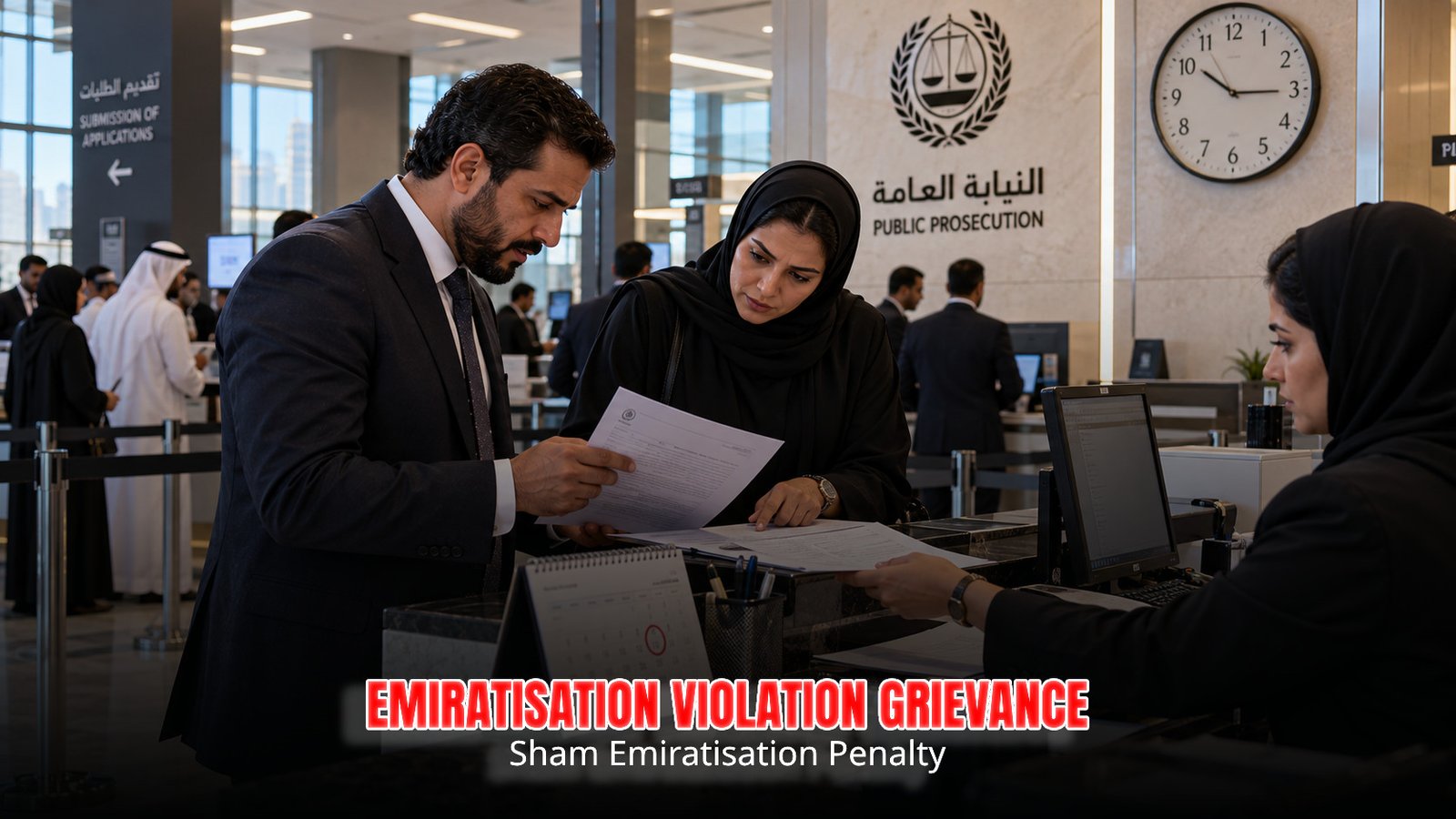
What Is Fake Emiratisation in the UAE?
Fake Emiratisation generally refers to registering a UAE national as an employee without there being a genuine employment relationship or genuine work being performed.
The arrangement may appear valid on paper because the employee has:
- An employment contract.
- A work permit.
- A salary record.
- Registration with the relevant authorities.
However, the actual circumstances may show that the employee does not perform the job associated with the employment relationship or that the arrangement was created primarily to manipulate Emiratisation figures or obtain government benefits.
The UAE authorities have previously described fake Emiratisation as registering a UAE national in a company under a nominal position without genuine work, or otherwise manipulating employment arrangements to circumvent Emiratisation requirements and benefit improperly from Nafis programmes.
Is Hiring a UAE National Always Considered Genuine Emiratisation?
No.
The fact that a UAE national has been registered as an employee does not, by itself, establish genuine employment for Emiratisation purposes.
The actual employment relationship may be examined, including:
- Whether the employee actually works for the company.
- Whether the employee performs the duties stated in the employment contract.
- Whether the position is genuine.
- Whether the salary corresponds to an actual employment relationship.
- Whether the employee attends work or performs assigned duties.
- Whether the employer maintains accurate employment records.
- Whether the employment arrangement was created to obtain or preserve Emiratisation benefits.
The authorities may therefore look beyond the paperwork when investigating suspected violations.
Can a Company Hire a Relative as an Emirati Employee?
Hiring a relative is not, by itself, prohibited.
A UAE national may be employed by a company owned or managed by a relative provided that the employment relationship is genuine and complies with the applicable requirements.
The relevant question is whether the employee actually has a genuine position and performs real duties.
The UAE authorities have previously clarified that there is no general prohibition on employing relatives in the same company. However, the employee’s qualifications, job title, duties and actual requirements of the position should be consistent with the employment relationship.
Therefore:
Hiring a relative does not automatically constitute fake Emiratisation.
But registering a relative merely to create an artificial Emiratisation position may result in a violation.
What Are Examples of Fake Emiratisation?
Depending on the circumstances, examples may include:
1. Registering an Employee Who Does Not Actually Work
A company registers a UAE national as an employee, but the person performs no genuine work.
2. Creating a Nominal Job Position
A company creates a position on paper solely to increase its Emiratisation percentage.
3. Paying a Salary Without Genuine Employment
A salary may be transferred to the employee even though there is no corresponding genuine employment relationship.
4. Misrepresenting the Employee’s Job
The employee may be registered under a particular professional position while performing completely different or no duties.
5. Manipulating Employment Data
A company may change employee classifications, workforce numbers or other information to avoid its Emiratisation obligations.
6. Obtaining Nafis Benefits Through a Sham Arrangement
A company or individual may attempt to obtain government support or benefits through an employment arrangement that does not reflect genuine employment.
The legal assessment depends on the facts and the applicable regulations.
What Is the Nafis Programme?
Nafis is part of the UAE’s national initiatives supporting the participation and competitiveness of Emirati citizens in the private sector.
The programme provides various initiatives and benefits intended to support Emirati employment and career development.
Because these benefits are connected to genuine employment and Emiratisation objectives, the authorities have established rules addressing attempts to manipulate the system.
The UAE government’s official information states that violations connected with Nafis and Emiratisation targets can include fake Emiratisation and other practices designed to circumvent Emiratisation requirements.
What Are the Penalties for Fake Emiratisation in the UAE?
The applicable penalty depends on the specific violation, the circumstances, the parties involved and the regulation in force at the relevant time.
Administrative penalties may include financial fines and measures affecting the benefits associated with Nafis.
Under the current framework, the government has stated that establishments failing to meet applicable Emiratisation targets may be required to make financial contributions. The official UAE government portal currently states that the contribution for an Emirati position not fulfilled was AED 96,000 beginning in January 2025 for the 2024 year, increasing to AED 108,000 in January 2026 where the applicable 2025 target was not met.
Separate penalties may apply where the authorities establish deliberate manipulation, false information or fake Emiratisation.
Can the Fine for Fake Emiratisation Reach AED 100,000?
Yes, under the more recent administrative penalty framework, fines for certain violations connected with fake employment or obtaining Nafis-related benefits through false information can range from AED 20,000 to AED 100,000 per case, depending on the applicable violation.
Reporting on Cabinet Resolution No. 43 of 2025 states that an administrative fine of between AED 20,000 and AED 100,000 may apply to an establishment for providing incorrect documents or data to obtain Nafis services or benefits or to evade or circumvent the Emiratisation system.
The exact penalty should therefore be determined by identifying the specific violation and the legal provision applied by the competent authority.
Can a Company Be Referred to the Public Prosecution?
Yes, in serious cases.
Not every Emiratisation violation is necessarily a criminal offence. Many violations are dealt with through administrative measures.
However, where the facts indicate serious manipulation, fraud or conduct requiring criminal investigation, the competent authorities may refer the matter to the Public Prosecution.
The UAE has previously announced cases in which suspected fake Emiratisation resulted in referral to the Public Prosecution.
A notable Abu Dhabi case involved a company that was found to have registered 113 UAE nationals without genuine employment relationships. The matter was referred to the Public Prosecution, and the competent criminal court subsequently convicted the company and imposed a AED 10 million fine.
That case illustrates that serious sham-employment arrangements can potentially move beyond administrative penalties and result in criminal proceedings.

Can the Emirati Employee Be Penalised?
Yes.
The consequences are not necessarily limited to the employer.
Where an Emirati employee knowingly participates in a sham employment arrangement or assists in obtaining benefits improperly, the employee may also face consequences under the applicable regulations.
Possible consequences may include:
- Suspension of Nafis support.
- Recovery of amounts improperly received.
- Administrative measures.
- Other consequences depending on the nature of the violation.
The UAE authorities have previously warned that Emirati citizens who accept nominal jobs may themselves participate in a violation and may face suspension of support and recovery of amounts paid to the company.
The employee’s actual knowledge and involvement are therefore relevant when assessing individual liability.
Can Nafis Support Be Stopped?
Yes.
Where a violation is established, the benefits provided through Nafis may be suspended or otherwise affected in accordance with the applicable rules.
This may be particularly relevant where the employee knowingly participates in a sham employment arrangement.
The consequences may also include recovery of benefits that were improperly obtained.
Can the Government Recover Money Already Paid?
Depending on the applicable violation and decision, amounts paid as benefits or support may be subject to recovery.
This can potentially affect:
- The employer.
- The employee.
- Benefits paid through Nafis.
- Other amounts obtained as a result of inaccurate information.
The specific recovery mechanism depends on the legal basis for the decision and the circumstances of the case.
How Do Authorities Detect Fake Emiratisation?
Authorities may rely on inspections, employment records and information provided through government systems.
Potential indicators may include inconsistencies between:
- The employee’s registered job.
- The employee’s qualifications.
- The employee’s actual duties.
- Attendance records.
- Salary payments.
- Company activity.
- Workplace records.
- Employment data.
The authorities may also investigate information suggesting that an employee was registered without actually joining the workplace or performing the duties associated with the position.
The Ministry of Human Resources and Emiratisation has stated that inspection activity is used to identify manipulation of employee information and violations of Emiratisation requirements.
What Happens If an Employee Does Not Actually Attend Work?
If the employee does not perform genuine work and the employment relationship exists only on paper, this may be evidence of fake Emiratisation.
However, absence from the workplace does not automatically establish a violation in every case.
Some genuine jobs may involve:
- Remote work.
- Flexible working arrangements.
- Field work.
- Different working schedules.
The question is whether there is a genuine employment relationship and whether the employee performs the duties required under that relationship.
Can a Company Change an Employee’s Job Title to Meet Emiratisation Requirements?
Changing an employee’s job title is not automatically unlawful.
However, the job title should accurately reflect the genuine position and the employee’s actual duties.
If a company changes job classifications, workforce numbers or other employment information primarily to avoid Emiratisation requirements, the arrangement may constitute a violation.
The applicable regulations specifically address practices involving manipulation of workforce data or employee classifications to circumvent Emiratisation targets.
Is Paying a UAE National Without Requiring Work Legal?
A company should not create an artificial employment relationship simply to satisfy an Emiratisation requirement or obtain government benefits.
An employment contract should correspond to a genuine employment relationship.
Where salary payments are made without genuine employment and the arrangement is designed to circumvent the applicable Emiratisation requirements, the circumstances may be treated as fake Emiratisation.
The legal assessment depends on the facts, documents and purpose of the arrangement.
What Is the Difference Between Genuine Emiratisation and Fake Emiratisation?
The distinction can be summarised as follows:
| Genuine Emiratisation | Fake Emiratisation |
|---|---|
| Genuine employment relationship | Employment exists mainly on paper |
| Real job position | Nominal or artificial position |
| Employee performs actual duties | Employee performs no genuine work |
| Job matches the employment arrangement | Job information may be manipulated |
| Salary is paid for genuine employment | Salary may be paid without genuine work |
| Employer maintains accurate records | Employment information may be inaccurate |
| Complies with Emiratisation requirements | Intended to circumvent Emiratisation requirements |
The table is a general explanation. The competent authority will assess the actual circumstances of each case.
What Should a Company Do If It Discovers a Potential Fake Emiratisation Arrangement?
A company that discovers a potentially problematic employment arrangement should not ignore it.
The company should review:
- Employment contracts.
- Job descriptions.
- Attendance records.
- Payroll records.
- Salary transfers.
- Employee qualifications.
- Actual duties.
- Work permits.
- Emiratisation records.
- Nafis-related documents.
If an error or violation is identified, the company should obtain appropriate legal and compliance advice before taking corrective action.
It is also important not to create or modify documents retrospectively in a manner that could itself create additional legal problems.
What Should an Emirati Employee Do If the Company Registered Them Without Genuine Work?
An Emirati employee who discovers that their name has been registered under an employment arrangement that does not reflect the actual situation should take the matter seriously.
The employee should retain:
- Employment contract.
- Salary records.
- Work permit.
- Correspondence with the employer.
- Job description.
- Nafis documents.
- Any evidence concerning actual work performed.
If the employee did not agree to the arrangement or was misled by the employer, the circumstances should be documented and appropriate legal advice should be obtained.
Can Fake Emiratisation Affect a Company’s Business Licence?
Depending on the violation and the measures imposed by the competent authorities, a company may face administrative consequences affecting its ability to comply with labour and Emiratisation requirements.
The precise consequences depend on the applicable legislation and the decision issued by the competent authority.
A company should therefore not assume that a fake Emiratisation investigation concerns only a financial fine.
Can Fake Emiratisation Become a Criminal Case?
Potentially, yes.
A distinction should be made between:
Administrative Emiratisation violations
and
Conduct that may amount to a criminal offence.
Where the facts involve deliberate falsification, fraud, manipulation of official information or other conduct that falls within criminal legislation, the matter may be referred to the Public Prosecution.
The 2024 Abu Dhabi case involving the registration of 113 UAE nationals demonstrates that serious fake Emiratisation cases can result in criminal proceedings and substantial court-imposed fines.
What Evidence Is Important in a Fake Emiratisation Case?
The evidence will depend on the allegation, but relevant documents may include:
- Employment contracts.
- Work permits.
- Payroll records.
- Bank statements.
- Attendance records.
- Job descriptions.
- Internal company communications.
- Emails.
- WhatsApp messages.
- Company organisational charts.
- Employee qualification records.
- Nafis records.
- Government correspondence.
- Inspection reports.
Electronic communications can be particularly important where the issue concerns whether the parties knowingly created a nominal employment arrangement.
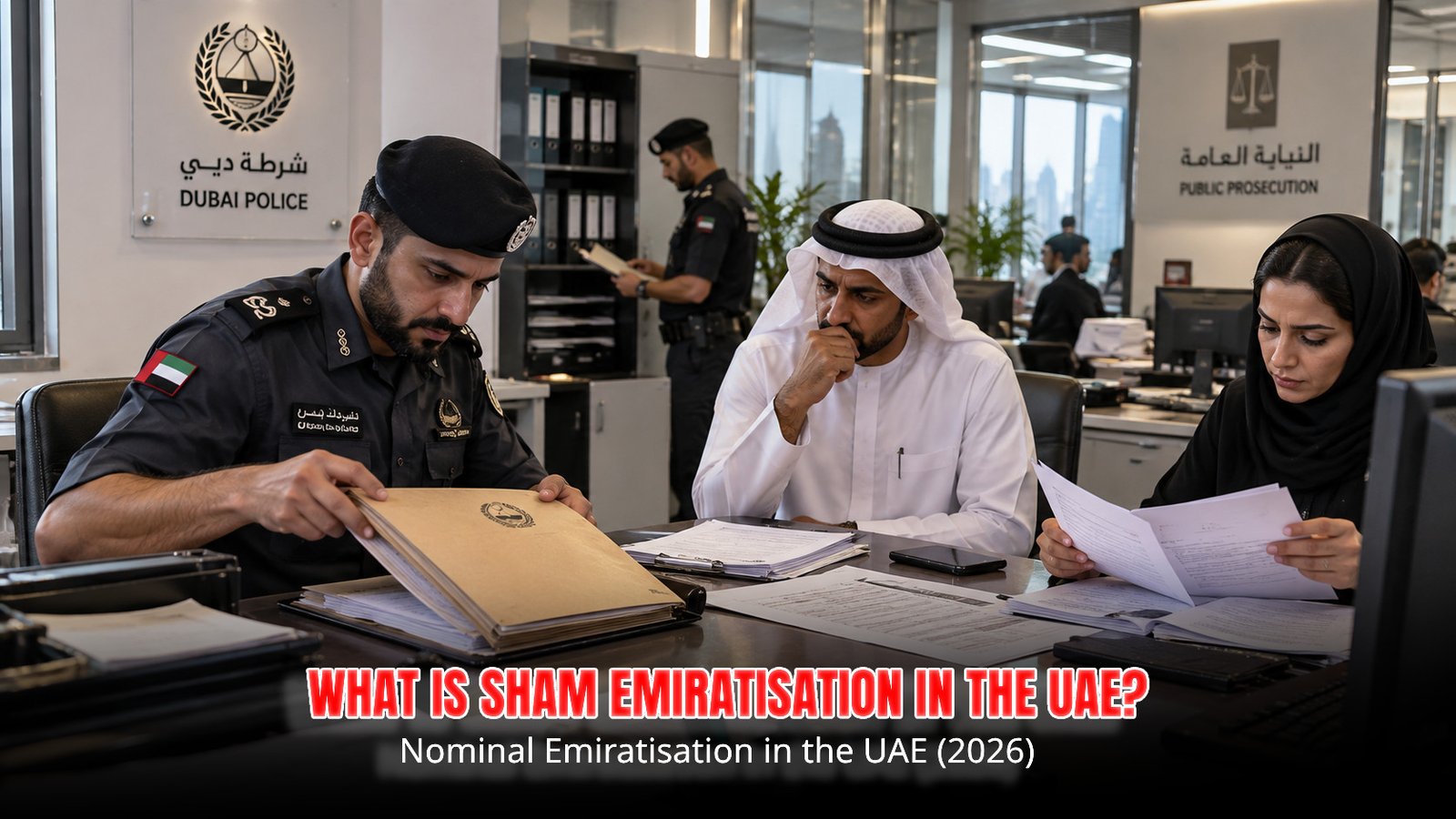
Can an Employer Defend a Fake Emiratisation Allegation?
Yes, if the allegation does not accurately reflect the actual employment relationship.
A company facing an investigation should establish the facts with supporting documents.
The defence may involve demonstrating:
- The employee actually worked for the company.
- The job position was genuine.
- The employee performed identifiable duties.
- Salary payments corresponded to genuine employment.
- The company maintained accurate records.
- There was no intention to circumvent Emiratisation requirements.
- The company complied with the applicable rules.
The appropriate response depends on the evidence and the specific allegation.
What If the Company Made an Unintentional Administrative Error?
Not every error in employment records constitutes fake Emiratisation.
A genuine administrative mistake may have a different legal treatment from deliberate manipulation designed to circumvent the law.
However, the company should address the error promptly and maintain evidence showing the actual circumstances.
The distinction between an administrative error and deliberate circumvention may depend on the nature of the discrepancy, the company’s conduct, the evidence and the applicable legal framework.
How Can Legal Consultant Mohammed Jasem Assist With Fake Emiratisation Cases?
Legal Consultant Mohammed Jasem can assist employers and individuals in reviewing disputes and investigations relating to Emiratisation requirements and alleged sham employment arrangements.
Legal assistance may include:
- Reviewing employment contracts.
- Analysing Emiratisation compliance.
- Reviewing Nafis-related documents.
- Examining inspection reports.
- Reviewing payroll and attendance records.
- Assessing the legal classification of the alleged violation.
- Preparing legal responses.
- Assisting with administrative procedures.
- Advising on potential criminal implications.
- Representing clients in appropriate legal proceedings.
The first step is to determine whether the employment relationship was genuinely established and whether the documents accurately reflect the actual circumstances.
What Should Employers Do to Avoid Fake Emiratisation Violations?
Employers should maintain a compliance system that ensures Emiratisation positions are genuine.
Practical measures include:
Create Genuine Job Positions
Every Emiratisation position should correspond to an actual business need and genuine employment.
Maintain Accurate Employment Records
Job titles, duties, salaries and employee information should accurately reflect reality.
Verify Employee Attendance and Duties
Employers should maintain appropriate records demonstrating that employees are performing their contractual responsibilities.
Keep Payroll Records
Salary payments should correspond to the actual employment relationship and applicable wage requirements.
Review Nafis Compliance
Companies participating in Nafis initiatives should ensure that the information submitted to the programme remains accurate.
Avoid Artificial Arrangements
Employers should not register UAE nationals merely to increase an Emiratisation percentage or obtain benefits without genuine employment.
What Should Employees Do to Protect Themselves?
UAE nationals should also understand that accepting a nominal position may expose them to legal or administrative consequences.
Before accepting an Emiratisation position, the employee should verify:
- The company’s identity.
- The actual job title.
- Duties and responsibilities.
- Salary.
- Working hours.
- Workplace or remote-work arrangement.
- Employment contract.
- Nafis-related obligations.
The employee should not sign documents stating that they perform duties that they do not actually perform.
Frequently Asked Questions
What Is Fake Emiratisation in the UAE?
Fake Emiratisation is generally the use of nominal or sham employment arrangements involving UAE nationals to satisfy Emiratisation requirements or obtain related benefits without genuine employment.
Is Fake Emiratisation Illegal in the UAE?
Arrangements designed to circumvent Emiratisation requirements or obtain benefits through false or misleading employment information may constitute violations subject to administrative penalties and, in serious cases, potentially criminal proceedings.
What Is the Fine for Fake Emiratisation?
The applicable penalty depends on the violation. Under the current administrative framework reported for 2025, certain violations involving false information to obtain Nafis benefits or circumvent the Emiratisation system may attract fines ranging from AED 20,000 to AED 100,000 per case.
Can an Emirati Employee Be Penalised?
Yes. Where an Emirati employee knowingly participates in a prohibited sham arrangement, the employee may face consequences affecting Nafis benefits and other measures under the applicable rules.
Can a Company Be Criminally Prosecuted?
Potentially. Serious cases involving deliberate manipulation or other conduct that may constitute a criminal offence can be referred to the Public Prosecution.
Can a Company Hire a Relative as Part of Emiratisation?
Yes, employing a relative is not automatically prohibited. The employment must, however, be genuine and consistent with the employee’s qualifications, position and actual duties.
Does Paying a Salary Make Emiratisation Genuine?
No. A salary payment alone does not necessarily establish genuine employment. The actual employment relationship and duties must be considered.
Can a Company Change an Employee’s Job Title?
A job title can be changed where there is a genuine business and employment reason and the records accurately reflect the employee’s actual position. Manipulating job classifications to circumvent Emiratisation requirements may result in a violation.
How Can I Report Fake Emiratisation?
The UAE government provides channels for reporting suspected Emiratisation violations. The official UAE government portal also provides a service for reporting fake Emiratisation and other violations.
Conclusion
Fake Emiratisation in the UAE is not simply a matter of registering a UAE national as an employee. The central issue is whether there is a genuine employment relationship and whether the employer and employee are complying with the applicable Emiratisation and Nafis requirements.
A company that creates nominal positions, provides inaccurate employment information or otherwise attempts to circumvent Emiratisation requirements may face administrative penalties, recovery of improperly obtained benefits and, in serious cases, referral to the Public Prosecution.
At the same time, not every employment irregularity automatically constitutes fake Emiratisation. The actual facts, documents, employee duties, payroll records and purpose of the arrangement must be examined.
For employers and employees facing an investigation or allegation of fake Emiratisation, obtaining legal advice at an early stage can help clarify the applicable rules, preserve relevant evidence and determine the appropriate response.
Legal Consultant Mohammed Jasem can assist with reviewing Emiratisation-related disputes, employment documentation, Nafis issues, administrative investigations and related legal proceedings in the UAE.
Legal Disclaimer
This article is provided for general legal information and educational purposes only and does not constitute legal advice for a specific case. Emiratisation rules, administrative penalties and government programmes may be amended from time to time. The applicable legal position should therefore be verified based on the facts, date of the alleged violation and regulations in force at the relevant time.
Comments are closed