




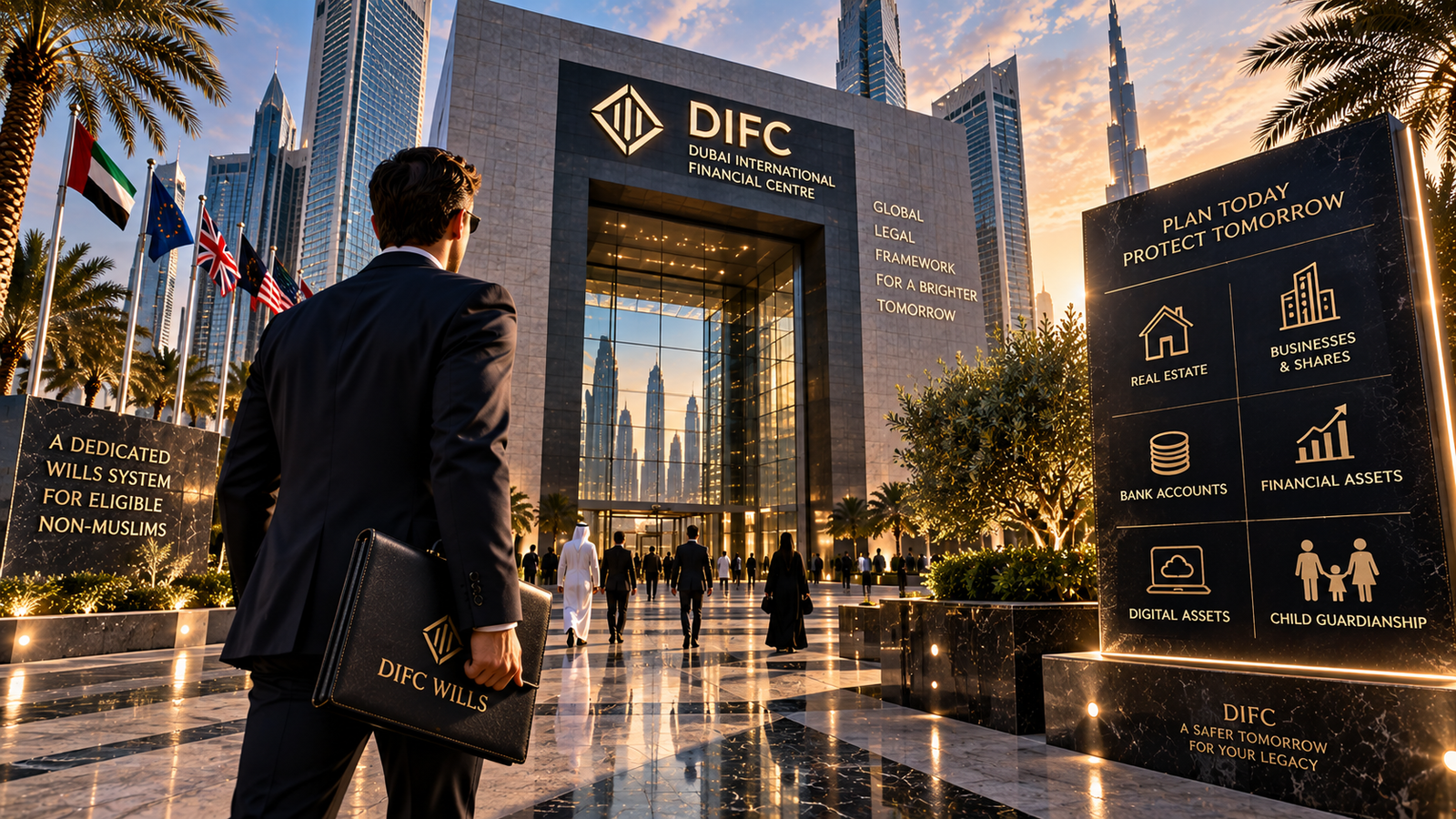
Planning what happens to your assets after death is an important part of protecting your family and financial interests in the UAE. For non-Muslims who own property, bank accounts, business interests or other assets in Dubai, registering a legally recognised Will can provide a structured way to determine how their estate should be dealt with.
The DIFC Courts Wills Service provides a dedicated framework for eligible non-Muslims to register Wills and set out their wishes regarding the distribution of assets and, where applicable, the appointment of guardians for minor children. The service operates under the legal framework established for non-Muslim inheritance, Wills and probate in Dubai.
This guide explains what non-Muslims should know about Dubai Wills in 2026, including eligibility, available Will types, property and business assets, guardianship, registration, amendments and important estate-planning considerations.
Why Is a Will Important for Non-Muslims Living in Dubai?
A Will allows an individual to make clear arrangements for their estate instead of leaving important decisions entirely to the default legal procedures that may apply after death.
This can be particularly important for expatriates and international investors who may have:
- Residential or commercial property in Dubai.
- Bank and investment accounts.
- Shares in UAE companies.
- Business interests.
- Digital assets.
- Children or dependants living in the UAE.
- Assets or family interests in more than one country.
The DIFC Courts Wills Service was established specifically to provide non-Muslims with a legal mechanism for organising their UAE estate and, where applicable, appointing guardians for their children.

What Is a DIFC Will?
A DIFC Will is a Will registered through the DIFC Courts Wills Service for eligible non-Muslims.
The DIFC framework provides for the registration of Wills and the subsequent probate process. When a person dies with a registered Will, the appointed executor can apply for the relevant Grant of Probate, allowing the estate to be administered in accordance with the Will and applicable procedures.
This makes the DIFC Wills Service an important estate-planning option for non-Muslim individuals with qualifying interests connected to the UAE.
Who Can Register a Will in Dubai?
The current DIFC Courts requirements generally allow an individual to register a Will where the person:
- Is not Muslim and has never been Muslim.
- Is at least 18 years old.
- Owns assets in the UAE and/or has minor children residing with them in the UAE.
Importantly, UAE residency is not required to register a DIFC Courts Will. Eligible individuals may register their Will virtually from outside the UAE.
This can be particularly useful for international investors who own UAE assets but do not permanently reside in the country.
What Types of Wills Are Available in Dubai?
The DIFC Courts Wills Service provides different Will options depending on the individual’s assets and estate-planning objectives.
Full Will
A Full Will is the broadest option available through the Wills Service.
It can address movable and immovable assets within the applicable scope and may also include provisions concerning the appointment of interim and permanent guardians for eligible minor children residing in Dubai or Ras Al Khaimah.
For individuals with several categories of assets, a Full Will may provide a more comprehensive estate-planning solution.
Guardianship Will
A Guardianship Will is focused on children rather than the distribution of the individual’s entire estate.
It can be used to nominate guardians for minor children in accordance with the applicable DIFC rules.
Parents with young children may therefore consider guardianship arrangements as an essential part of their wider estate plan.
Property Will
A Property Will is designed for individuals who want to address specific UAE real estate interests.
The DIFC Courts currently state that the Property Will can cover up to five UAE properties through the relevant Will format.
This may be suitable for a property investor whose main estate-planning concern is the succession of particular real estate assets.
Business Owners Will
Business owners can use a Business Owners Will to address qualifying interests in UAE companies.
The current DIFC framework allows this type of Will to cover up to five UAE shareholdings through the designated format.
For entrepreneurs and investors, succession planning can be particularly important because the death of a shareholder may affect ownership, control and the continuity of a business.
Financial Assets Will
A Financial Assets Will is designed for specified financial accounts.
The DIFC Courts state that this type of Will can cover up to ten bank and/or brokerage accounts registered with branches located in the UAE.
The DIFC Courts also currently provide a separate Digital Assets Will service.
Can One Will Cover Property and Other Assets?
The appropriate Will depends on the nature and scope of the individual’s estate.
Someone who owns a combination of property, financial assets and business interests should not simply select a Will based on its name or registration fee. The individual’s complete asset structure should first be reviewed to determine which Will arrangement is most appropriate.
For more complex estates, professional legal advice can help identify how the different assets should be addressed and whether additional estate-planning arrangements are required.
Can a Will Cover Property in Ras Al Khaimah?
The DIFC Wills framework includes assets and matters connected with Dubai and Ras Al Khaimah within the applicable legal scope. The DIFC Courts rules define a Will as relating to movable and immovable assets situated in Dubai and/or Ras Al Khaimah, subject to the applicable requirements.
This can be particularly relevant to investors who own properties in both Emirates.
However, the exact wording and type of Will remain important, particularly where an estate contains multiple properties or different categories of assets.
Can a Will Include Assets Outside the UAE?
International estate planning requires additional care.
The DIFC Courts FAQ states that foreign assets may be included in a DIFC Full Will, but the execution of the Will outside the UAE remains subject to the laws and rules of the jurisdiction where those assets are located.
Therefore, someone with property or financial interests in several countries should not assume that one UAE Will automatically resolves every succession issue worldwide.
In international cases, it may be necessary to coordinate the DIFC Will with estate-planning documents in other jurisdictions.
Can Parents Appoint Guardians for Their Children?
Yes.
Eligible parents can include guardianship provisions in their Will.
Depending on the applicable requirements, a Will can provide for the appointment of:
- An interim guardian.
- A permanent guardian.
This can give parents an opportunity to express their wishes regarding who should care for their minor children if both parents are unable to do so.
The residence and circumstances of the children at the relevant time are important and should be considered carefully when drafting guardianship provisions.
Why Is Estate Planning Important for Business Owners?
Business succession is often overlooked when preparing a personal Will.
A business owner may have:
- Shares in one or more companies.
- Voting rights.
- Partnership interests.
- Corporate bank accounts.
- Intellectual property.
- Investments.
- Contracts connected to the business.
The death of a shareholder can create practical and legal complications if ownership succession has not been properly considered.
A Business Owners Will may therefore form part of a broader succession strategy for entrepreneurs and investors with UAE business interests.
What Happens If Someone Dies Without a Will?
Dying without a registered Will can make estate administration more complicated.
The DIFC Courts explain that where a person dies without a DIFC Courts Will, the laws of the local courts in the Emirate or Emirates where the assets are located may apply by default.
For families with significant assets, this can create uncertainty regarding succession, administration and the procedures required to deal with the estate.
Preparing a Will in advance can provide greater clarity about the individual’s intentions.
What Happens After the Death of a Will-Maker?
Registering a Will does not mean that assets are transferred automatically immediately after death.
The estate must go through the applicable probate process.
The executor named in the Will generally takes responsibility for applying for the Grant of Probate and dealing with the estate in accordance with the relevant procedures. The DIFC Courts provide a dedicated probate process for estates where a Will has been registered with the DIFC Wills Registry.
Depending on the circumstances, Guardianship Orders may also be required.
Can a DIFC Will Be Registered Online?
Yes.
The DIFC Courts currently provide virtual Will registration through video conferencing.
The testator and the required witnesses can participate remotely, meaning they do not necessarily have to travel to the UAE for the registration appointment.
This is particularly useful for international investors and expatriates who are temporarily outside the UAE.
Do Witnesses Need to Live in the UAE?
No.
The DIFC Courts state that witnesses may participate in the registration appointment virtually from anywhere in the world.
The applicable identification and eligibility requirements for witnesses must still be satisfied.
Can a Registered Will Be Changed?
Yes.
Life circumstances and financial circumstances can change considerably after a Will is registered.
A Will may need to be reviewed following events such as:
- Marriage.
- Divorce.
- The birth or adoption of a child.
- The death of a beneficiary.
- Acquisition of new assets.
- Sale of property.
- Changes in business ownership.
- Changes to guardians.
- Changes to executors.
- Changes in the individual’s international assets.
Where the substantive contents of the Will need to be changed, the appropriate DIFC process should be followed to ensure that the new arrangements properly replace or amend the previous document.
How Much Does a Dubai Will Cost in 2026?
The registration fee depends on the type of Will selected.
The applicable fee should always be checked against the current DIFC Courts fee schedule before registration because court fees and service requirements can change.
For estate planning purposes, the cost of registering a Will should also be considered alongside the value and complexity of the assets being protected.
A Will involving substantial real estate, business interests or international assets may require professional legal drafting in addition to the official registration process.
Is Legal Advice Necessary When Preparing a DIFC Will?
The DIFC Courts do not require every person to appoint a Wills Draftsman.
However, the Courts make clear that the Wills Service itself does not provide legal advice and that individuals who require legal advice or assistance with Will drafting can contact registered DIFC Wills Draftsmen.
Professional advice can be particularly valuable where an individual has:
- Multiple properties.
- Company shares.
- Minor children.
- International assets.
- Existing Wills.
- Complex family arrangements.
- Significant financial investments.
What Should You Prepare Before Drafting a Will?
Before meeting a legal professional, it is useful to prepare a clear overview of your estate.
Personal Details
This may include:
- Full legal name.
- Passport details.
- Nationality.
- Marital status.
- Residency information.
Family Details
You may need information regarding:
- Spouse.
- Children.
- Minor children.
- Beneficiaries.
- Proposed guardians.
- Executors.
Asset Details
A complete asset inventory may include:
- Dubai property.
- Ras Al Khaimah property.
- Bank accounts.
- Brokerage accounts.
- Company shares.
- Business interests.
- Investments.
- Digital assets.
- Other significant property.
Having accurate information at the drafting stage can make the estate-planning process clearer and help identify potential issues before registration.
Why Should Your Will Be Reviewed Regularly?
A Will should not necessarily remain unchanged for the rest of a person’s life.
Major changes in family circumstances, ownership or wealth may affect whether the existing arrangements still reflect the person’s intentions.
For example, acquiring a new business, purchasing property, getting married or having another child may justify a legal review.
Regular estate planning reviews can help ensure that the Will continues to reflect the individual’s current wishes and financial position.
How Can a Legal Consultant Help With a Dubai Will?
Preparing a Will involves more than completing a registration form.
A legal professional can help review the individual’s circumstances before registration and identify potential issues relating to assets, beneficiaries, guardians and estate administration.
Legal assistance may include:
Reviewing the Family Structure
Identifying spouses, children, beneficiaries and potential guardians.
Reviewing Assets
Assessing properties, bank accounts, company interests, investments and other assets.
Selecting the Appropriate Will
Determining whether a Full Will, Property Will, Business Owners Will, Financial Assets Will, Guardianship Will or another arrangement is appropriate.
Drafting the Legal Provisions
Ensuring that the individual’s intentions are expressed clearly and consistently.
Reviewing Existing Estate Documents
Checking whether previous Wills or other legal arrangements could conflict with the new estate plan.
Preparing for Probate
Considering how the estate may be administered after death and what documents the executor may need.
Frequently Asked Questions
Can a non-Muslim register a Will in Dubai?
Yes. Eligible non-Muslims aged 18 or above who meet the DIFC Courts requirements can register a Will through the DIFC Wills Service.
د
Do I need to be a UAE resident?
No. UAE residency is not a mandatory requirement for registering a DIFC Courts Will.
Can I register a Will while living outside the UAE?
Yes. The DIFC Courts allow eligible individuals to complete Will registration virtually.
Can my Will cover UAE property?
Yes, subject to the type of Will and the applicable requirements.
Can a DIFC Will cover foreign assets?
Foreign assets may be included in a Full Will, but the laws of the jurisdiction where those assets are located may affect how the Will is implemented.
Can I appoint a guardian for my children?
Yes. Eligible Wills can include provisions for interim and permanent guardians for minor children where the applicable requirements are satisfied.
Can a business owner protect company interests through a Will?
Yes. The DIFC Courts provide a Business Owners Will for qualifying UAE shareholdings.
Can I include bank accounts in my Will?
Yes. A Financial Assets Will can cover qualifying UAE bank and brokerage accounts within the applicable limits.
Can a Will be registered online?
Yes. DIFC Courts Wills can be registered virtually through a video conference process.
What happens if I die without a Will?
The applicable local court laws in the Emirates where the assets are located may apply by default.
Conclusion: Planning Your Dubai Will in 2026
For non-Muslims with assets or family interests in the UAE, a carefully prepared Will can be an important part of long-term estate planning.
The DIFC Courts Wills Service provides a dedicated legal framework through which eligible non-Muslims can record their wishes concerning qualifying assets and, where applicable, guardianship arrangements.
The right approach depends on the individual’s circumstances. A property investor, business owner, parent and international investor may each require a different estate-planning strategy.
Before registering a Will, it is therefore advisable to review your assets, family circumstances, beneficiaries and existing legal arrangements and obtain professional advice where necessary.
Legal Consultant Mohammed Jassem can assist clients with reviewing their estate-planning requirements, preparing and reviewing Wills, assessing UAE assets and addressing legal arrangements connected with succession and estate administration.
Comments are closed