










Dubai Shared Housing Law 2026 establishes a comprehensive legal framework for regulating the occupancy and management of shared housing in the Emirate of Dubai. The law addresses the allocation, management, leasing and occupancy of real estate units designated for shared housing, while defining the responsibilities of property owners, establishments, occupants and the competent authorities.
The law also distinguishes between a Permit for Allocating a Real Estate Unit for Shared Housing and a Permit to Carry Out the Shared Housing Activity, which is one of the most important issues that property owners, establishments and individuals involved in shared housing should understand.
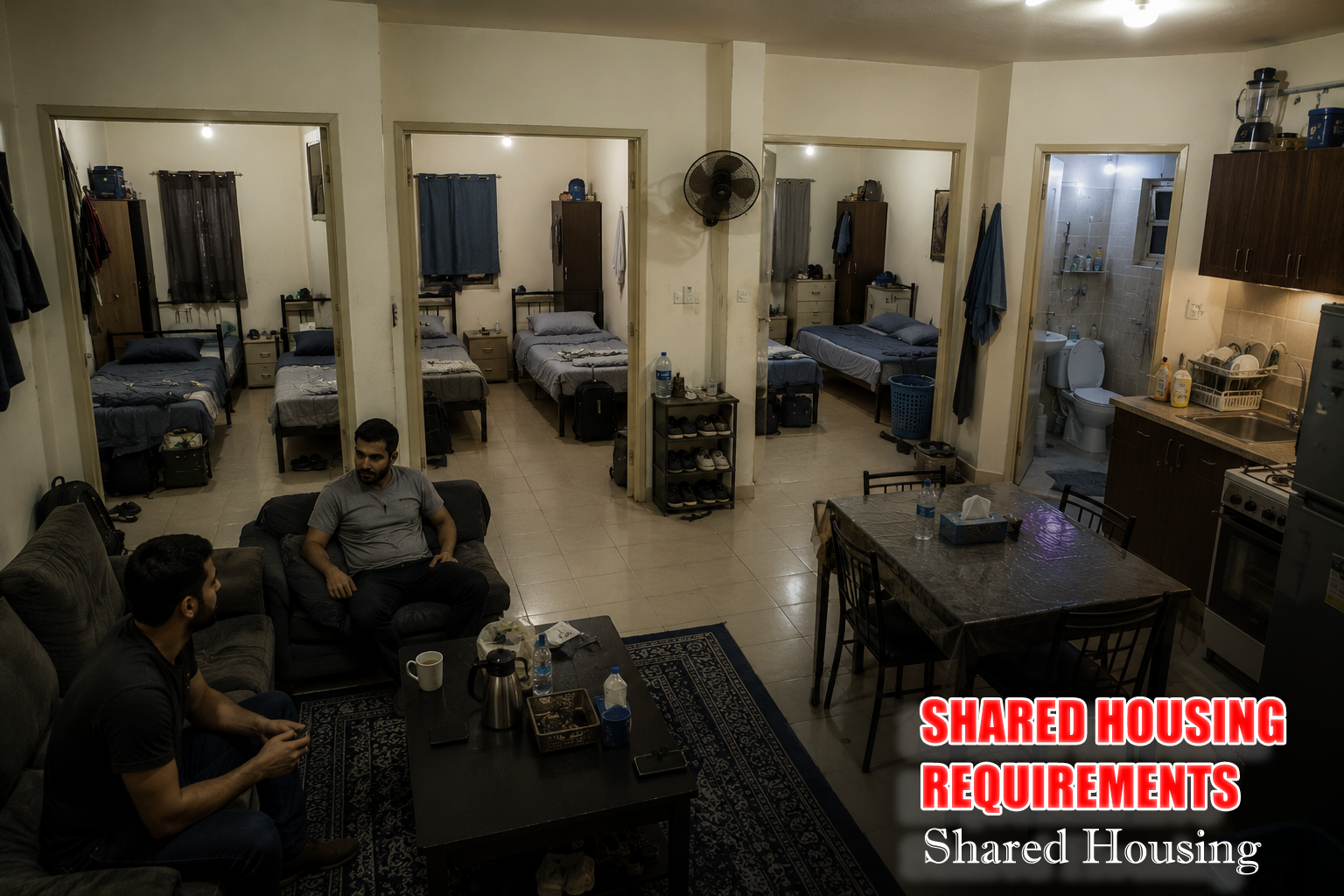
What Is the Dubai Shared Housing Law 2026?
Dubai Shared Housing Law is legislation that regulates the occupancy and management of real estate units designated for shared housing in the Emirate.
The law establishes rules governing property owners, establishments, occupants and the competent authorities, while setting requirements related to the allocation and management of shared housing units.
Shared housing does not simply mean that several people live in the same property. The law focuses on situations where a real estate unit is specifically allocated for shared residential purposes in accordance with the applicable requirements, standards and permits.
The legislation aims to create a clearer regulatory framework for shared housing, improve safety and organization, and protect the rights of the parties involved.
When Was the Dubai Shared Housing Law 2026 Issued?
Dubai Law No. (4) of 2026 concerning the regulation of the occupancy and management of shared housing in the Emirate of Dubai was issued in 2026.
The law establishes a framework for regulating shared housing across Dubai, including the requirements applicable to property owners, establishments and occupants.
It is important to distinguish between the date on which the law was issued, the date on which it was published in the Official Gazette, and the date on which it becomes legally effective, because these dates may have different legal consequences.
When Does the Dubai Shared Housing Law Take Effect?
The law provides that it shall come into force after the period specified in its final provisions following publication in the Official Gazette.
Because the calculation and official publication date have been the subject of differing published references, property owners, establishments and occupants should verify the effective date through the latest official announcement or implementing decision issued by the competent authorities before relying on a specific date.
This distinction is particularly important because the law also provides transitional provisions for existing shared housing arrangements.
Is There a Grace Period to Regularize Existing Shared Housing?
Yes.
The law provides specific provisions for regularizing existing shared housing arrangements.
Property owners and establishments that were already operating shared housing before the law became effective are required to bring their properties and activities into compliance with the requirements of the law within the legally prescribed period.
The competent authority may also extend the regularization period in accordance with the applicable legal provisions.
This transitional period is important for existing owners and operators because it provides an opportunity to obtain the required permits, meet technical requirements and regularize their contractual and operational arrangements.
What Is Shared Housing in Dubai?
Shared housing generally refers to accommodation where a group of individuals or families occupy designated spaces within a single real estate unit for residential purposes while sharing common facilities.
Common facilities may include:
- Kitchens
- Dining areas
- Bathrooms
- Outdoor areas
- Other shared facilities within the property
However, the presence of more than one person in a property does not automatically mean that the property is classified as shared housing under the law.
The nature of occupancy, the way the property is allocated, and its actual use must be considered.
What Is the Difference Between a Permit for Allocating a Property for Shared Housing and a Permit to Carry Out the Activity?
This is one of the most important points under the Dubai Shared Housing Law 2026, because the law distinguishes between two different permits.
What Is a Permit for Allocating a Real Estate Unit for Shared Housing?
A Permit for Allocating a Real Estate Unit for Shared Housing is the approval that allows a property owner to designate a specific real estate unit for shared housing after satisfying the applicable requirements and standards.
In simple terms, this permit relates primarily to:
The property itself and its approved use as shared housing.
A real estate unit cannot be allocated for shared housing unless the required permit has been obtained and the applicable conditions have been satisfied.
What Is a Permit to Carry Out the Shared Housing Activity?
A Permit to Carry Out the Shared Housing Activity relates to the person or establishment carrying out the activity of leasing and managing the real estate unit on behalf of the owner, or leasing the unit from the owner for the purpose of subleasing it to occupants, where permitted by law.
Therefore, this permit is different from the permit relating to the allocation of the property itself.
In simple terms:
Property Allocation Permit = relates to the property and its use as shared housing.
Activity Permit = relates to the person or establishment carrying out the leasing and management activity.
This distinction is particularly important for property owners, establishments, marketers and individuals dealing with shared housing arrangements.
Who Needs a Permit to Allocate a Property for Shared Housing?
If a property owner wants to designate a real estate unit for shared housing, the owner must obtain the required permit before using the property for that purpose.
Ownership of the property alone does not automatically authorize the owner to use it as shared housing.
The property must also satisfy the applicable planning, construction, health, safety, fire prevention and other regulatory requirements established by the competent authorities.
Who Needs a Permit to Carry Out the Shared Housing Activity?
If a person or establishment carries out the activity of leasing and managing a real estate unit on behalf of its owner, or leases the unit from the owner for the purpose of subleasing it to occupants, the activity is subject to the applicable permit and regulatory requirements.
The establishment must satisfy the relevant legal requirements and hold the appropriate authorization to conduct the activity.
Therefore, having a property that is approved for shared housing does not mean that any person can automatically lease, manage or sublease the property without the required authorization.
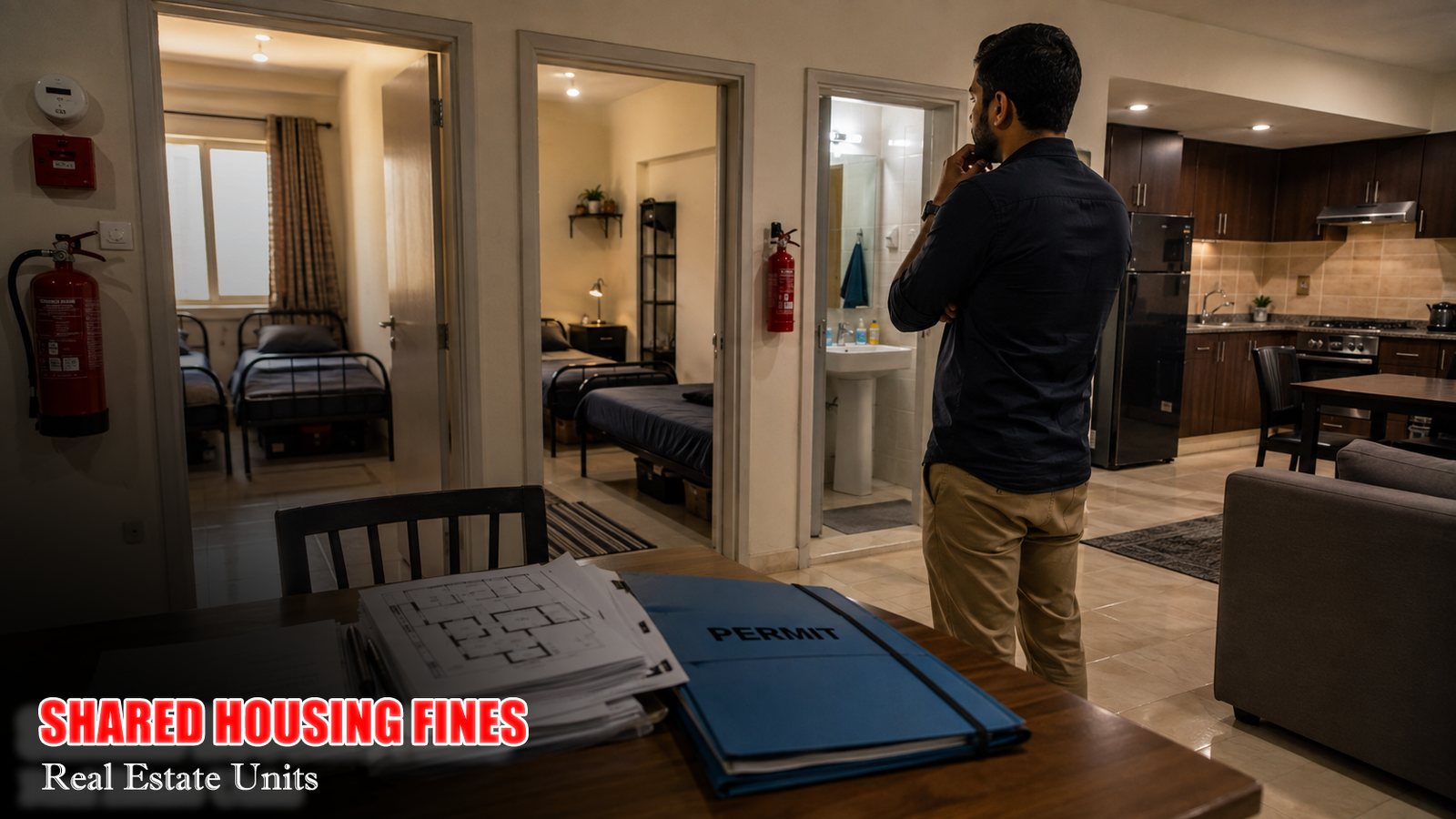
Can a Property Owner Allocate a Property for Shared Housing?
Yes, provided that the owner complies with the applicable legal requirements.
If a property owner wants to use a real estate unit as shared housing, the owner must obtain the required Permit for Allocating the Unit for Shared Housing and ensure that the property satisfies all applicable conditions and standards.
Property ownership alone does not mean that the owner can use the property for any purpose without complying with applicable laws and regulations.
Can the Property Owner Manage the Shared Housing Personally?
The law requires a distinction between allocating a property for shared housing and carrying out the activity of leasing and managing shared housing.
The law regulates different forms of management and leasing, including arrangements where an establishment manages the property on behalf of its owner under a management agreement, as well as arrangements where an establishment leases the property from the owner for the purpose of subleasing it to occupants.
Therefore, the exact contractual relationship, management structure, leasing arrangement and required permits should be determined for each individual case.
Can a Real Estate Unit Be Subleased for Shared Housing?
The law regulates situations where an establishment leases a real estate unit from the owner for the purpose of subleasing it to occupants.
However, subleasing does not mean that the activity can be conducted without regulatory controls.
The required permits, conditions and standards must be satisfied, and the property itself must be legally designated for shared housing.
Is Collective Labour Accommodation Covered by the Dubai Shared Housing Law?
This is an important issue when determining whether the law applies to a particular property.
Real estate units designated for collective labour accommodation are excluded from the scope of the Dubai Shared Housing Law.
However, this exclusion should not be interpreted to mean that every property occupied by workers is automatically excluded.
The classification depends on the nature of the property, its official classification and its actual use.
The law also identifies employees of government entities and workers of private companies and establishments among the categories that may be accommodated under shared housing arrangements where the law applies.
Therefore, the nature and classification of the accommodation should be established before determining which legal regime applies.
Who Can Live in Shared Housing?
The law identifies categories of occupants that may be accommodated in shared housing, including:
- Families.
- Single women.
- Single men.
- Female students residing in units owned or not owned by educational institutions.
- Male students residing in units owned or not owned by educational institutions.
- Government employees and workers of private companies and establishments.
The competent authority may modify these categories or add other categories in accordance with the applicable procedures and regulations.
What Types of Properties Can Be Used for Shared Housing?
The law recognizes several types of real estate units that may be allocated for shared housing, subject to the required conditions and standards.
These may include:
- Residential apartments.
- Detached houses.
- Residential complexes.
- Mixed-use buildings.
- Townhouses.
- Multi-storey buildings.
However, the inclusion of a property type does not mean that every property of that type can automatically be used for shared housing.
The required permit must be obtained and all applicable legal and regulatory requirements must be satisfied.
What Are the Responsibilities of a Property Owner?
Property owners have several responsibilities when dealing with shared housing.
These include:
- Complying with the maximum permitted number of occupants.
- Complying with applicable space and occupancy requirements.
- Obtaining the required permit before allocating the unit for shared housing.
- Not changing the approved use without the necessary approvals.
- Not making unauthorized partitions or modifications to the property.
- Complying with health and safety requirements.
- Dealing with authorized persons or establishments when the law requires authorization for leasing and management activities.
These requirements are designed to ensure that the property is used in accordance with its approved purpose and to reduce legal, safety and operational risks.
Must Shared Housing Lease Contracts Be Registered?
Yes.
The law establishes a Shared Housing Register maintained by the Dubai Land Department.
The register includes relevant information such as:
- Lease contracts.
- Management contracts.
- Occupant information.
- Other information determined by the competent authority.
Registration is intended to create a clear record of shared housing arrangements and improve transparency and regulatory oversight.
It also helps establish a more structured legal relationship between the property owner, establishment and occupants.
What Are the Rights and Obligations of Shared Housing Occupants?
Occupants must use the space allocated to them for residential purposes and maintain the property in accordance with applicable health and safety requirements.
Occupants must also respect common areas and comply with the rules governing the use of the shared housing unit.
An occupant may not use the allocated space to conduct economic activities or unlawfully sublease the space to another person.
The law also restricts unauthorized subleasing and other arrangements that could undermine the regulatory framework.
What Are the Penalties for Violating the Dubai Shared Housing Law?
The law provides penalties and fines for violations of its provisions and the implementing decisions issued under it.
Depending on the violation, fines may reach significant amounts, with repeat violations subject to increased penalties under the conditions established by the law. Recent reporting indicates that fines can reach AED 500,000 for a violation and up to AED 1 million for certain repeated violations.
Additional measures may include:
- Suspension of the activity.
- Cancellation of the permit.
- Measures affecting the relevant commercial licence.
- Disconnection of public utilities in cases permitted by law.
- Refusal or suspension of certain transactions relating to the violating property.
- Corrective measures.
- Evacuation of the violating property in accordance with applicable legal procedures.
For this reason, obtaining the required permits and complying with the applicable requirements from the beginning is one of the most effective ways to reduce legal risks.
Does the Dubai Shared Housing Law Affect Lease Contracts?
Yes.
The law may have a direct impact on lease arrangements involving shared housing.
It is important to distinguish between:
The lease contract,
the permit required to allocate the property for shared housing,
and
the permit required to carry out the shared housing activity.
Having a lease contract alone does not necessarily mean that the property is legally approved for shared housing.
Likewise, a lease contract does not automatically authorize a person or establishment to conduct the activity of leasing and managing shared housing.
What Should a Property Owner Do Before Allocating a Unit for Shared Housing?
Before allocating a property for shared housing, the owner should verify several important matters, including:
- The permitted use of the property.
- The type and classification of the property.
- The category of occupants.
- Whether the unit satisfies the applicable requirements.
- Obtaining the required property allocation permit.
- Determining whether an activity permit is required for leasing and management.
- The contractual relationship between the owner and the person or establishment managing the property.
- The obligations toward occupants.
- Registration of leases and required information.
- Compliance with health, safety and other local regulatory requirements.
Taking these steps can help reduce legal risks and prevent future disputes or violations.

Is the Dubai Shared Housing Law a New Law?
Yes.
Dubai Law No. (4) of 2026 introduces a specific legal framework for regulating the occupancy and management of shared housing in the Emirate.
The law establishes requirements concerning property allocation, permits, leasing and management, occupants, registration, safety standards and penalties.
It is therefore important for property owners and operators to understand the law and any implementing decisions issued by the competent authorities.
Can the Shared Housing Requirements Change After the Law Is Issued?
The competent authorities may issue implementing decisions, regulations, technical requirements and guidelines explaining how the law is to be applied in practice.
For this reason, property owners, establishments, marketers and individuals dealing with shared housing should monitor official decisions and instructions issued by the relevant authorities.
Relying on the text of the law alone may not be sufficient when carrying out practical procedures, particularly where technical standards, permits and registration requirements are concerned.
Frequently Asked Questions About the Dubai Shared Housing Law 2026
When Does the Dubai Shared Housing Law Take Effect?
The law provides that it takes effect after the statutory period following publication in the Official Gazette. Because there are conflicting published references concerning the publication and calculation of the effective date, the latest official announcement should be checked before relying on a specific commencement date.
When Was the Dubai Shared Housing Law Issued?
Dubai Law No. (4) of 2026 was issued in 2026 to regulate the occupancy and management of shared housing in the Emirate of Dubai.
Is the Property Allocation Permit the Same as the Activity Permit?
No.
The Property Allocation Permit relates to the designation and approved use of the real estate unit as shared housing.
The Activity Permit relates to the person or establishment carrying out the leasing and management activity in accordance with the law.
Does a Property Owner Need a Permit to Allocate a Property as Shared Housing?
Yes.
A real estate unit cannot be allocated for shared housing without obtaining the required permit and satisfying the applicable conditions and standards.
Does a Marketer or Person Leasing and Managing Shared Housing Need Authorization?
If the person is actually carrying out a regulated leasing and management activity covered by the law, the applicable authorization and legal requirements must be satisfied.
The exact requirements depend on the nature of the activity and the contractual arrangement.
Is Collective Labour Accommodation Covered by the Shared Housing Law?
No. Real estate units specifically designated for collective labour accommodation are excluded from the scope of the Shared Housing Law.
However, this does not mean that every property occupied by workers is automatically excluded. The property’s official classification and actual use must be considered.
Can a Property Be Subleased for Shared Housing?
Yes, the law regulates situations where an establishment leases a property from the owner for the purpose of subleasing it to occupants, subject to the applicable permits and requirements.
Can an Occupant Sublease Their Space to Another Person?
No. Unauthorized subleasing of the allocated space is prohibited under the shared housing framework.
What Is the Maximum Fine Under the Dubai Shared Housing Law?
Fines can reach AED 500,000, while repeat violations may result in increased penalties, with recent reporting indicating a maximum of AED 1 million in certain repeat cases.
Is There a Grace Period for Existing Shared Housing?
Yes. Existing owners and establishments are subject to transitional arrangements allowing them to regularize their properties and activities within the period established by the law and applicable decisions. Recent legal commentary describes a one-year compliance period for existing arrangements.
Conclusion
The Dubai Shared Housing Law 2026 establishes an important legal framework for regulating the occupancy and management of real estate units used for shared housing in Dubai.
The law introduces requirements relating to property allocation, permits, leasing and management, occupant categories, registration, health and safety standards, and penalties for violations.
One of the most important aspects of the legislation is the distinction between the Permit for Allocating a Real Estate Unit for Shared Housing and the Permit to Carry Out the Shared Housing Activity.
The first relates to the property and its approved use as shared housing, while the second relates to the person or establishment carrying out the regulated leasing and management activity.
It is also important to understand that real estate units designated for collective labour accommodation are excluded from the Shared Housing Law, while workers of private companies and government employees may fall within one of the recognized shared housing categories where the law applies.
Property owners and establishments that already operate shared housing should review their properties, permits, contracts and management arrangements and take the necessary steps to comply with the applicable legal requirements.
Before allocating a property for shared housing or carrying out any leasing and management activity, property owners and establishments should verify the property’s classification, permitted use, required permits, occupant category, registration requirements and all applicable implementing decisions.
Legal Source: Dubai Law No. (4) of 2026 concerning the Regulation of Occupancy and Management of Shared Housing in the Emirate of Dubai.
Comments are closed