





Posting an angry comment on X, Instagram, Facebook, or even in a WhatsApp group may take only a few seconds. However, those few seconds could lead to lengthy legal proceedings and criminal liability under UAE law.
With the widespread use of social media platforms, expressing opinions, sharing news, and commenting on current events has become easier than ever. Yet, the ease of publishing content does not eliminate legal responsibility. Individuals are not permitted to make false accusations or publish statements that damage another person’s reputation, dignity, or honor.

What Is Electronic Defamation and Insult in the UAE?
Electronic Defamation and Insult in the UAE refers to using information technology, social media platforms, messaging applications, or other electronic means to publish statements, images, videos, voice recordings, or other content that insults a person or harms their reputation.
Defamation generally involves making allegations or attributing facts to another person that could expose them to public contempt or damage their reputation, such as accusing someone of fraud, theft, dishonesty, or other unlawful conduct without proper legal basis.
The offense is not limited to written posts. It may also occur through:
- Social media posts.
- Comments.
- Private messages.
- Emails.
- Voice recordings.
- Videos.
- Images or memes.
- Digitally altered content.
- Any electronic communication containing offensive or defamatory material.
UAE legislation provides legal protection against electronic defamation and online insults, and violations may result in criminal penalties depending on the circumstances of each case.
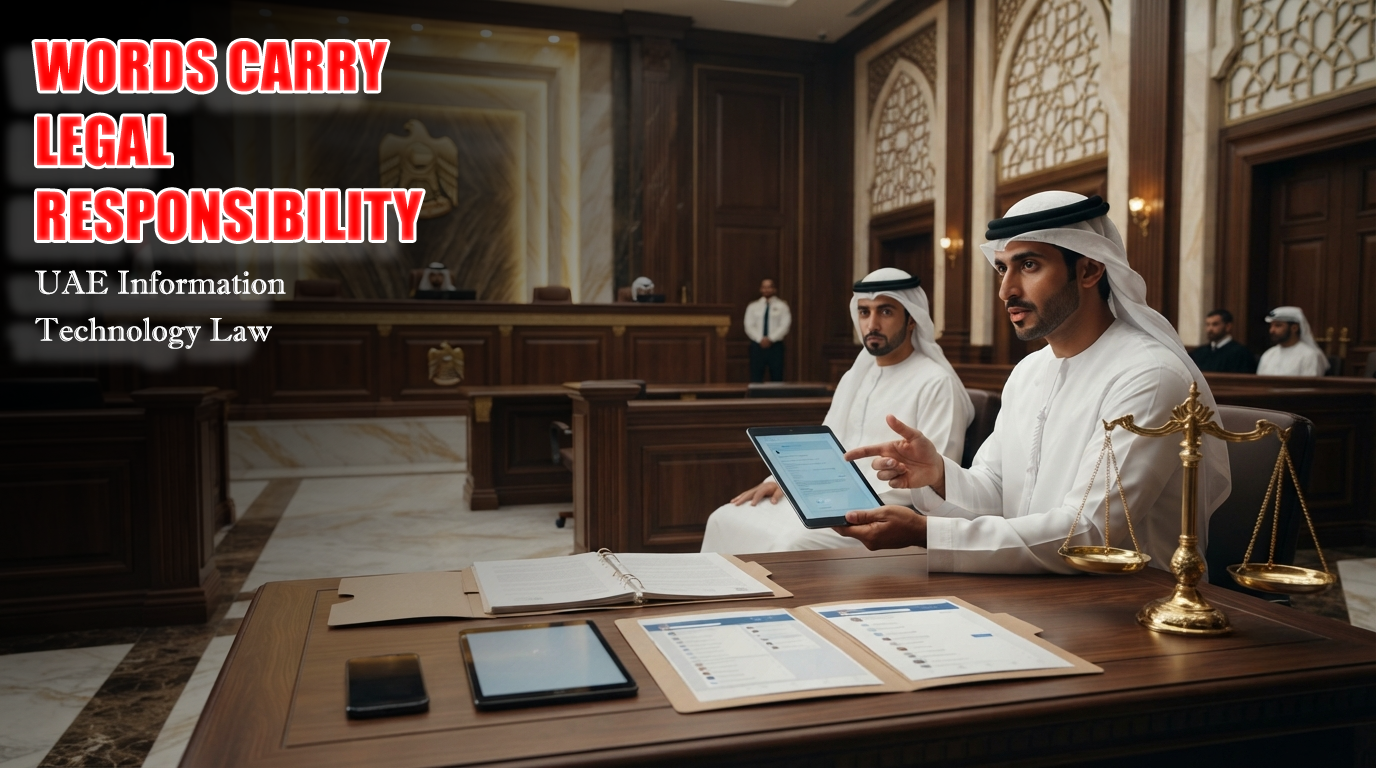
Is Every Negative Comment Considered Defamation?
No. Not every negative review or unfavorable opinion constitutes a criminal offense.
For example:
“I was dissatisfied with the company’s customer service because my inquiries were not answered.”
This generally reflects a personal experience without necessarily accusing the company of illegal conduct.
However, saying:
“This company steals customers’ money.”
is no longer simply an opinion. It may constitute a serious allegation capable of harming the company’s reputation and could expose the publisher to legal liability depending on the facts and available evidence.
The distinction depends on:
- The words used.
- Whether factual accusations are made.
- The surrounding context.
- The potential impact on the victim’s reputation.
When Do Words Become a Crime?
Words may become a criminal matter when they include:
- Offensive or insulting language.
- False accusations.
- Statements damaging another person’s reputation.
- Defamatory allegations.
- Publication of false information.
- Images, videos, or edited content intended to humiliate another person.
Each case is assessed individually based on its specific facts, evidence, and applicable UAE legislation.
Does Deleting a Post Eliminate Legal Responsibility?
Many people assume that deleting a post shortly after publication ends the matter.
In reality, this is not always the case.
The content may already have been viewed, copied, photographed, or shared by others before deletion. Consequently, deleting a post does not necessarily eliminate its legal consequences.
Liability depends on the available digital evidence and the circumstances surrounding the publication.
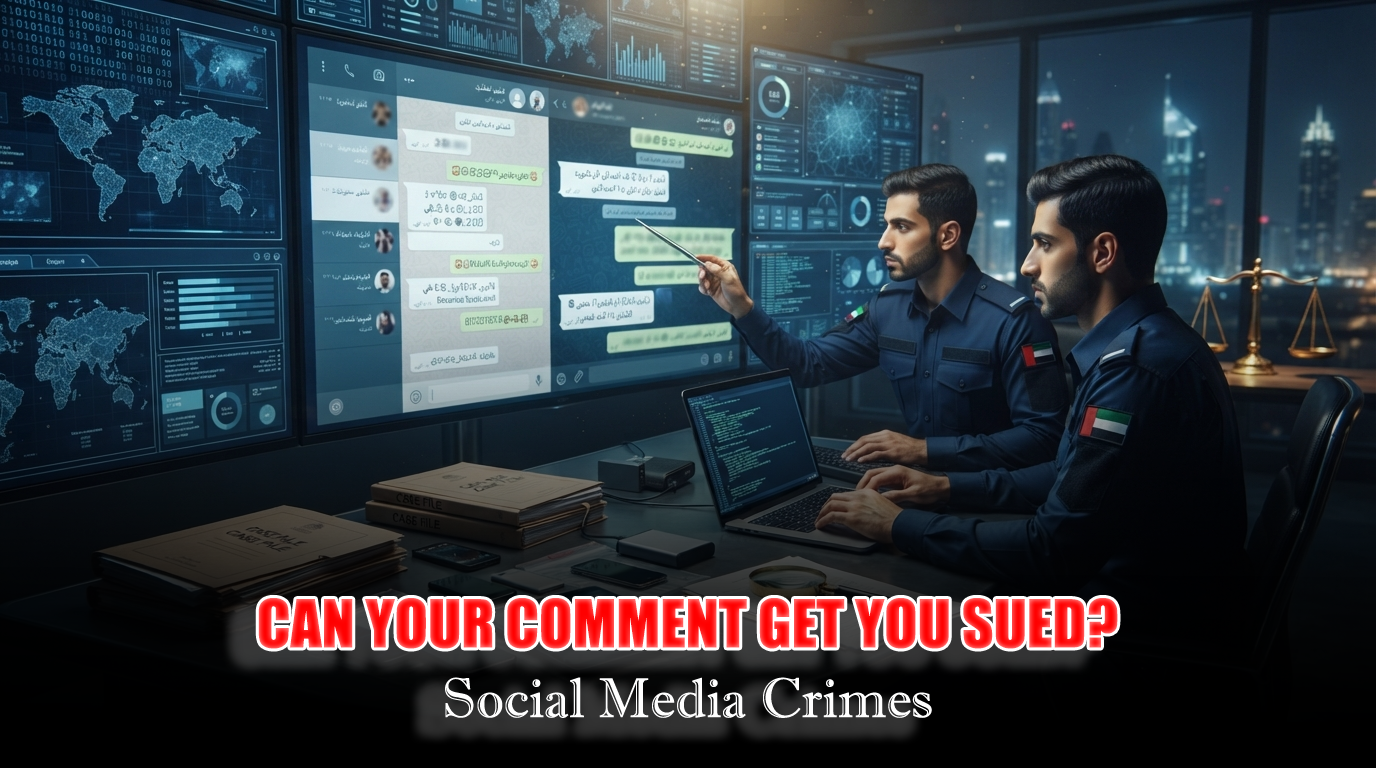
Can Sharing Someone Else’s Content Create Legal Liability?
Legal responsibility is not always limited to the original author.
Sharing, reposting, forwarding, or endorsing defamatory content may contribute to its wider distribution and increase the harm caused.
For this reason, reposting allegations or unverified information simply because they are circulating online does not protect a person from potential legal consequences.
What About Private Messages and WhatsApp Groups?
Electronic defamation may occur not only on public social media accounts but also within private conversations, emails, or WhatsApp groups.
The private nature of a conversation does not necessarily provide complete immunity from legal responsibility. Whether private communications may be used as evidence depends on the facts and legal circumstances surrounding each individual case.
Think Before You Post
Social media platforms have become places where news spreads instantly and emotions often outweigh careful judgment.
Many people react impulsively to sporting events, business disputes, political issues, or social controversies. What begins as an exchange of opinions may quickly turn into accusations, insults, or defamatory statements.
Not everything published online is accurate or trustworthy. Some posts may be misleading, edited out of context, or intentionally designed to provoke emotional reactions and encourage conflict.
Although online controversies often disappear within days, offensive comments frequently remain preserved through screenshots or digital records and may later become evidence in legal proceedings.
Pausing before posting is therefore not a sign of weakness—it is a demonstration of legal awareness and responsible online conduct.
Not every story deserves to be believed.
Not every provocation deserves a response.
Not every online argument should end in court.
Before You Publish, Consider the Legal Consequences
Social media provides valuable opportunities to express opinions and review products or services.
However, exercising freedom of expression should never result in harming another person’s dignity, reputation, or legal rights.
A person may have a legitimate complaint, yet using insulting language or making unsupported accusations could shift that individual from being the complainant to becoming the subject of legal proceedings.
Whether a statement amounts to electronic defamation depends on the wording, surrounding circumstances, available evidence, and the specific facts of each case.
How Can a Lawyer Help in Electronic Defamation Cases?
A lawyer specializing in cybercrime matters can assist by:
- Evaluating your legal position.
- Reviewing digital evidence.
- Providing legal advice before taking action.
- Representing clients before the competent authorities.
- Preparing legal defenses.
- Protecting clients’ legal rights throughout criminal proceedings.

Why Choose Mohammed Jasem Law Firm?
Mohammed Jasem Law Firm provides professional legal services in Electronic Defamation and Insult in the UAE, including legal consultations, representation in cybercrime cases, analysis of electronic evidence, and comprehensive legal support in accordance with UAE laws.
The firm is committed to protecting clients’ rights while providing practical legal solutions tailored to the circumstances of each case.
Frequently Asked Questions
Is every negative review considered electronic defamation?
No. UAE law distinguishes between lawful criticism and defamatory or insulting statements. Each case depends on its facts and the language used.
Does deleting a social media post prevent legal action?
Not necessarily. Deleted content may still exist through screenshots or digital records and could remain relevant as evidence.
Can sharing a defamatory post create legal liability?
Yes. Reposting or distributing defamatory content may expose a person to legal consequences depending on the circumstances.
Can private WhatsApp messages result in criminal liability?
They may. Private communications are not automatically exempt from legal scrutiny, and each situation is evaluated individually under applicable UAE law.
Conclusion
Electronic Defamation and Insult in the UAE has become increasingly significant with the rapid growth of digital communication and social media platforms. While UAE law protects freedom of expression, it also safeguards individuals against unlawful attacks on their reputation, dignity, and honor.
Before publishing comments, accusations, or opinions online, individuals should carefully consider both the factual basis of their statements and the potential legal consequences. If you have been subjected to online defamation or wish to understand your legal rights before taking action, obtaining professional legal advice is often the most effective way to assess your legal position.
Mohammed Jasem Law Firm provides experienced legal representation and strategic advice in cybercrime matters, helping individuals and businesses protect their rights in accordance with the laws of the United Arab Emirates.
Comments are closed