




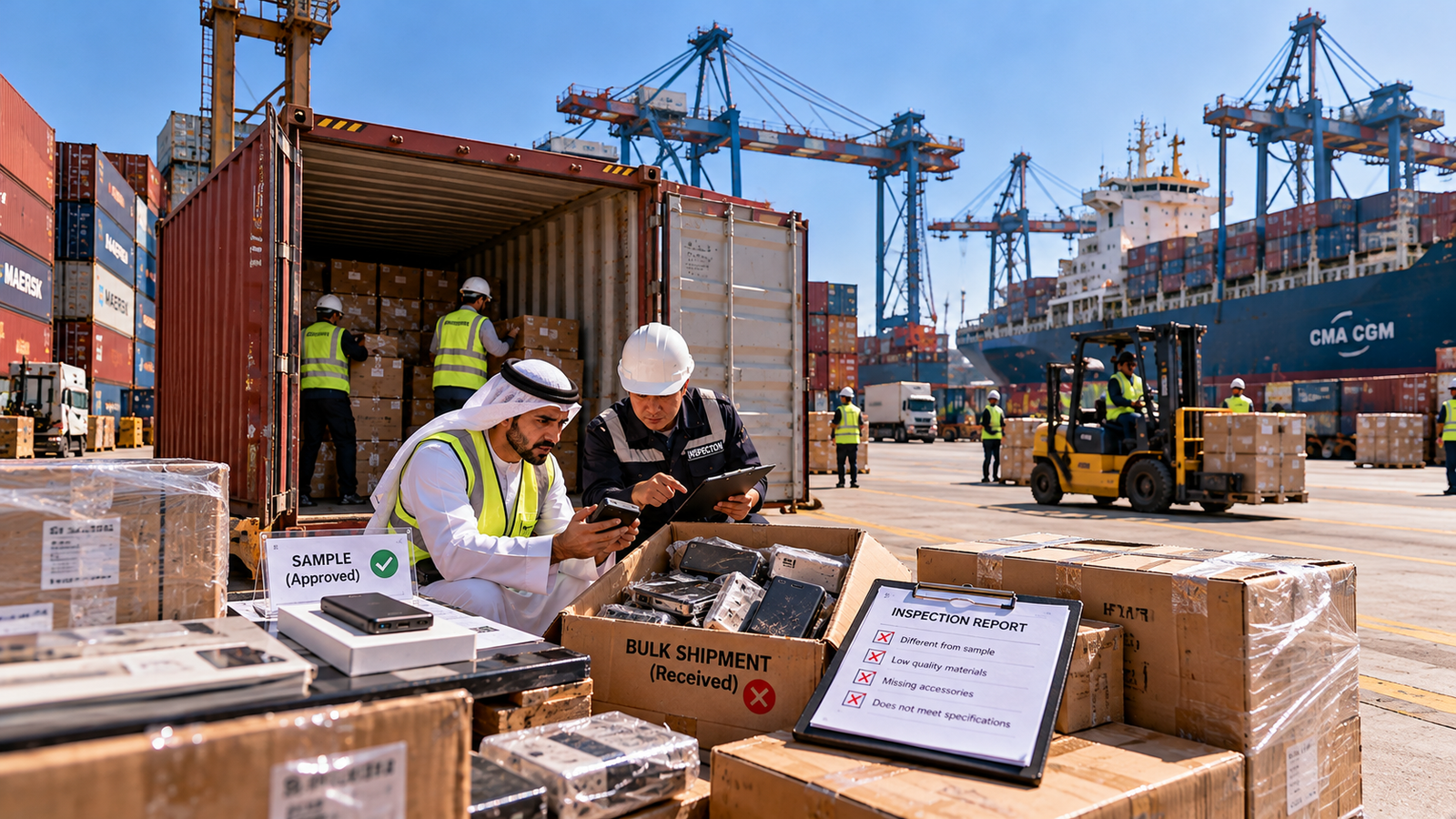
Importing from China to the UAE can offer businesses access to competitive prices, manufacturers and a wide range of products. However, international trade also involves legal and financial risks, particularly when payments are made before the goods are delivered or when several intermediaries are involved.
Problems may arise when a supplier fails to deliver the agreed goods, ships products that do not meet the specifications, changes the price after receiving payment, or disappears after receiving a deposit. Disputes can also arise between buyers, sourcing agents, shipping companies and intermediaries.
The key to protecting your money is to establish clear contractual obligations, verify the parties involved, document every payment and understand the legal options available if the transaction fails.
This article explains how to reduce the risks of importing from China to the UAE, what to include in a commercial contract, and what legal steps may be available if a supplier or intermediary breaches the agreement.

What Are the Main Risks of Importing from China to the UAE?
Import transactions often involve several parties, including the manufacturer, trading company, sourcing agent, shipping company, customs broker and UAE-based importer.
The more parties involved, the more important it becomes to establish who is responsible for each stage of the transaction.
Common risks include:
- Paying a supplier who does not deliver the goods.
- Receiving products that differ from the agreed specifications.
- Dealing with a company whose identity or authority has not been verified.
- Paying an intermediary without clearly defining their responsibilities.
- Discovering hidden charges after the agreement has been signed.
- Facing delays without clear contractual remedies.
- Receiving counterfeit or defective products.
- Losing money through false invoices or changed bank details.
- Being unable to establish which party is legally responsible for the loss.
A low purchase price does not necessarily mean a transaction is safe. Before transferring a deposit or making a substantial payment, the buyer should assess the supplier, the contract and the payment arrangements.
How Can You Protect Your Money When Importing from China?
The best approach is to complete several checks before committing significant funds.
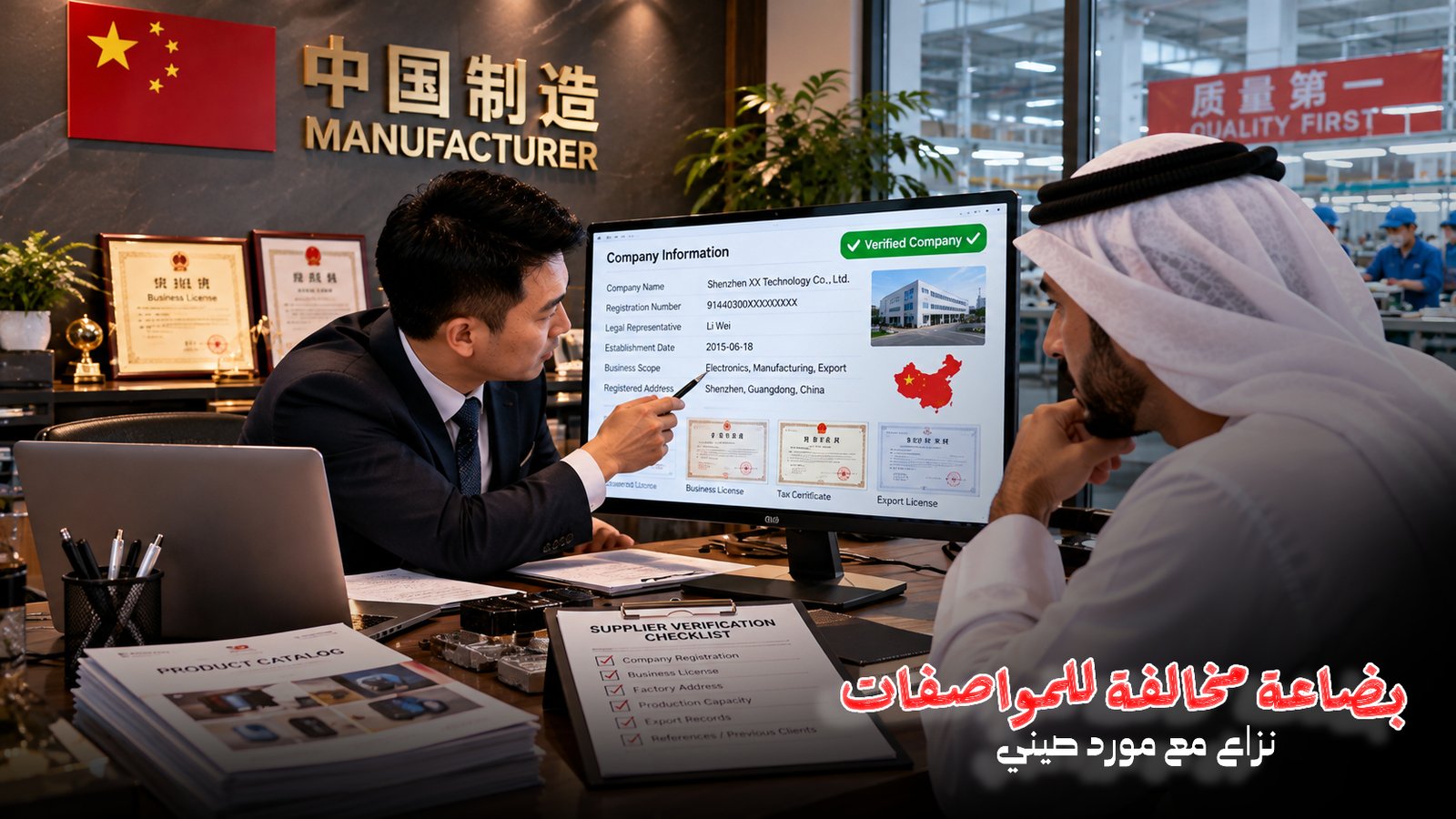
1. Verify the Supplier’s Identity
Before entering into a contract, obtain the supplier’s full legal name, registered business details, address and contact information.
Confirm whether you are dealing with the actual manufacturer, a trading company or an intermediary.
Where appropriate, request business registration documents and verify the information through reliable sources. Also confirm that the person signing the contract or receiving payment has the authority to act for the company.
A social media profile, website or online marketplace account alone does not establish that a supplier is reliable.
2. Confirm the Bank Account Details
Payment instructions should be verified carefully, particularly when the supplier changes its bank account details shortly before payment.
Before transferring money:
- Confirm the beneficiary’s name.
- Compare the account details with the agreed contract and invoice.
- Independently verify any change to payment instructions.
- Keep the bank transfer confirmation.
- Avoid sending money to an unrelated third party without a documented and verified explanation.
If you suspect that payment instructions have been altered fraudulently, contact your bank immediately.
3. Request a Written Contract
A written contract should identify the parties and explain exactly what each party must do.
Avoid relying solely on verbal promises or informal messages when significant sums are involved.
The contract should clearly establish the goods being purchased, the total price, the payment schedule, the delivery arrangements, the inspection process and the consequences of non-performance.
4. Check the Goods Before Shipment
Where commercially appropriate, arrange for product samples, factory inspections or independent quality inspections before the goods are shipped.
The inspection process should be agreed in writing. It should specify the applicable standards, acceptable tolerances, inspection timing and procedure for dealing with defective or non-conforming products.
5. Keep Complete Transaction Records
Preserve the contract, invoices, purchase orders, payment receipts, email correspondence, messages, shipping documents and inspection reports.
These records may be important if you need to establish what was agreed, what was paid and how the other party failed to perform.
Why Is a Written Import Contract Important?
A written contract helps reduce uncertainty by defining the rights and obligations of each party.
Under the UAE’s commercial legal framework, commercial transactions and contractual obligations may be governed by the applicable provisions of Federal Decree-Law No. 50 of 2022 on the Commercial Transactions Law, alongside other relevant legislation and the contract’s applicable governing law.
For an international supply transaction, the contract should address the following matters.
Identification of the Contracting Parties
Include the full legal names and addresses of the buyer and seller, together with their relevant registration details.
If an intermediary is involved, clarify whether that intermediary is acting as an agent, broker, purchasing representative, reseller or contracting party.
This distinction matters because the intermediary’s legal responsibilities may differ depending on the actual arrangement.
Detailed Product Specifications
Describe the products accurately, including:
- Product name and model.
- Quantity.
- Materials and dimensions.
- Technical specifications.
- Packaging requirements.
- Applicable quality standards.
- Branding and labelling requirements.
- Required certificates or approvals, where applicable.
Attach product schedules, approved samples or technical drawings when necessary.
A vague description can make it more difficult to prove that the goods supplied did not meet the agreement.
Price and Payment Terms
The contract should state the total price, currency, deposit, instalments, payment deadlines and any additional charges.
It should also specify what conditions must be met before each payment becomes due.
For example, the parties may agree that a portion of the price is payable after production, subject to an inspection report or another clearly defined milestone.
The appropriate payment structure depends on the transaction, the supplier’s reliability and the buyer’s commercial requirements.
Delivery and Shipping Terms
The agreement should identify the delivery location, shipment deadlines, responsibilities for freight and insurance, and the documents that must be provided.
If the parties use Incoterms, identify the specific rule and version agreed upon, together with the named place or port.
Incoterms help allocate certain delivery responsibilities, costs and risks, but they do not replace the full commercial contract.
Inspection and Defective Goods
Specify how the goods will be inspected and what happens if they fail to meet the agreed specifications.
Possible contractual remedies may include replacement, repair, a price reduction, reimbursement or another agreed solution, subject to the contract and applicable law.
Breach of Contract and Dispute Resolution
The contract should address the consequences of delayed delivery, non-delivery, defective goods, non-payment and other material breaches.
It should also identify the governing law and the agreed dispute-resolution mechanism, such as the competent courts or arbitration, where appropriate.
For cross-border transactions, these provisions should be reviewed carefully before signing.
What Should You Do If a Chinese Supplier Takes Your Money and Does Not Deliver?
If you have paid a supplier and the goods have not arrived, begin by organizing the evidence and identifying the nature of the breach.
Step 1: Review the Contract and Payment Terms
Check the agreed delivery date, payment conditions, cancellation rights and any notice requirements.
Determine whether the supplier has missed a contractual deadline or whether a payment or delivery condition remains outstanding.
Step 2: Send a Formal Written Notice
Depending on the contract and applicable law, you may need to send a formal notice requesting performance, delivery, repayment or another contractual remedy.
The notice should identify the agreement, the amount paid, the outstanding obligation and the action requested.
Keep proof of delivery or receipt of the notice.
Step 3: Preserve All Evidence
Keep copies of:
- The signed contract.
- Purchase orders and invoices.
- Bank transfer receipts.
- Supplier messages and emails.
- Promised delivery dates.
- Shipping documents.
- Any admission that the supplier received the money.
- Any explanation for the failure to deliver.
Do not delete conversations or rely solely on screenshots if original records are available.
Step 4: Assess the Available Legal Options
Depending on the parties’ locations, the contract, the amount involved and the available evidence, possible options may include negotiation, mediation, arbitration, court proceedings or enforcement of an existing judgment or award.
The correct route should be assessed before proceedings are started, especially where the supplier and assets are located outside the UAE.
Is a Supplier’s Failure to Deliver Always Fraud?
No. A failure to deliver goods does not automatically prove criminal fraud.
The situation may involve a contractual breach, a commercial dispute, financial difficulties or conduct that potentially constitutes fraud. The legal classification depends on the facts and evidence.
For example, a genuine supplier experiencing a documented production delay may be in breach of contract without necessarily having committed a criminal offence.
By contrast, evidence that a person deliberately used false identities, fabricated documents or deceptive representations to obtain money may justify further investigation for possible fraud.
It is important to distinguish between a claim for contractual performance or repayment and a criminal complaint based on suspected deliberate deception.
What If the Supplier Sends the Wrong or Defective Goods?
If the delivered goods do not match the contract, document the discrepancy immediately.
Take photographs or videos, preserve packaging and labels, obtain inspection reports where appropriate, and compare the delivered goods with the agreed specifications.
Notify the supplier in accordance with the contract’s notice requirements.
Depending on the agreement and applicable law, potential remedies may include replacement, repair, a price reduction, rejection of the goods or compensation for recoverable losses.
Do not assume that you can reject all goods or recover every expense automatically. The available remedy may depend on the nature of the defect, the contract, applicable deadlines and the governing law.
What Is the Legal Position If an Intermediary Is Involved?
An intermediary may help identify manufacturers, negotiate prices, arrange inspections or coordinate shipping. However, the intermediary’s legal responsibilities depend on the role they agreed to perform.
Before paying an intermediary, establish:
- Whether the intermediary is acting on behalf of the buyer or supplier.
- Whether the intermediary is responsible for selecting or verifying the manufacturer.
- Whether the intermediary guarantees any aspect of the transaction.
- Whether the intermediary receives or controls the purchase funds.
- Whether the intermediary is responsible for inspecting goods.
- Whether the intermediary is liable for errors, misrepresentations or failure to perform agreed services.
If the intermediary only introduces the buyer to a supplier, their obligations may differ from those of a company that contracts to supply the goods itself.
The contract should reflect the actual commercial arrangement rather than relying on a general description such as “agent” or “broker.”
What If the Supplier and the Intermediary Blame Each Other?
Disputes can arise when the supplier claims that it fulfilled its obligations while the intermediary claims that the manufacturer is responsible.
To assess the situation, examine the contractual relationships between the parties.
Important questions include:
- Who signed the supply contract?
- Who issued the invoice?
- Who received the payment?
- Who selected the manufacturer?
- Who agreed to the product specifications?
- Who undertook to inspect the goods?
- Who was responsible for delivery?
- Did any party make specific guarantees or representations?
The answers can help determine which party may be responsible for the loss and which legal proceedings may be appropriate.
A party should not be assumed liable merely because it participated in the transaction. Liability must be assessed according to the relevant agreement, conduct and applicable law.
Can You Recover Money Transferred to a Supplier in China?
Recovery may be possible, but it is not guaranteed.
The outcome may depend on:
- The identity of the recipient.
- The country in which the recipient and assets are located.
- The contractual documents.
- The payment method.
- Whether the funds can be traced.
- The applicable governing law.
- The agreed court or arbitration jurisdiction.
- Whether a judgment or arbitral award can be recognized and enforced where the assets are located.
If the payment was made recently and fraud is suspected, contact your bank or payment provider promptly to ask whether any protective action is available.
If the recipient is outside the UAE, obtaining a UAE judgment may not, by itself, guarantee recovery from assets abroad. Recognition and enforcement requirements in the relevant jurisdiction may need to be considered.
What Documents Are Needed for an Import Dispute?
The documents required depend on the circumstances, but the following records are often useful:
- Supply contract or purchase agreement.
- Purchase order and commercial invoice.
- Proof of payment.
- Product specifications and approved samples.
- Emails and messages with the supplier.
- Documents concerning the intermediary.
- Shipping and transport documents.
- Customs and import documents, where applicable.
- Inspection reports and photographs.
- Formal notices and the supplier’s responses.
- Records of losses or additional expenses claimed.
Organizing these documents chronologically can make it easier to assess the dispute and determine the next legal step.
How Can a UAE Lawyer Help With an Import Dispute Involving China?
A lawyer can review the commercial documents and help identify the available legal options.
Depending on the case, legal assistance may include:
Contract Review
Reviewing the agreement to identify unclear obligations, payment risks, delivery provisions, liability clauses and dispute-resolution terms.
Legal Notices
Preparing or reviewing a formal notice demanding performance, delivery, repayment or another remedy available under the contract and applicable law.
Assessing Liability
Examining the roles of the supplier, intermediary, buyer and other parties to determine which obligations may have been breached.
Dispute Resolution
Assessing whether negotiation, mediation, arbitration or court proceedings are appropriate under the agreement and applicable legal framework.
Recovery and Enforcement
Considering the legal routes available to seek repayment or compensation and assessing any recognition or enforcement issues arising from the international nature of the transaction.
The appropriate approach depends on the evidence, the parties’ locations, the contract and the value of the claim.
How Can You Reduce Legal Risks Before Importing from China?
Prevention is usually less costly than pursuing a cross-border dispute after money has been lost.
Before placing an order:
- Verify the supplier’s legal identity.
- Confirm who will receive the payment.
- Use a written contract with clear specifications.
- Define the intermediary’s responsibilities.
- Agree on inspection and acceptance procedures.
- Set clear delivery milestones.
- Confirm the shipping terms and named destination.
- Identify the governing law and dispute-resolution forum.
- Verify any required UAE import permits, product registrations or conformity approvals.
- Keep a complete record of the transaction.
For regulated products, check the specific requirements applicable to the goods before placing the order or arranging shipment.
Frequently Asked Questions About Importing from China to the UAE
How can I protect my money when importing from China?
Verify the supplier, confirm the payment beneficiary, use a written contract, establish clear delivery and inspection terms, and preserve all transaction records.
What can I do if a supplier receives payment but does not ship the goods?
Review the contract, preserve proof of payment and communications, send an appropriate written notice where required, and assess the available dispute-resolution or recovery procedures.
Can I file a criminal complaint against a Chinese supplier?
A criminal complaint may be appropriate if the available evidence indicates suspected criminal conduct. A simple contractual breach does not automatically establish fraud. The facts and jurisdiction should be assessed before deciding how to proceed.
Is the intermediary responsible if the transaction fails?
Not automatically. Responsibility depends on the intermediary’s contractual role, the obligations undertaken, the representations made and the applicable law.
Can I recover my money if the supplier is outside the UAE?
Recovery may be possible, but it can involve cross-border procedures. The supplier’s location, the location of its assets, the contract and the relevant enforcement rules may affect the process.
Should I pay the full amount before shipment?
There is no single payment structure suitable for every transaction. Consider the supplier’s reliability, the transaction’s value and the available safeguards. Where commercially feasible, link payments to clearly defined milestones and verification steps.
Which law applies to an international supply contract?
The applicable law depends on the contract, the parties’ circumstances and the relevant conflict-of-law rules. The fact that the buyer is in the UAE does not automatically mean that every aspect of the dispute will be governed exclusively by UAE law.
What should an import contract include?
It should identify the parties, describe the goods, specify the price and payment terms, allocate delivery responsibilities, establish inspection procedures, address breach and remedies, and provide a clear dispute-resolution mechanism.

Conclusion: Protect Your Money Before Importing from China
Importing from China to the UAE can expose businesses to significant financial risks when supplier identities, payment arrangements, product specifications and contractual responsibilities are not clearly established.
The most effective safeguards are a verified supplier, a detailed written agreement, controlled payment arrangements, proper inspection procedures and complete transaction records.
If a dispute occurs, the first step is to determine what the contract requires, which party may be responsible and where the available legal remedies can be pursued.
Legal Consultant Mohammed Jasem can assist with reviewing commercial agreements, assessing supplier and intermediary disputes, preparing legal notices and explaining the available legal options under the applicable UAE legal framework.
Legal Disclaimer: This article is for general informational purposes only and does not constitute legal advice. The appropriate legal position depends on the contract, the evidence, the parties’ locations and the law applicable to the transaction.
Comments are closed