





Juvenile cases in the UAE are governed by special legal provisions designed to protect children, promote rehabilitation and ensure that minors are treated in a manner appropriate to their age and circumstances. Unlike adult criminal proceedings, juvenile cases focus not only on accountability but also on education, social support and reintegration into society.
The main legislation governing these cases is Federal Law No. 6 of 2022 Concerning Juvenile Delinquents and Juveniles at Risk of Delinquency, together with its implementing regulations and other applicable UAE laws.
Understanding how juvenile justice works is essential for parents, guardians and families dealing with a criminal allegation involving a minor.
What Is a Juvenile Case Under UAE Law?
A juvenile case generally involves a person under the age of 18 who is suspected of committing an offence or who may be at risk of delinquency under the applicable legal framework.
UAE law distinguishes between a juvenile who has committed an offence and a child who is considered at risk of delinquency because their physical, psychological, educational or social well-being may be exposed to circumstances that could lead to delinquent behaviour.
The legal approach considers the child’s age, personal circumstances, the nature of the alleged act and the child’s best interests.
At What Age Does Criminal Responsibility Begin in the UAE?
The age of the child at the time of the alleged offence is a key factor in determining the applicable legal procedures and measures.
Children Under 12 Years of Age
Under Article 5 of Federal Law No. 6 of 2022, a juvenile who has not reached the age of 12 when committing an act punishable by law is not criminally liable.
However, the Public Prosecution may order appropriate administrative measures under the law when necessary. The absence of criminal liability does not mean that child protection or rehabilitation measures cannot be taken.
Children Aged 12 to Under 16
Where a child aged 12 but under 16 commits an offence punishable under UAE law, the court applies the judicial measures provided for by the Juvenile Law rather than the ordinary criminal penalties applicable to adults.
The court considers the child’s age, the seriousness and nature of the act, the child’s family and social circumstances, and other relevant factors when deciding on the appropriate measure.
Juveniles Aged 16 to Under 18
Juveniles who are at least 16 but have not yet reached 18 are also subject to the special juvenile justice framework.
The law provides specific rules for judicial measures and detention. Where an offence would ordinarily carry imprisonment or the death penalty, the applicable juvenile provisions replace those penalties with detention, subject to the statutory limits. Detention may not exceed ten years and must also comply with the law’s limit linked to the maximum penalty prescribed for the original offence.
The exact legal consequences depend on the offence, the juvenile’s age and the applicable statutory provisions.
Can a Minor Be Sentenced to Prison in the UAE?
Juveniles are not treated in the same way as adult offenders. The Juvenile Law establishes special rules that prohibit imposing the death penalty or ordinary imprisonment on a juvenile and provides for specific juvenile measures and detention where legally applicable.
Depending on the circumstances, the court may order measures such as:
- Judicial supervision.
- Electronic monitoring.
- Community service.
- Prohibition from carrying out certain work.
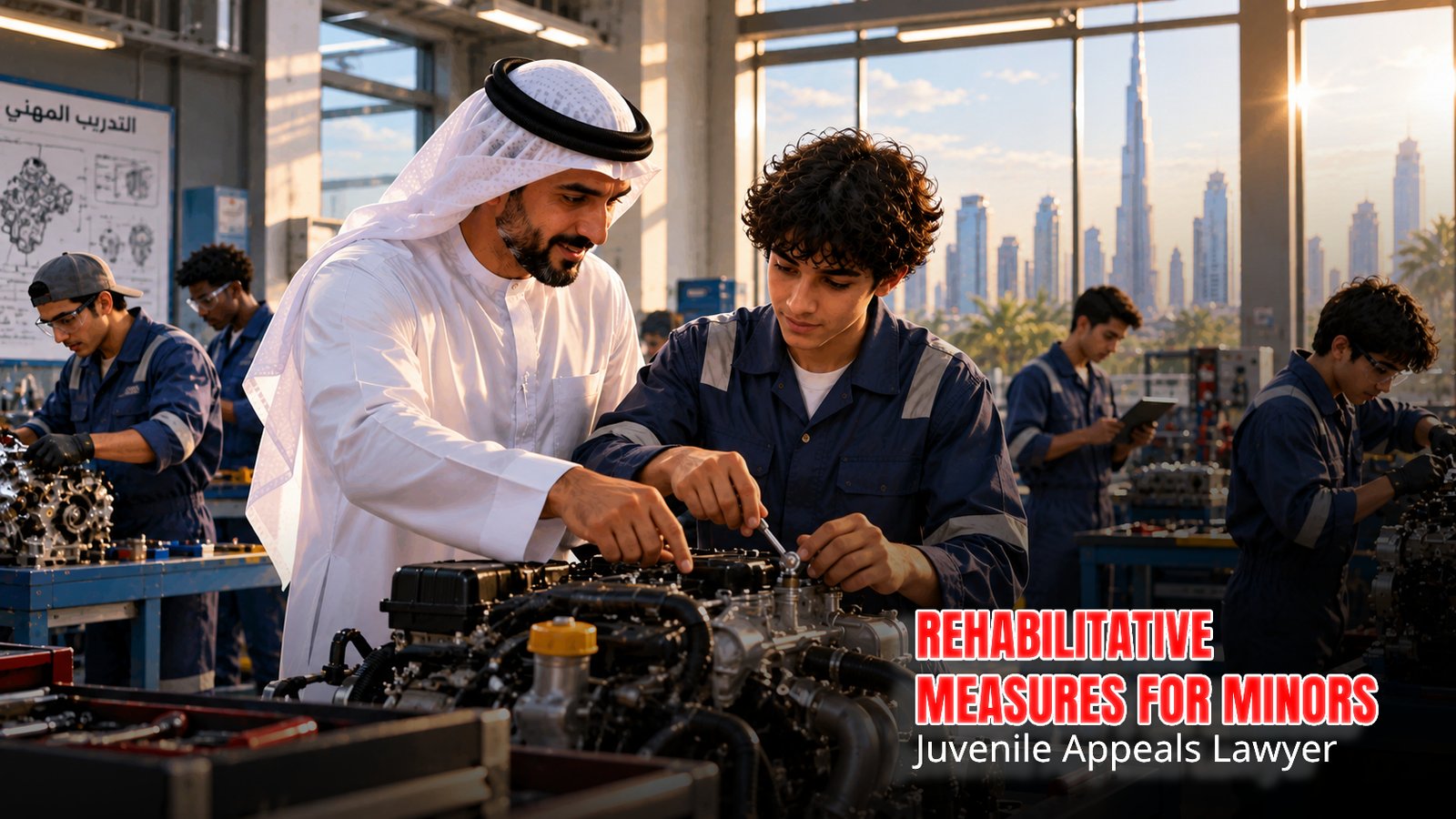
- Mandatory vocational training.
- Placement in a healthcare facility when appropriate.
- Placement in a juvenile facility.
- Placement in the National Counselling Centre.
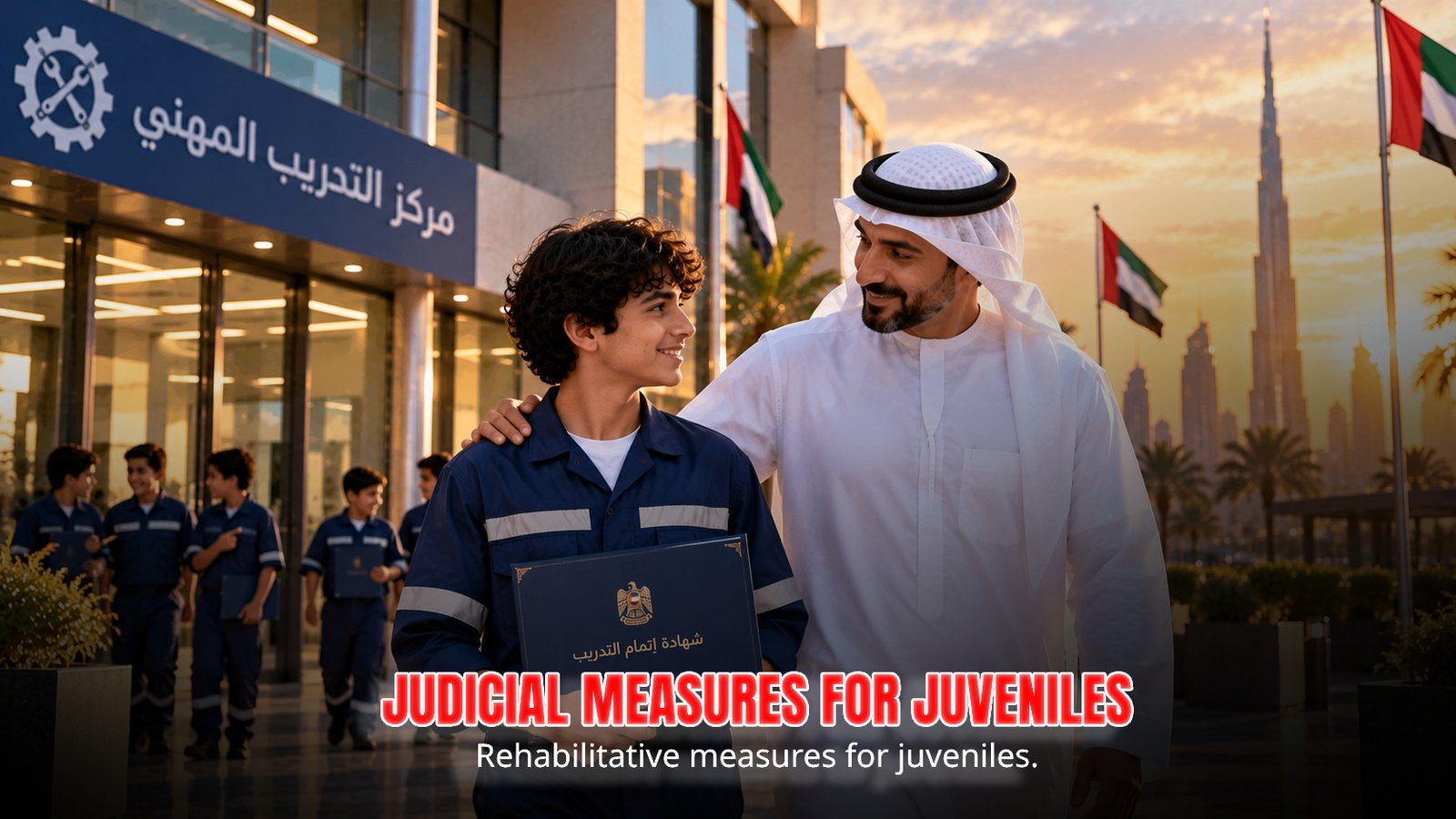
The court determines the appropriate measure based on the law and the individual circumstances of the case. These measures are intended to support rehabilitation and reduce the risk of reoffending.
What Happens During a Juvenile Criminal Case?
The procedure depends on the nature of the alleged offence and the circumstances of the child. The case may involve the police, the Public Prosecution, child-protection specialists and the competent court.
The process may include the following stages:
1. Reporting and Initial Investigation
The authorities receive the report and investigate the alleged offence. The child’s age must be established using the legally accepted methods of proof.
2. Public Prosecution Proceedings
The Public Prosecution examines the available evidence and determines the appropriate legal action in accordance with the law.
3. Assessment of the Juvenile’s Circumstances
Relevant factors may include the child’s family environment, psychological and social circumstances, education, the seriousness of the alleged act and any assessment prepared by a child-protection specialist.
4. Court Proceedings and Judicial Measures
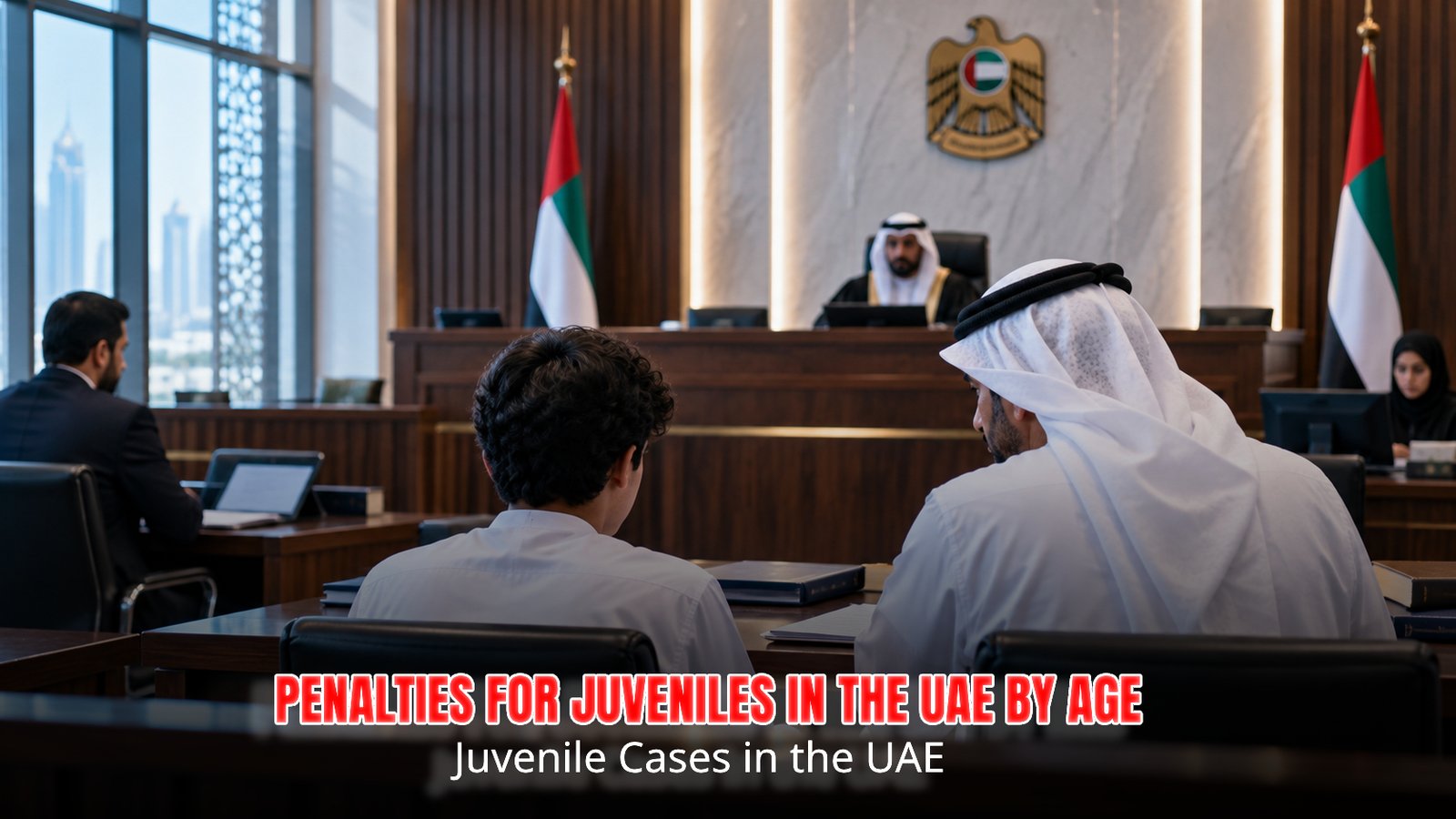
Where the case proceeds to court, the judge considers the evidence and the applicable juvenile provisions before determining the appropriate outcome.
Each case is assessed individually. The final decision depends on the facts, the evidence and the relevant legislation.
Are Juvenile Cases Confidential in the UAE?
Yes. UAE law provides important protections for the privacy and reputation of juveniles.
The official UAE Government guidance explains that publishing a juvenile’s name, photograph, investigation details, trial proceedings or judgment in the media or on social media is prohibited unless authorised by the court or Public Prosecution in accordance with the law.
These protections help prevent unnecessary harm to the child and their family and support the child’s rehabilitation.
Parents, guardians and other individuals should therefore avoid sharing identifying information, documents or allegations concerning a minor on social media. Publishing such material may create additional legal issues.
What Rights Does a Juvenile Have in the UAE?
A juvenile involved in a criminal case benefits from special legal protections under the applicable legislation. Depending on the circumstances, these protections include:
- Treatment in accordance with the juvenile justice framework.
- Consideration of the child’s age and best interests.
- Assessment of relevant family, psychological and social circumstances.
- Application of the judicial measures prescribed by law.
- Protection of privacy and reputation.
- Appropriate legal representation and assistance in accordance with the applicable procedural rules.
Parents or guardians should seek qualified legal advice as early as possible to understand the allegations, the procedural stage and the options available under UAE law.
What Should Parents Do If Their Child Is Accused of a Crime?
If a minor is accused of an offence, parents and guardians should take the matter seriously and avoid actions that could prejudice the case.
Recommended steps include:
- Confirm the procedural status: Determine whether the matter is at the police investigation, Public Prosecution or court stage.
- Preserve relevant evidence: Keep messages, documents, photographs and other material that may be relevant to the allegations.
- Avoid public discussion: Do not publish the child’s identity or details of the investigation online.
- Obtain legal advice: Have the allegations and available evidence reviewed by a qualified legal professional familiar with UAE juvenile law.
- Cooperate through the proper legal channels: Respond to official requests appropriately and ensure that the child’s rights are respected throughout the proceedings.
Early legal advice can help parents understand the process, prepare relevant documents and assess the appropriate response.
Can a Juvenile Case Affect a Child’s Future?
A juvenile case can have consequences that depend on its outcome, the nature of the alleged offence and the measures imposed. However, the juvenile justice framework is designed to account for the child’s age and prospects for rehabilitation.
The legal protections surrounding juvenile proceedings, including restrictions on disclosure of identifying information, are important safeguards for the child’s privacy.
Families should obtain case-specific advice rather than assume that every allegation results in the same legal or long-term consequences.
Frequently Asked Questions
Can a child under 12 be held criminally responsible in the UAE?
No. Under Article 5 of Federal Law No. 6 of 2022, a child who has not reached 12 years of age at the time of the act is not criminally liable. Appropriate administrative or protective measures may still be considered under the law.
Can a juvenile be sentenced to life imprisonment?
The Juvenile Law establishes special rules for juveniles and prohibits imposing ordinary imprisonment or the death penalty as adult criminal penalties. Where an offence carries imprisonment or the death penalty, the law provides for detention subject to specific statutory limits.
Can the identity of a juvenile accused of a crime be published?
The UAE provides specific protections against publishing a juvenile’s name, photograph and details of the investigation or proceedings, unless disclosure is authorised by the competent court or Public Prosecution in accordance with the law.
Does every juvenile offence lead to detention?
No. The law provides various judicial measures, and the appropriate outcome depends on the child’s age, the offence, the circumstances and the applicable legal provisions. Detention is not the automatic outcome of every juvenile case.
Which law governs juvenile cases in the UAE?
The principal legislation is Federal Law No. 6 of 2022 Concerning Juvenile Delinquents and Juveniles at Risk of Delinquency, together with Cabinet Resolution No. 133 of 2023 concerning its Executive Regulations and any other applicable legislation.
Legal Assistance in Juvenile Cases in the UAE
Juvenile cases require careful consideration of the evidence, procedural requirements and legal protections available to minors. Parents and guardians should understand the applicable law before taking steps that may affect the child’s rights or the outcome of the case.
Legal Consultant Mohammed Jasem provides legal consultation concerning UAE law, including guidance on criminal proceedings and the legal options available in individual cases.
For advice tailored to a specific situation, the relevant documents and circumstances should be reviewed by a qualified legal professional.
Legal Disclaimer
This article is provided for general informational purposes only and does not constitute legal advice. The outcome of any juvenile case depends on its facts, the applicable legislation and the decisions of the competent authorities. The official Arabic legislation and its applicable amendments should be consulted when assessing a specific case.
Comments are closed