




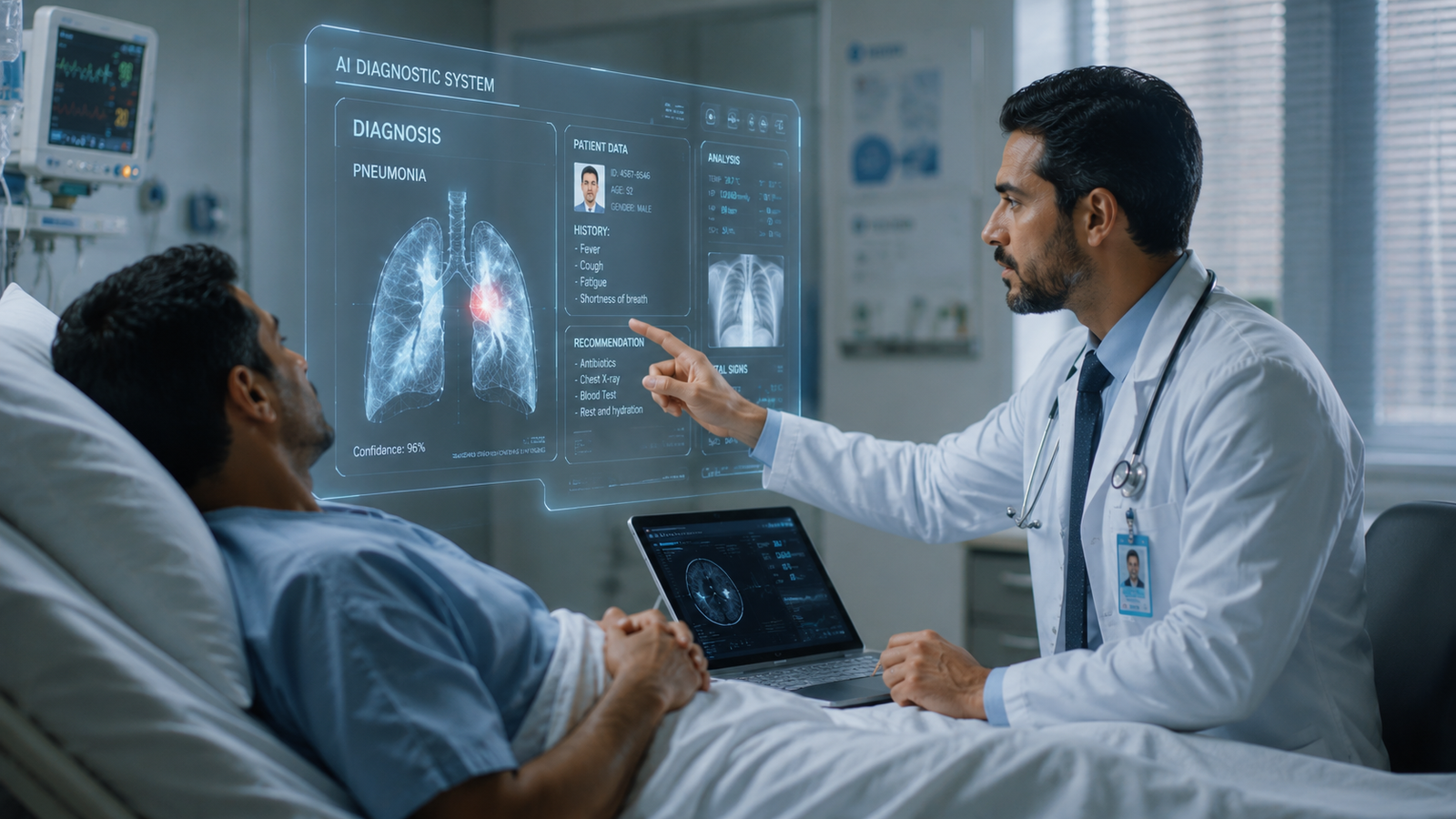
Artificial intelligence is no longer a futuristic technology. It is already being used in hospitals, clinics, and medical centers to analyze medical images, support diagnosis, process large amounts of medical data, assist in treatment decisions, and support robotic surgery.
Although artificial intelligence has contributed significantly to the development of healthcare, it does not guarantee that every result or recommendation will be accurate.
Just as a doctor can make a medical mistake, an artificial intelligence system can also produce an inaccurate result or an inappropriate recommendation.
This raises an important legal question:
Who is responsible when artificial intelligence causes harm to a patient?
Could the responsibility fall on the doctor, the medical facility, the software developer, the manufacturer, or the party responsible for operating the system?
This article explains medical AI errors, their causes, potential liability, patient compensation claims, and the importance of human supervision.
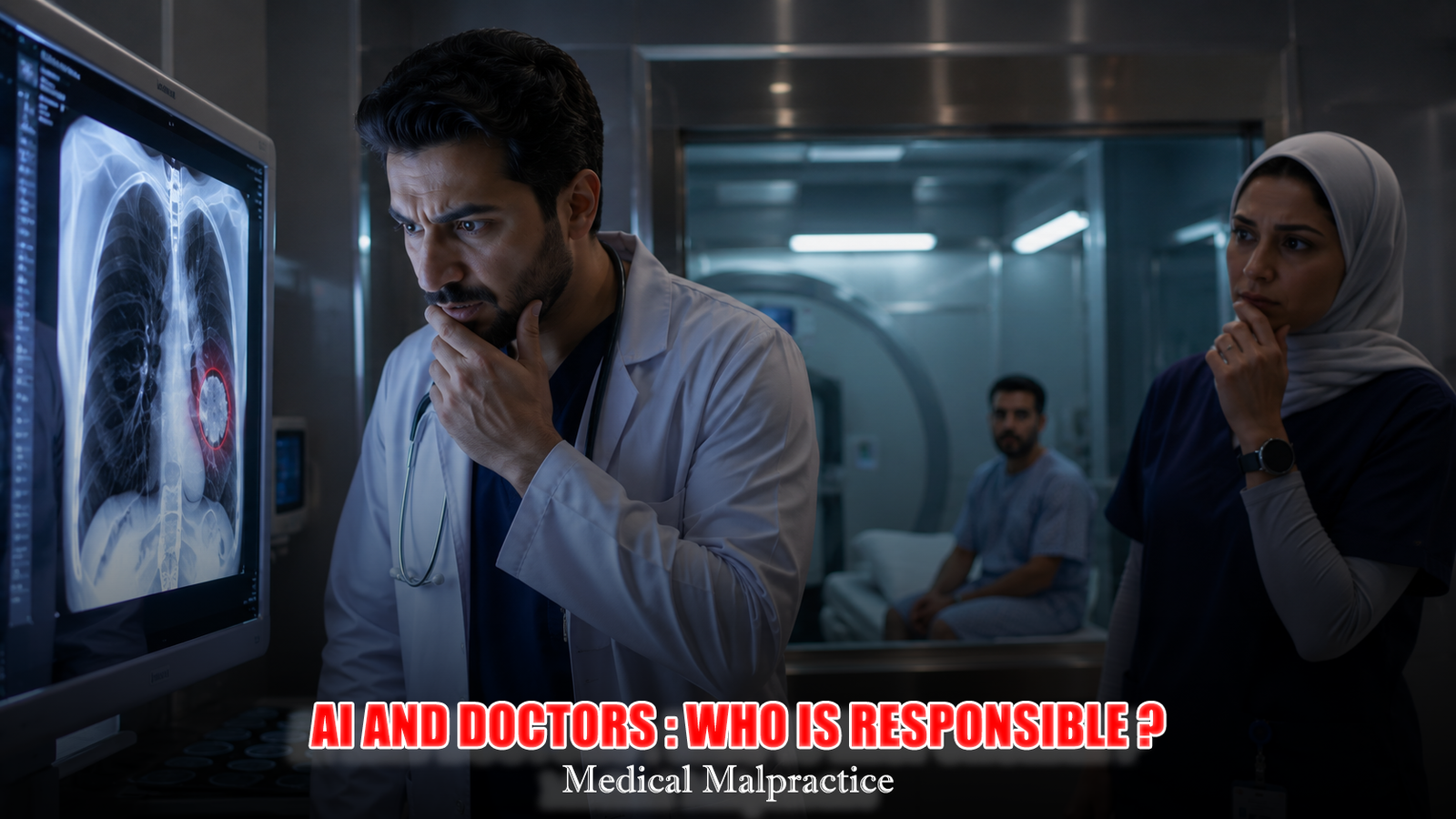
What Are Medical AI Errors?
Medical AI errors refer to incorrect results, decisions, or recommendations generated by artificial intelligence systems used in healthcare.
These errors may occur in:
- Medical diagnosis
- Medical imaging
- Treatment recommendations
- Robotic surgery
- Patient monitoring
- Medical data analysis
- Disease prediction
An error may occur because of defective software, incomplete data, inaccurate information, biased training data, technical problems, or improper use of the system.
For example, an AI system may incorrectly analyze a medical image and fail to identify an important sign of disease. If a doctor relies on that result without conducting an independent medical assessment, the patient may experience a delayed diagnosis or inappropriate treatment.
For this reason, artificial intelligence in healthcare requires continuous human supervision, particularly when the decision directly affects a patient’s health or life.
How Is Artificial Intelligence Used in Healthcare?
Artificial intelligence is now used in several areas of modern medicine.
AI for Disease Diagnosis
AI systems can analyze medical images, test results, and patient information to help healthcare professionals identify certain diseases.
AI for Medical Imaging
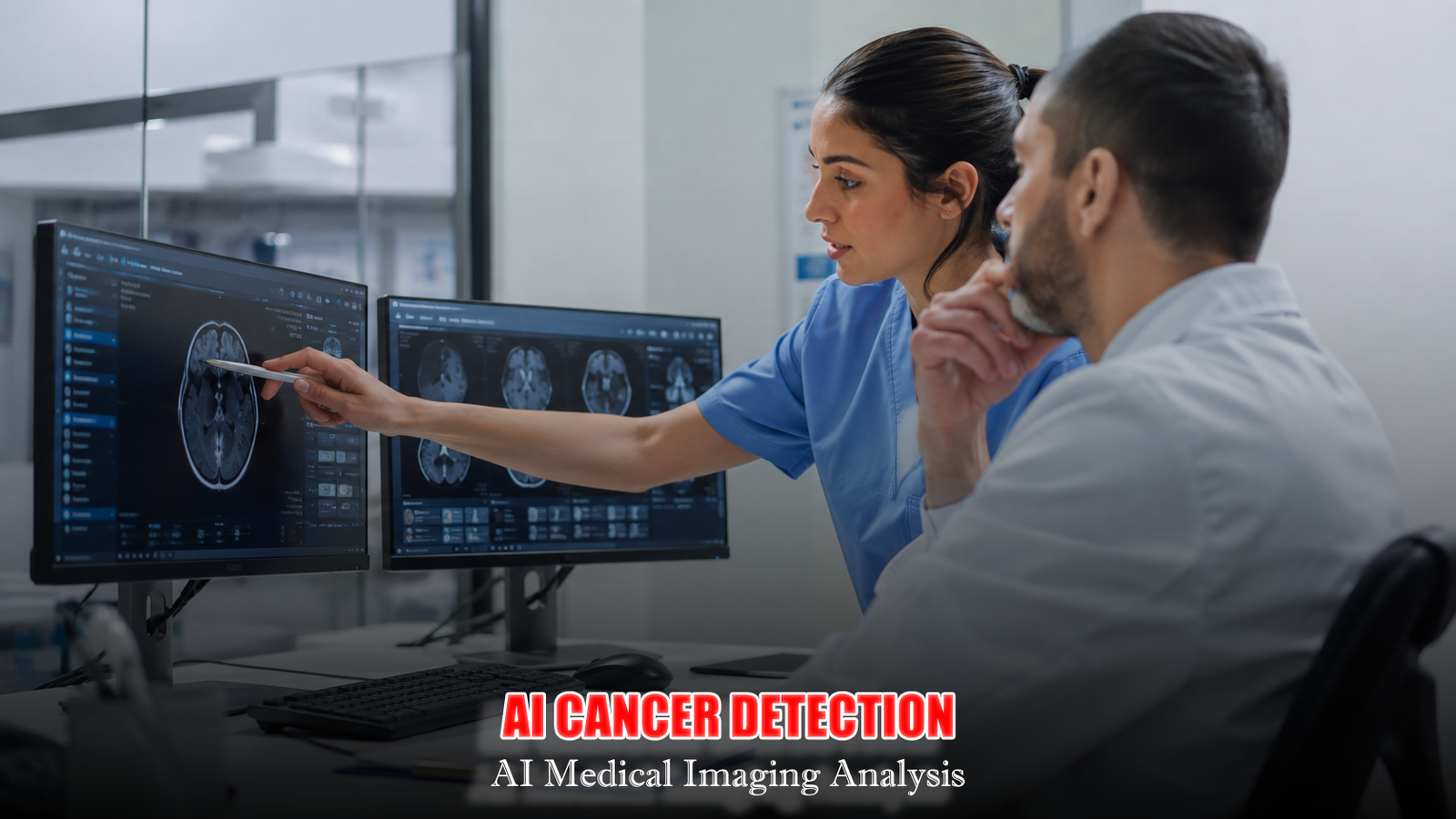
Some AI algorithms can examine X-rays, scans, and other medical images and identify patterns that may assist doctors in detecting abnormalities.
AI for Tumor Detection
Machine learning technologies can analyze medical images and data to help identify certain tumors and abnormal changes.
AI for Clinical Decision Support
Artificial intelligence can provide information, predictions, and possible outcomes that help doctors evaluate a patient’s condition and make informed medical decisions.
Robotic Surgery
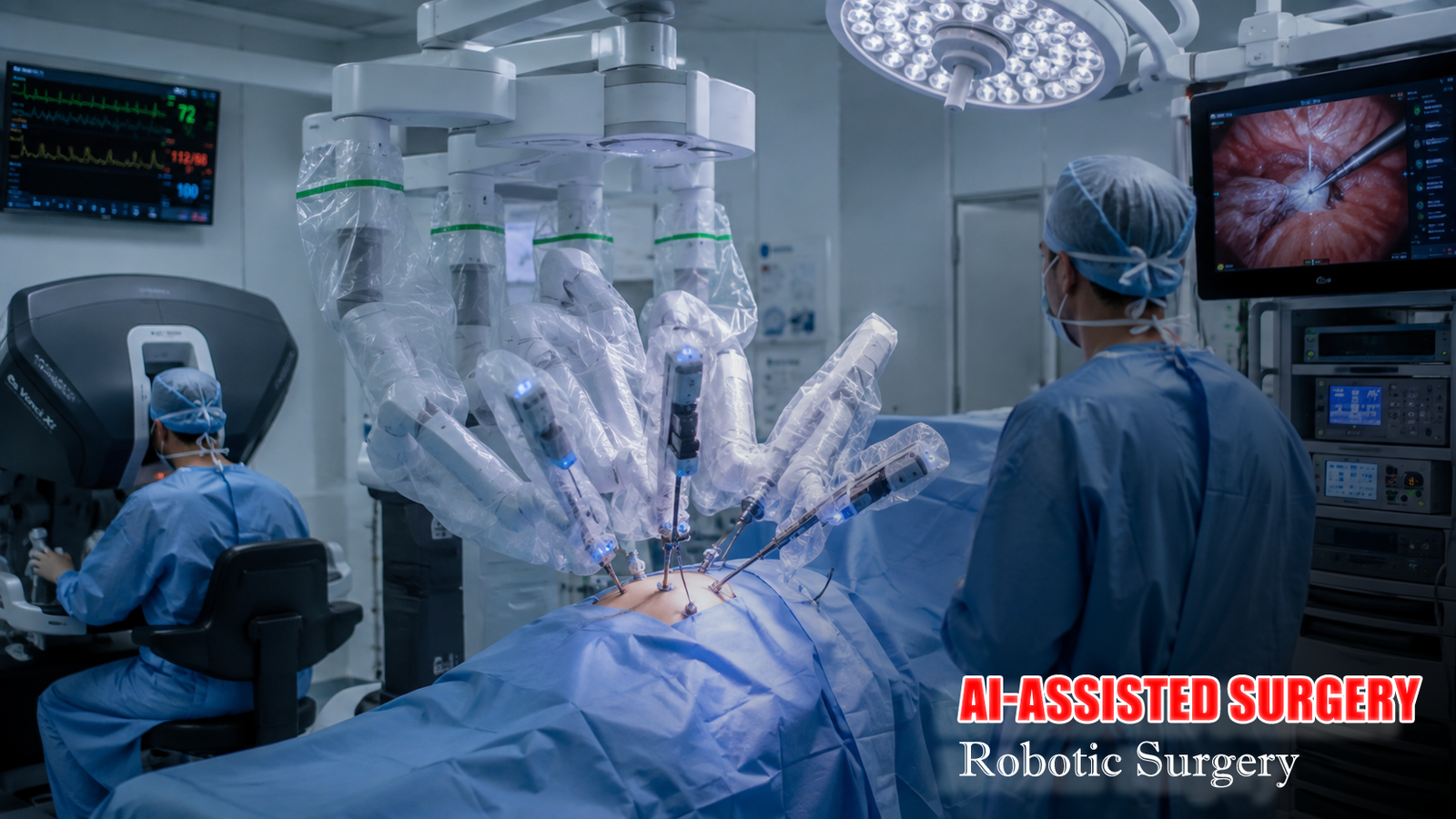
Some robotic systems are used during surgical procedures to assist doctors with precision, movement, and control.
However, robotic surgery does not eliminate medical risks. Technical failures, software problems, improper operation, inadequate training, or medical judgment errors may still occur.
AI in Drug Development
Artificial intelligence can process large amounts of scientific and medical data to help researchers identify potential drug compounds and study their possible applications.
AI for Patient Monitoring
AI systems can analyze patient data and monitor certain health indicators, potentially alerting healthcare professionals when changes require further medical evaluation.
Despite these benefits, successful performance in one situation does not guarantee that an AI system will produce a correct result in every medical case.
What Are the Most Common Medical AI Errors?
There are several types of errors that may occur when artificial intelligence is used in healthcare.
AI Errors in Medical Diagnosis
Diagnostic errors are among the most serious risks associated with medical AI.
An AI system may analyze available data and reach an incorrect conclusion, fail to identify an important abnormality, or classify a medical condition incorrectly.
This may result in:
- Delayed treatment
- Misdiagnosis
- Failure to detect an existing disease
- Inappropriate treatment
- Unnecessary medical tests
- Unnecessary surgery
- Deterioration of the patient’s condition
The risk becomes greater when a doctor treats an AI-generated result as definitive without conducting an appropriate medical assessment.
AI Errors in Medical Treatment
Some artificial intelligence systems can provide treatment recommendations based on the medical information entered into the system.
However, if important information is missing or inaccurate, the recommendation may not be appropriate for the patient.
For example, an AI system may not have access to relevant information about a patient’s previous treatment, medications, allergies, or other medical factors that could affect the treatment decision.
This is why AI should not be used independently for sensitive medical decisions without appropriate professional supervision.
Errors in Robotic Surgery
Robotic surgery represents one of the most significant developments in modern healthcare.
Robotic systems can provide surgeons with advanced tools and may improve precision and control during certain procedures.
However, the use of a surgical robot does not mean that surgery becomes risk-free.
Problems may result from:
- Technical failures
- Software defects
- Incorrect operation
- Insufficient training
- Medical judgment errors
- Communication problems
- Maintenance issues
- System updates
- Failure to respond appropriately to an emergency
Therefore, robotic surgery does not eliminate medical liability. Instead, it introduces additional technical factors that may need to be examined when a patient suffers harm.
Can an AI System or Robot Make a Medical Error?
Yes. An artificial intelligence system or medical robot can generate an incorrect decision, recommendation, result, or movement.
However, from a legal perspective, it is important to distinguish between the technology itself and the individuals or organizations responsible for developing, approving, operating, maintaining, or supervising it.
A robot does not assume legal responsibility in the same way as a person or medical organization.
When an injury occurs, the underlying cause must be carefully investigated.
Important questions may include:
- Was there a technical defect?
- Was there a software problem?
- Was the system operated correctly?
- Did the doctor review the AI-generated result?
- Was adequate training provided?
- Was the system properly maintained?
- Was the software updated appropriately?
- Did the medical facility have adequate supervision procedures?
The answers to these questions may help determine which party, or parties, could potentially be responsible for the resulting harm.
Why Does Artificial Intelligence Make Mistakes in Medicine?
Medical AI errors can occur for several reasons.
1. Insufficient Data
AI systems depend heavily on data.
If the data used to train an AI model is incomplete or insufficient, the system may not perform accurately when faced with certain medical conditions.
2. Inaccurate or Incomplete Data
If incorrect or incomplete patient information is entered into the system, the final result may also be inaccurate.
This reflects an important principle in artificial intelligence:
The quality of an AI result depends significantly on the quality of the data used by the system.
3. Algorithmic Bias
An AI system may be trained using data that does not adequately represent all patient groups or medical conditions.
As a result, its accuracy may vary from one group or situation to another.
4. Rare Medical Conditions
Doctors may sometimes identify rare conditions based on clinical experience, symptoms, and professional judgment.
An AI system, however, may not have sufficient training data relating to a rare condition and may therefore produce an inaccurate result.
5. Software Errors
Programming errors, system failures, or problems in data processing can affect the accuracy of an AI-generated result.
6. Excessive Reliance on Technology
One of the most significant risks is allowing artificial intelligence to become the sole source of a medical decision.
If doctors stop independently reviewing AI recommendations, a single technological error could result in actual harm to a patient.
Is Artificial Intelligence More Accurate Than Doctors?
There is no universal answer to this question.
Artificial intelligence can analyze enormous amounts of information and identify certain patterns much faster than humans.
However, AI operates according to its programming, training data, and intended purpose.
Doctors, on the other hand, can combine:
- Clinical examination
- Medical history
- Patient symptoms
- Professional experience
- Medical records
- Laboratory results
- Other contextual factors
Therefore, the safest approach is not necessarily to choose between doctors and artificial intelligence.
Instead, the strongest model may involve cooperation between medical professionals and AI technology.
AI can support doctors, while the final medical decision remains subject to appropriate professional evaluation.
When Does an AI Error Become a Medical Error?
An error produced by an AI system does not automatically constitute a medical error.
However, the two may become connected when artificial intelligence is used as part of diagnosis, treatment, or surgery and its incorrect result contributes to patient harm.
Several factors may need to be examined, including:
- The type of AI system used.
- The purpose for which it was used.
- The extent to which the doctor relied on the AI result.
- Whether the doctor independently reviewed the result.
- Whether the system was used correctly.
- Whether the medical data was accurate.
- Whether the system was functioning properly.
- Whether the patient suffered actual harm.
- Whether there is a causal connection between the error and the harm.
- Which party was responsible for supervision, maintenance, or operation.
Therefore, determining liability requires a comprehensive assessment rather than simply establishing that an AI system produced an incorrect result.
Who Is Responsible for Medical AI Errors?
Determining responsibility for medical AI errors can be legally complex because several parties may be involved.
The Doctor
A doctor may potentially face responsibility if the AI system was used improperly, or if the doctor ignored clear indications that the AI result was inaccurate, depending on the circumstances and applicable professional and legal standards.
The Medical Facility
A hospital, clinic, or other healthcare facility may potentially be involved if the harm resulted from inadequate training, supervision, system operation, maintenance, or management of medical technology.
The AI Developer
If the harm resulted from a software defect, programming problem, or technical failure, the developer or producer may potentially face liability depending on the facts, contractual relationships, and applicable legal rules.
The Manufacturer or Equipment Provider
In robotic surgery and other medical technologies, different parties may be responsible for manufacturing, maintenance, software updates, technical support, or operation.
Therefore, the exact source of the failure must be established before determining liability.
Can a Patient Claim Compensation for a Medical AI Error?
A patient may potentially have the right to seek compensation when the legal requirements for liability are satisfied and there is evidence of actual harm and a causal relationship between the wrongful act or error and the injury.
However, simply proving that an AI system produced an incorrect result may not, by itself, be sufficient to establish a compensation claim.
The circumstances must be carefully examined, including:
- What exactly went wrong?
- Who was responsible?
- Could the error have been avoided?
- Was the system used properly?
- Did the doctor review the AI recommendation?
- What injury did the patient suffer?
- Is there a causal relationship between the error and the injury?
Medical AI compensation claims may therefore require medical, technical, and legal analysis at the same time.
What Evidence May a Patient Need to Prove an AI-Related Medical Error?
A patient who believes that an AI system contributed to medical harm should preserve as many relevant documents as possible.
Important evidence may include:
- Medical records
- Doctors’ reports
- Laboratory results
- Medical imaging
- Prescriptions
- Surgical reports
- Reports concerning the AI system or robotic equipment
- Available system-use records
- Medical expenses and invoices
- Medical reports documenting the injury
- Documents showing the timeline of treatment
Such evidence may help establish what happened, how the AI system was used, and which party may have contributed to the harm.
How Can Medical AI Errors Be Reduced?
Artificial intelligence cannot simply be introduced into healthcare without adequate safeguards.
Human Oversight
Doctors should be able to review AI-generated results and should not rely automatically on the technology for sensitive medical decisions.
Improving Data Quality
Accurate, diverse, and representative data can help improve system performance and reduce certain types of errors.
Continuous Testing
AI systems should not only be tested before deployment. Their performance should also be monitored continuously.
Training Medical Professionals
Doctors and healthcare workers should understand the capabilities and limitations of AI systems, including when to rely on them and when to seek traditional medical assessment.
Documenting AI-Assisted Decisions
Recording how an AI system was used and how the final medical decision was reached can become important when investigating an adverse event.
Emergency and Failure Procedures
Healthcare facilities should have clear procedures for dealing with system failures, abnormal AI results, technical problems, and emergencies during AI-assisted procedures.
The Importance of Human Oversight in Medical AI
One of the most important principles in medical artificial intelligence is maintaining meaningful human oversight.
Doctors can communicate directly with patients, identify symptoms, perform physical examinations, understand medical history, and combine different factors that may not be fully reflected in the data available to an AI system.
A patient may also develop an emergency that requires an immediate decision that does not correspond with the AI recommendation.
For this reason, doctors should remain capable of overriding an AI recommendation whenever professional medical judgment indicates that a different course of action is necessary.
Does Using AI Protect a Doctor From Liability?
The use of artificial intelligence does not automatically remove a doctor’s professional responsibility.
Using technology as a medical tool does not necessarily transfer all responsibility to the software developer or manufacturer.
The circumstances of the medical decision must be examined, including:
- How the system was used.
- Whether the doctor followed professional standards.
- Whether the AI result was reviewed.
- Whether there were warning signs requiring human intervention.
- Whether the system was functioning correctly.
AI should therefore be viewed as part of an integrated healthcare system rather than a mechanism for transferring professional responsibility.
What Is the Difference Between a Doctor’s Error and an AI Error?
The key difference is the source of the error.
Human Error
This may include incorrect diagnosis, failure to take an appropriate medical action, or failure to respond properly to the patient’s condition.
Technical Error
This may include software defects, hardware failures, or technical malfunctions.
Data Error
This may result from inaccurate, incomplete, or improperly entered patient information.
User Error
This can occur when the system is operated in a manner inconsistent with its instructions or intended purpose.
Combined Error
Some incidents may involve several contributing factors at the same time, such as a software problem combined with improper medical use.
Combined errors can be particularly complex from a legal perspective because it may be necessary to determine the contribution of each party to the resulting harm.
Artificial Intelligence in Operating Rooms: Opportunity or Risk?
Robotic technology provides significant opportunities in modern surgery and may improve precision and control in certain procedures.
However, every new technology introduces new risks.
Traditional surgery may primarily require an assessment of the performance of the doctor and medical team.
Robotic surgery can introduce additional factors, including:
- Software
- Electronic equipment
- Control systems
- Communication systems
- Maintenance
- Updates
- Data
- User interfaces
Therefore, investigating an adverse surgical event involving a medical robot may require both medical and technical analysis.
Can Medical AI Errors Be Completely Prevented?
It is difficult to guarantee that an AI system will never make a mistake.
Even highly advanced technologies may encounter unexpected situations, incomplete information, unusual medical conditions, or technical failures.
However, risks can be reduced through:
- Strict safety controls
- Appropriate system testing
- Clear limitations on AI use
- Continuous monitoring
- Medical professional training
- Effective human intervention
- Emergency procedures
The objective should not necessarily be to create a system that never makes a mistake.
Instead, the goal should be to create a healthcare environment capable of detecting errors, reducing their consequences, and responding quickly when problems occur.
The Future of Artificial Intelligence and Medical Errors
As artificial intelligence continues to develop, its use in healthcare is likely to expand.
Future systems may become increasingly capable of analyzing medical images and patient data, supporting complex clinical decisions, and assisting surgeons through increasingly sophisticated robotic technologies.
However, this development will also create new legal questions.
Who is responsible for a decision made with the assistance of an AI system?
What happens when a doctor follows an AI recommendation in good faith?
Who is responsible if the injury results from a software defect?
Can a medical facility be responsible for inadequate supervision or training?
Should specific legal rules be developed to address AI-related medical errors?
These questions demonstrate why the regulation of artificial intelligence in healthcare is becoming increasingly important.
Frequently Asked Questions About Medical AI Errors
Can Artificial Intelligence Make a Wrong Medical Diagnosis?
Yes. AI can produce an inaccurate diagnosis because of incomplete data, biased training data, technical problems, or unusual medical conditions that differ from the cases used to train the system.
Is an AI Error Automatically Considered a Medical Error?
No. Whether an AI-related error constitutes a medical error depends on the circumstances, how the system was used, the doctor’s role, the medical facility’s role, the cause of the error, and the resulting harm.
Who Is Responsible for a Medical AI Error?
Responsibility may potentially involve the doctor, medical facility, AI developer, manufacturer, maintenance provider, or more than one party, depending on the cause of the error and the applicable legal rules.
Can a Patient Claim Compensation for an AI-Related Medical Error?
Potentially yes, if the legal requirements for liability are satisfied and the patient can establish harm and a causal connection between the error and the injury.
Does Robotic Surgery Mean That the Doctor Is Not Responsible?
No. A surgical robot is a technological tool used as part of the medical procedure. Its use does not automatically transfer all responsibility away from the doctor or medical facility.
What Should a Patient Do If They Suspect an AI-Related Medical Error?
The patient should preserve the medical records, test results, imaging, prescriptions, surgical reports, and other relevant documentation, obtain an independent medical assessment, and seek advice from a qualified legal professional regarding potential rights and liability.
Will Artificial Intelligence Replace Doctors?
Artificial intelligence should not be viewed as a complete replacement for doctors. The safer approach is to use AI as a tool that supports medical professionals while maintaining appropriate human supervision.
Conclusion
Medical AI errors represent one of the most important challenges created by the increasing use of artificial intelligence in healthcare.
AI can analyze enormous amounts of information, support diagnosis and treatment, monitor patients, and assist surgeons. However, it remains capable of producing inaccurate results.
An error may arise from data, software, hardware, system design, improper use, inadequate training, or human decision-making. In some cases, several factors may contribute to the same incident.
From a legal perspective, the central question should not simply be:
“Did the artificial intelligence make a mistake?”
The more important questions are:
How did the error occur? Who was responsible for operating or supervising the system? Did the error cause actual harm? And is there a causal connection between the error and the patient’s injury?
Determining liability for medical AI errors therefore requires an integrated medical, technical, and legal assessment.
Ultimately, the goal of artificial intelligence in healthcare should not be to replace doctors. Instead, it should help create a stronger medical system that combines technological capabilities with human experience, professional judgment, effective oversight, and clear safeguards to protect patients from preventable harm.
Comments are closed