




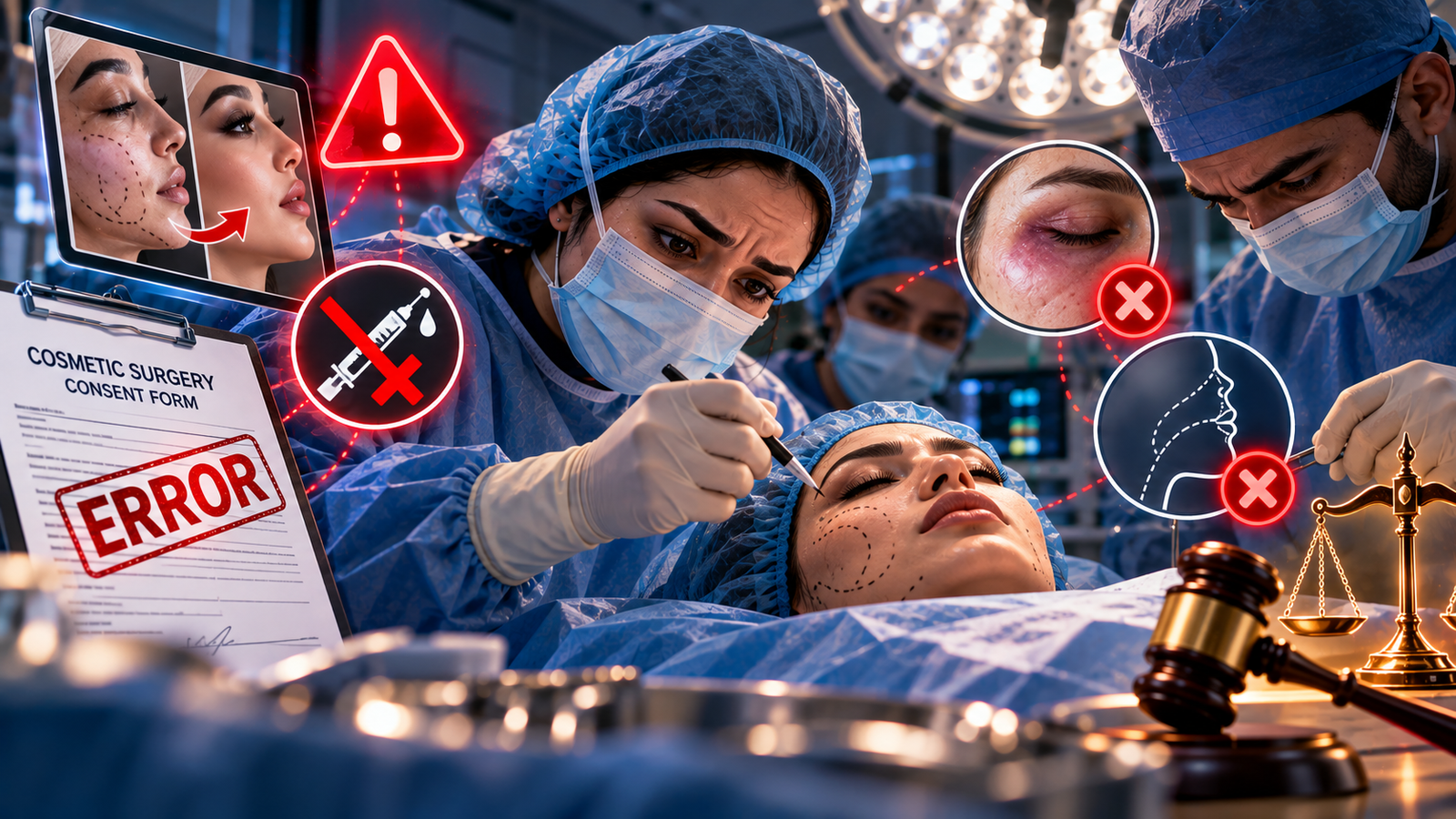
If you have suffered harm because of a medical error during cosmetic surgery in Dubai, you may have more than one legal option. Depending on the circumstances, the patient may be able to pursue a medical complaint and seek compensation for the damage suffered.
Cosmetic procedures may involve surgery, anaesthesia, medication, implants, injections, or other medical interventions. Like any medical procedure, they must be performed according to the applicable professional, scientific, and technical standards.
Under the UAE Medical Liability Law, healthcare professionals are required to perform their duties with the level of accuracy and honesty required by their profession and in accordance with recognized scientific and technical standards, while providing appropriate care to the patient.
Therefore, an unexpected result after cosmetic surgery does not automatically mean that medical malpractice has occurred. The circumstances of the procedure must be examined to determine whether there was an actual medical error and whether that error caused the claimed damage.
What Is Considered Medical Malpractice in Cosmetic Surgery?
Medical malpractice may arise when a healthcare professional fails to comply with the applicable medical standards and this results in harm to the patient.
In cosmetic surgery cases, potential issues may include:
- Failure to properly assess the patient’s medical condition before surgery.
- Performing a procedure without appropriate medical indications.
- Failure to obtain the necessary informed consent.
- Incorrect use of surgical or medical techniques.
- Failure to follow recognized professional standards.
- Inadequate monitoring during or after surgery.
- Incorrect administration of medication or treatment.
- Failure to properly respond to complications.
- Performing a procedure outside the practitioner’s professional scope or clinical privileges.
- Gross negligence in circumstances recognized by the applicable regulations.
The UAE’s Executive Regulations on Medical Liability provide criteria for assessing certain forms of gross medical malpractice and the resulting damage.
However, a poor cosmetic outcome alone does not necessarily establish medical malpractice.
Does a Bad Cosmetic Result Automatically Mean Medical Malpractice?
No.
One of the most important distinctions in cosmetic surgery cases is the difference between an undesired result and a medical error.
A patient may experience:
- Scarring.
- Asymmetry.
- Swelling.
- Infection.
- Pain.
- Skin changes.
- Implant complications.
- An unsatisfactory aesthetic result.
Some of these outcomes may be known risks of the procedure and may occur even when the surgeon has followed the appropriate medical standards.
The legal question is therefore not simply:
“Was the patient satisfied with the result?”
The more important question is:
“Was there a breach of the applicable medical standards, and did that breach cause the patient’s injury or damage?”
This distinction can be critical when assessing a potential medical malpractice claim.
What Should You Do After Suspecting a Medical Error During Cosmetic Surgery?
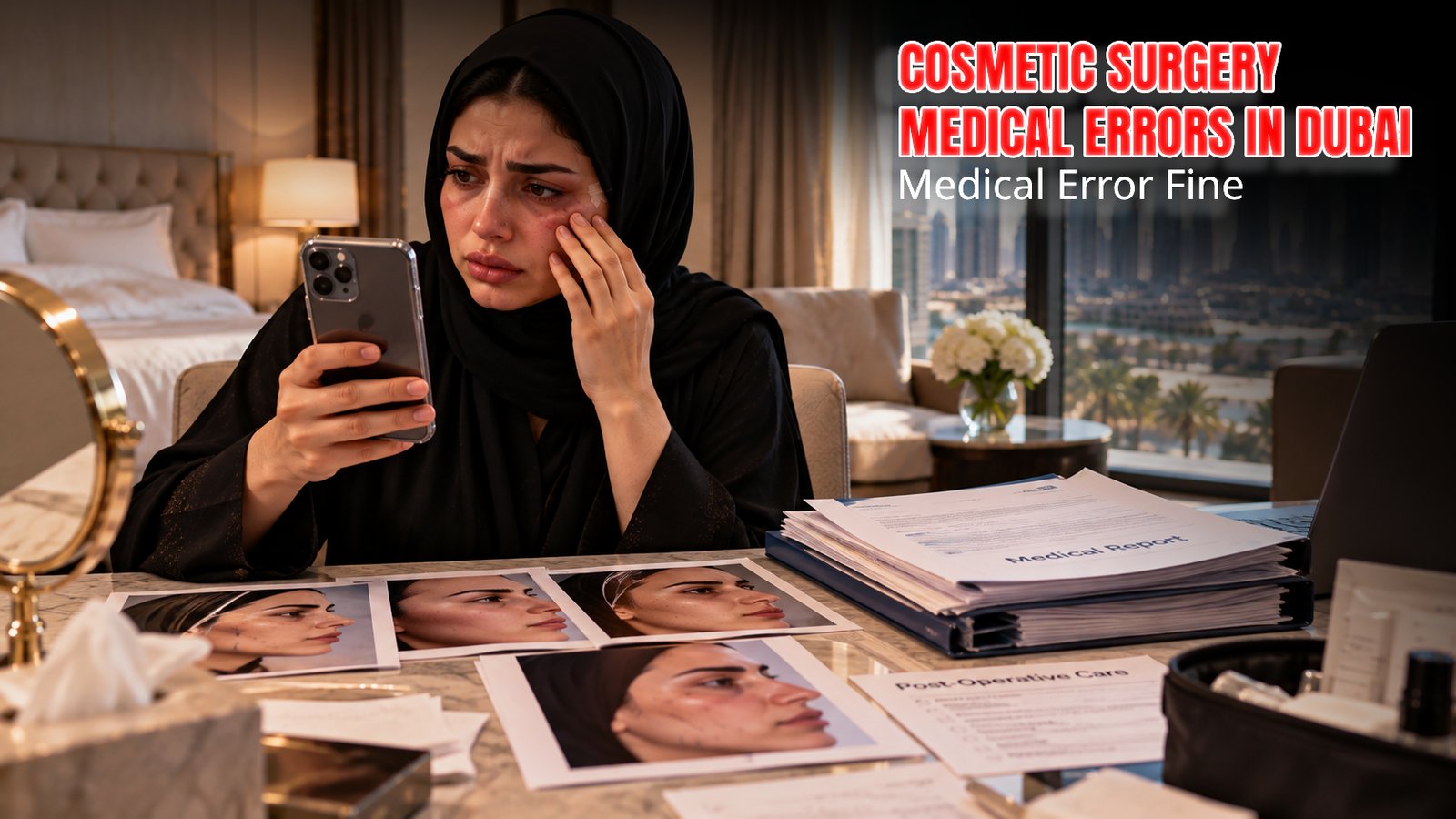
If you believe that a medical error occurred, you should preserve the relevant medical evidence as soon as possible.
Important documents may include:
- Medical reports.
- Surgical reports.
- Pre-operative examinations.
- Consent forms.
- Laboratory and imaging results.
- Prescriptions.
- Follow-up records.
- Photographs showing the condition before and after surgery.
- Invoices and payment records.
- Communications with the clinic or surgeon.
- Records of corrective or additional treatment.
- Evidence of additional medical expenses.
Avoid deleting messages or photographs that may later help establish what happened.
If another doctor provides treatment because of a complication, retain the medical reports explaining the patient’s condition and the treatment provided.
How Is a Medical Error Determined in the UAE?
Medical malpractice is not normally established simply because a patient files a complaint.
The medical circumstances must be examined by the competent authorities and specialists.
Under the UAE Medical Liability Law, Medical Liability Committees are responsible for considering complaints referred to them by the competent health authority, Public Prosecution, or the court. The Committee determines whether a medical error occurred and assesses its seriousness, the resulting damage, the relationship between the error and the damage, and, where applicable, the percentage of disability affecting the injured organ.
This medical assessment can therefore be a central part of a compensation claim.
Can You File a Complaint Against a Cosmetic Surgeon in Dubai?
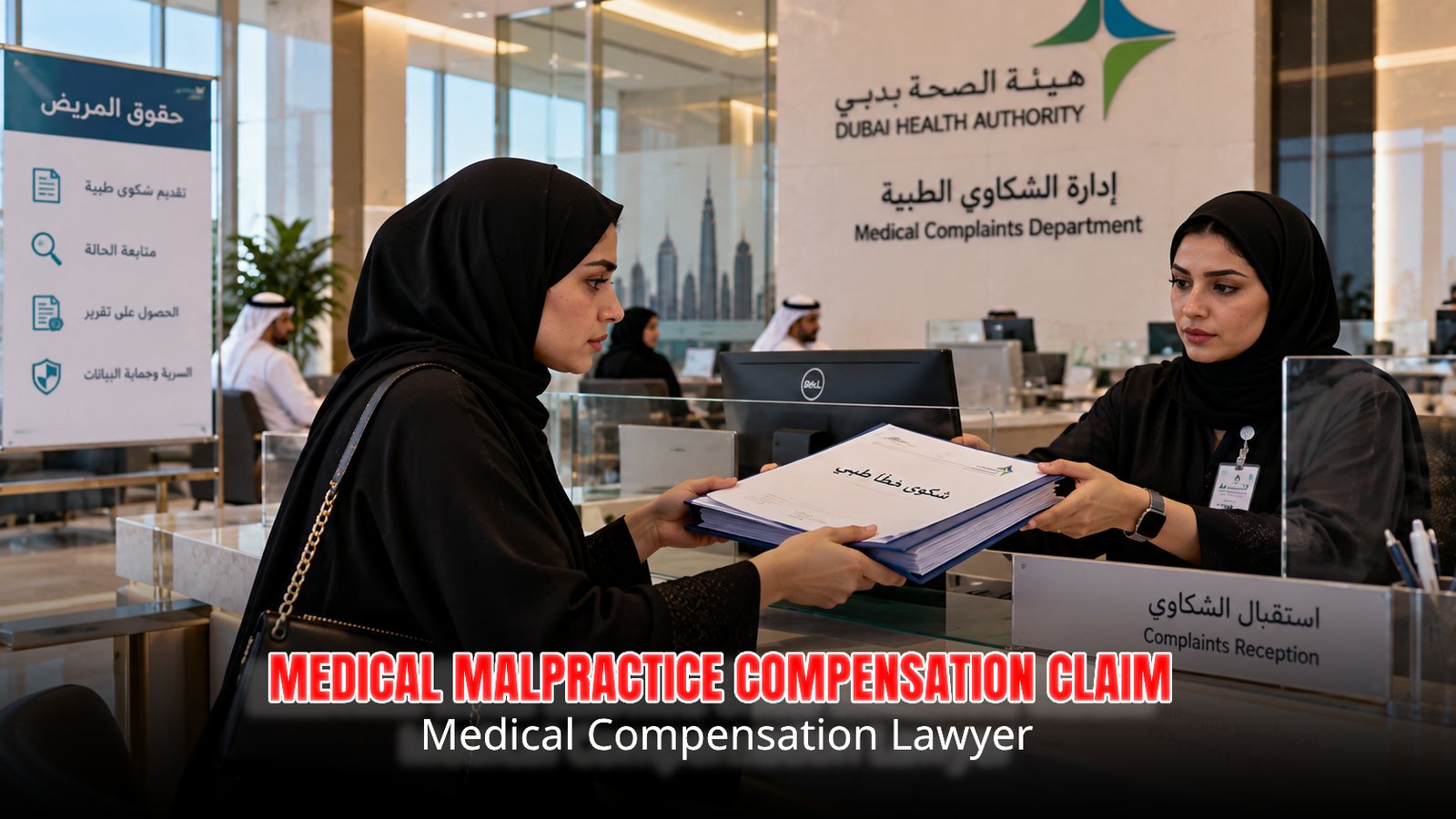
A patient who believes that medical malpractice occurred may have the right to submit a complaint through the competent healthcare authority, depending on the circumstances and applicable procedure.
The complaint should be supported by relevant medical evidence rather than relying solely on the patient’s dissatisfaction with the result.
A well-prepared complaint should clearly explain:
- What procedure was performed.
- When and where it was performed.
- Who performed the procedure.
- What happened during or after the procedure.
- What complications occurred.
- What treatment was subsequently required.
- What physical or financial damage resulted.
- What medical documents support the allegations.
Can You Claim Compensation for a Cosmetic Surgery Error?
Potentially, yes.
Where medical liability is established and the legal requirements for compensation are satisfied, the affected patient may pursue compensation for the damage caused by the medical error.
The nature and extent of compensation depend on the facts of the case and the damage established through the applicable medical and legal procedures.
Potential losses may include, depending on the circumstances:
- Additional medical expenses.
- Costs of corrective surgery.
- Treatment and rehabilitation expenses.
- Physical harm.
- Permanent impairment.
- Other legally recognized financial losses.
- Other damages recognized under the applicable law.
The existence of a compensation claim does not mean that every unsuccessful cosmetic procedure automatically gives rise to compensation.
The medical error, damage, and causal connection must be properly established.
What Is the Difference Between a Medical Complaint and a Compensation Claim?
A medical complaint primarily seeks an official examination of whether professional or medical malpractice occurred.
A compensation claim seeks financial compensation for legally recognized damage resulting from medical liability.
The two matters can be connected.
In fact, the UAE Medical Liability Law provides that compensation claims arising from medical liability are not accepted unless they have first been referred to the Medical Liability Committees in accordance with the law.
This makes the medical assessment particularly important in medical malpractice litigation.
What If the Cosmetic Surgery Was Performed at a Private Clinic?
The fact that the procedure was performed at a private cosmetic clinic does not by itself prevent the patient from pursuing a complaint or legal claim.
The circumstances must be examined, including:
- The identity and professional status of the practitioner.
- The clinic’s licensing status.
- The type of procedure performed.
- The medical records.
- The standard of care provided.
- The complications that occurred.
- The relationship between the alleged error and the damage.
Both the practitioner and, depending on the circumstances, the healthcare facility may have legal responsibilities under the applicable legislation.
What If the Surgeon Says the Complication Was a Known Risk?
A surgeon may argue that the complication was a recognized risk of the procedure.
This does not automatically resolve the matter.
A medical procedure can carry known risks even when performed correctly. At the same time, the occurrence of a known complication does not necessarily exclude medical liability if the evidence shows that the practitioner failed to meet the applicable medical standards or failed to provide appropriate care.
The medical records, consent documentation, expert assessment, and circumstances of the complication should therefore be reviewed together.
Does Signing a Consent Form Prevent a Medical Malpractice Claim?
Not necessarily.
A patient may have signed a consent form acknowledging the risks of cosmetic surgery. However, consent to known risks is not the same as consent to negligent medical treatment.
The legal effect of the consent depends on its content and the circumstances in which it was obtained.
The medical records should be reviewed to determine:
- What risks were explained.
- Whether the procedure was properly described.
- Whether the patient received sufficient information.
- Whether the actual procedure corresponded to the consent obtained.
- Whether the alleged damage resulted from an accepted risk or from a medical error.
What Evidence Is Important in a Cosmetic Surgery Malpractice Case?
Evidence can be decisive.
Patients should preserve all relevant documentation, including:
Medical Evidence
- Medical reports.
- Surgical records.
- Anaesthesia records.
- Laboratory results.
- Imaging.
- Prescriptions.
- Follow-up reports.
- Reports from other doctors.
Photographic Evidence
Photographs may be particularly relevant in cosmetic surgery disputes because they can demonstrate the patient’s condition before and after the procedure.
Where possible, photographs should retain their original date and should not be digitally altered.
Financial Evidence
Keep:
- Clinic invoices.
- Hospital bills.
- Medication receipts.
- Corrective surgery costs.
- Transportation expenses where legally relevant.
- Other documented medical expenses.
Communication Evidence
Keep relevant:
- WhatsApp messages.
- Emails.
- Appointment records.
- Written complaints to the clinic.
- Responses from the surgeon or medical facility.
Can You Seek Compensation for Corrective Cosmetic Surgery?
Depending on the circumstances, the cost of corrective treatment may form part of the claimed damages where it is legally attributable to established medical liability.
For example, if a patient requires additional surgery because of an established medical error, the costs of the necessary corrective treatment may become relevant to the compensation claim.
However, the claim should be supported by medical evidence establishing the relationship between the original procedure, the alleged error, and the subsequent treatment.
What If the Patient Needs Treatment Outside the UAE?
Some patients seek corrective treatment outside the UAE after experiencing complications.
If this occurs, all medical reports, invoices, photographs, and treatment records should be preserved.
Where foreign medical treatment is relied upon as evidence of damage or corrective treatment, the documents may need to satisfy applicable evidentiary, translation, and legalisation requirements.
The legal relevance of treatment obtained outside the UAE depends on the circumstances of the case.
Can You File a Criminal Complaint for Medical Malpractice?
Certain serious forms of medical malpractice may potentially result in criminal consequences where the legal elements of an offence are established.
However, not every medical error is automatically a criminal offence.
The nature of the conduct, the degree of negligence, the resulting damage, and the applicable legal provisions must be examined.
Medical liability proceedings may therefore have civil, administrative, and, in appropriate circumstances, criminal aspects.
What Happens After a Medical Malpractice Complaint?
The exact procedure depends on the authority and circumstances of the case.
Generally, the medical records and circumstances may be reviewed by the competent authorities, and the matter may be referred to the Medical Liability Committee for assessment.
The Committee may determine:
- Whether a medical error occurred.
- The seriousness of the error.
- The type of damage.
- The relationship between the error and the damage.
- The contribution of each responsible person, where several persons are involved.
- The percentage of disability, where applicable.
The Medical Liability Law expressly gives the Committee responsibility for these medical assessments.
How Long Do You Have to File a Medical Malpractice Claim in the UAE?
Medical malpractice claims can be subject to statutory limitation periods and procedural requirements.
Because the applicable deadline can depend on the nature of the claim and the circumstances in which the patient became aware of the relevant facts, it is important not to delay obtaining legal advice.
A lawyer should review the dates of:
- The cosmetic procedure.
- The discovery of the alleged medical error.
- The discovery of the resulting damage.
- Any complaint submitted to the competent authority.
- Any medical liability committee proceedings.
- Any previous legal proceedings.
The applicable limitation period should be calculated based on the current legislation and the specific facts of the case.
Should You Sue the Doctor or the Clinic?
This depends on the facts and the legal relationship between the patient, doctor, clinic, and other healthcare professionals involved in the procedure.
The legal analysis may need to consider:
- Who performed the procedure.
- Who employed or contracted with the doctor.
- Who provided the medical facility.
- Whether other medical professionals were involved.
- Whether the clinic had responsibility for the treatment.
- The nature of the alleged medical error.
A lawyer can determine the appropriate parties after reviewing the medical and contractual documents.
Why Should You Consult a Medical Malpractice Lawyer in Dubai?
Medical malpractice cases are different from ordinary civil disputes because they involve both legal and medical questions.
A lawyer can help you:
- Review the medical records.
- Identify the relevant legal issues.
- Organize the evidence.
- Prepare the complaint.
- Follow up with the competent authorities.
- Review the Medical Liability Committee’s findings.
- Assess potential compensation.
- Prepare the appropriate legal claim.
- Represent you in court proceedings where required.
The lawyer’s role is not to assume that every bad medical outcome constitutes malpractice, but to determine whether the available evidence supports a legally actionable claim.
Medical Malpractice in Cosmetic Surgery: Complaint or Compensation?
If you have suffered complications after cosmetic surgery in Dubai, the first step should be to understand what actually happened from both a medical and legal perspective.
A poor cosmetic result, complication, or unexpected outcome does not automatically establish medical malpractice.
However, if the evidence indicates that the medical professional failed to comply with the applicable medical standards and that this caused legally recognized damage, the patient may have grounds to pursue the appropriate complaint and compensation procedures.
The UAE Medical Liability Law provides a specific framework for examining alleged medical errors through Medical Liability Committees before compensation claims arising from medical liability are accepted.
For this reason, preserving medical evidence and obtaining appropriate legal advice at an early stage can be extremely important.
How Can Legal Consultant Mohammed Jasem Help?
Legal Consultant Mohammed Jasem can assist patients who believe they have suffered harm following cosmetic surgery or another medical procedure in the UAE.
Legal assistance may include:
- Reviewing medical records.
- Assessing the available evidence.
- Reviewing consent forms and treatment documents.
- Preparing or reviewing a medical malpractice complaint.
- Following up on Medical Liability Committee procedures.
- Assessing potential compensation claims.
- Preparing legal submissions.
- Representing clients in relevant legal proceedings.
Each medical malpractice case is assessed according to its individual facts, medical evidence, and the applicable UAE legislation.
Frequently Asked Questions
What Is Medical Malpractice in Cosmetic Surgery?
Medical malpractice may occur when a healthcare professional fails to comply with the applicable medical standards and this failure causes harm to the patient. A poor cosmetic result alone does not necessarily establish malpractice.
Can I Claim Compensation for a Cosmetic Surgery Error in Dubai?
Potentially, yes. If medical liability and the resulting damage are established under the applicable legal procedures, the patient may be able to pursue compensation.
Does a Failed Cosmetic Surgery Result Mean Medical Malpractice?
No. Cosmetic procedures involve recognized risks and possible complications. A medical assessment is required to determine whether an actual medical error occurred.
Can I File a Complaint Against a Cosmetic Surgeon?
Yes, a patient who believes medical malpractice occurred may be able to submit a complaint through the competent healthcare authority, subject to the applicable procedures.
Who Determines Whether a Medical Error Occurred?
Medical Liability Committees are responsible for examining referred complaints and determining whether a medical error occurred, its seriousness, the resulting damage, and the relationship between the error and the damage.
Does Signing a Consent Form Protect the Doctor From Liability?
Not automatically. Consent to recognized medical risks is different from consent to negligent treatment. The content and circumstances of the consent must be examined.
What Evidence Should I Keep After Cosmetic Surgery?
Keep medical records, photographs, invoices, prescriptions, follow-up reports, communications with the clinic, and records of any corrective treatment.
Can I Claim the Cost of Corrective Surgery?
Where medical liability is established and the corrective treatment is legally connected to the damage caused by the medical error, the cost of necessary corrective treatment may be relevant to the compensation claim.
Should I Consult a Lawyer Before Filing a Medical Complaint?
It is advisable to obtain legal advice early, particularly where the injury is significant, the medical records are incomplete, or substantial compensation may be claimed.
Legal References
- Federal Decree-Law No. (4) of 2016 Concerning Medical Liability.
- Cabinet Resolution No. (40) of 2019 Concerning the Executive Regulations of Federal Decree-Law No. (4) of 2016 Concerning Medical Liability.
Legal Disclaimer
This article is provided for general legal information and educational purposes only and does not constitute legal advice.
Medical malpractice cases depend on the specific medical facts, evidence, applicable legislation, and findings of the competent authorities and Medical Liability Committees. UAE legislation and procedures may also be amended from time to time.
For advice regarding a specific cosmetic surgery or medical malpractice case, the relevant medical records and circumstances should be reviewed by a qualified legal professional.
Medical Malpractice Lawyer in Dubai
Legal Consultant Mohammed Jasem assists clients with medical liability matters, including alleged medical errors, cosmetic surgery complications, medical malpractice complaints, and compensation claims, in accordance with the applicable UAE legal procedures.
Comments are closed