




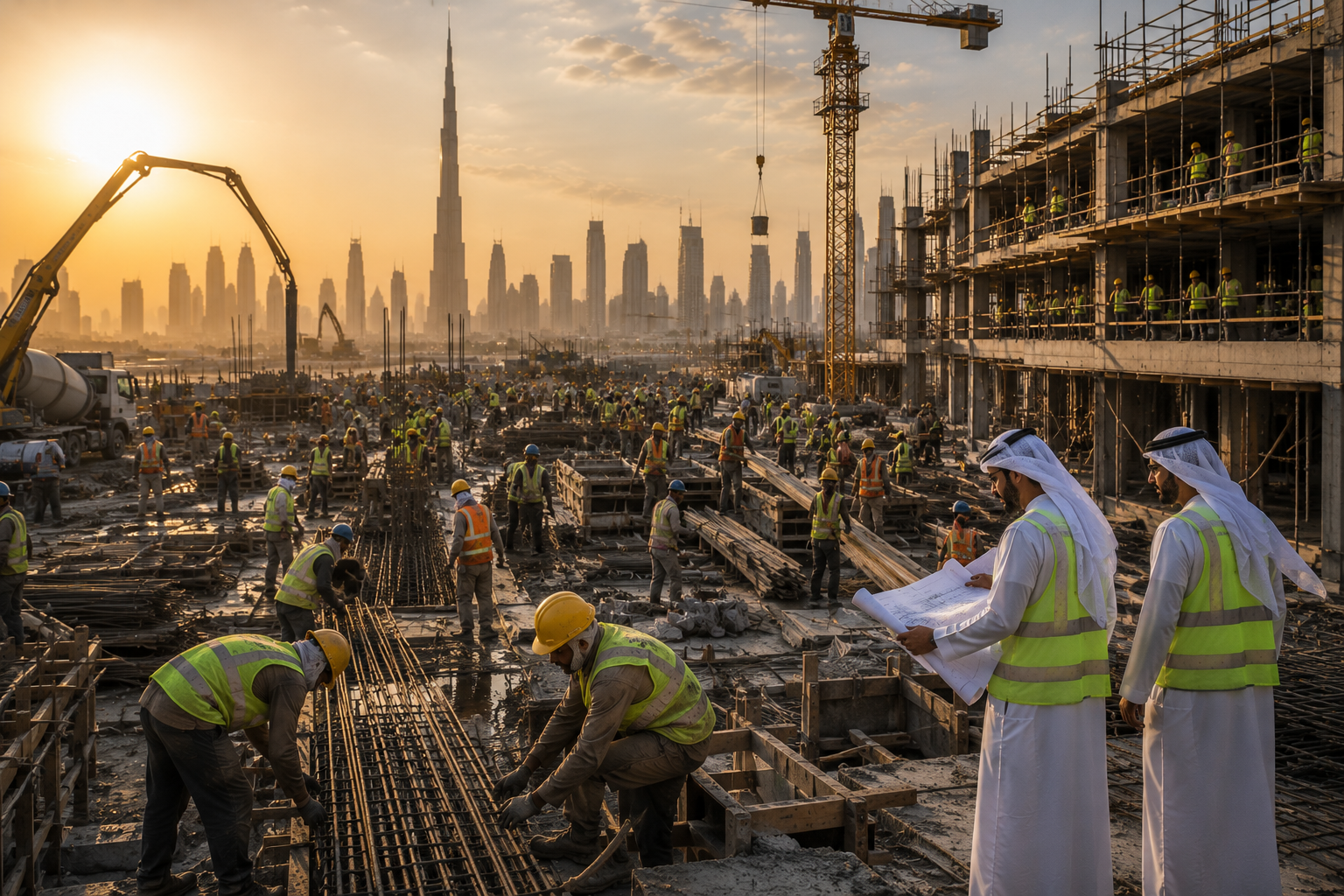
Real Estate Developer Regulations in the UAE are an essential part of the legal framework that investors and developers need to understand before entering the property development market. Real estate development in the UAE, particularly in Dubai, is subject to detailed regulatory and legal requirements covering licensing, project registration, land ownership, financing, escrow accounts, disclosures, taxation and compliance.
So, what does a real estate developer need before launching a new project? Can a developer sell units off-plan before construction is completed? Why is an escrow account important? And what are the developer’s obligations regarding anti-money laundering and taxation?
This guide explains the key aspects of real estate developer regulations in the UAE, with particular focus on the Dubai real estate market.

Can Anyone Start a Real Estate Development Business in the UAE?
No.
Launching a real estate development project and offering units for sale requires compliance with the applicable legal and regulatory requirements, particularly where the project involves off-plan sales.
A developer will generally need to establish the appropriate legal entity, obtain the relevant commercial licence and complete the required real estate registrations and approvals before beginning marketing and sales activities.
There is therefore an important distinction between owning a real estate company and actually carrying out real estate development activities and selling units within a development project.
Which Authorities Regulate Real Estate Developers in Dubai?
Several government and regulatory authorities may be involved depending on the nature, location and structure of the project.
These may include:
- Dubai Land Department (DLD).
- Real Estate Regulatory Agency (RERA).
- Dubai Department of Economy and Tourism and the relevant licensing authorities.
- Authorities responsible for planning, construction and technical approvals.
- Federal Tax Authority (FTA) for applicable tax obligations.
- Relevant authorities responsible for anti-money laundering and financial compliance.
The number and type of approvals required will depend on the project, the development activity, the location and the developer’s legal structure.
Real Estate Developer Licensing Requirements in the UAE
One of the most important aspects of real estate developer regulations in the UAE is obtaining the appropriate licence and completing the required registrations and approvals.
The first step is establishing the business and obtaining the correct commercial licence for the intended activity.
Simply registering a company may not be sufficient where the actual business activity requires a specialised licence or additional real estate approvals.
The developer may also be required to provide documents relating to:
- The company.
- The business activity.
- The legal structure.
- The company’s registered office.
- The development land.
- The proposed project.
- Relevant government approvals.
Choosing the correct business activity and legal structure from the beginning is particularly important because an incorrect structure may create difficulties when registering the project or obtaining subsequent approvals.
Does a Developer Need to Own the Land?
The legal status of the land is an important consideration when developing and selling real estate.
Depending on the project and applicable regulations, requirements may relate to ownership of the land or having the appropriate legal control over it, together with obtaining the necessary approvals before development or off-plan sales begin.
For this reason, a developer should verify the legal status of the land before entering into significant financial or marketing commitments.
What Is an Off-Plan Property Sale?
An off-plan sale involves selling a property unit before the development has been completed or before the unit is ready for final handover.
This type of transaction requires careful regulation because the buyer is making payments for a property that does not yet exist in its completed form.
Dubai’s regulatory framework therefore includes mechanisms designed to protect purchasers and regulate how developers use funds received from off-plan sales.
Obtaining a commercial licence alone does not automatically give a developer the right to advertise and sell off-plan units.
Can a Developer Advertise a Project Before Obtaining the Required Approvals?
A developer should ensure that the required registrations and approvals have been completed before beginning marketing or sales activities, depending on the nature of the project.
This is particularly important for off-plan developments because marketing or selling without satisfying the applicable requirements may expose the developer to regulatory and legal risks.
The project’s marketing strategy should therefore be aligned with its legal and regulatory timetable.
Why Is a Real Estate Escrow Account Important?
An escrow account is one of the most important mechanisms within the regulatory framework for property development, particularly for off-plan projects.
The main purpose of an escrow arrangement is to provide greater protection for purchasers’ funds and regulate the use of money collected from project sales.
Instead of treating purchasers’ payments as unrestricted business revenue, the funds are subject to specific rules governing their deposit, use and release.
Why Is an Escrow Account Important for Property Buyers?
A buyer purchasing an off-plan property assumes a certain level of risk because payments are made before the development is completed.
An escrow system provides an additional level of protection and oversight over funds associated with the project.
It can also contribute to greater confidence in the real estate market by reducing the risk that purchasers’ funds will be used for unrelated projects or purposes.
Is There a Fixed Amount That Must Be Deposited Into an Escrow Account?
Financial and regulatory requirements apply to escrow accounts and project development stages. However, developers should not assume that one fixed percentage applies to every project without reviewing the specific requirements applicable to that development.
The financing structure, type of project, development stage, approvals and escrow arrangements may all affect the applicable requirements.
For this reason, developers should obtain appropriate legal and regulatory advice before launching a project rather than relying on a general percentage that may not apply to their particular circumstances.
What Happens to Buyers’ Money if a Project Is Delayed or Fails?
The UAE and Dubai regulatory framework provides mechanisms for dealing with project delays and development failures, with the objective of protecting the rights of buyers and other relevant parties according to the applicable procedures.
A project delay does not automatically mean that a developer can freely dispose of funds held in an escrow account.
The funds and procedures remain subject to the applicable regulatory requirements and the involvement of the relevant authorities.

Can Foreign Investors Own Property in Dubai?
Yes. Foreign investors can own property in designated freehold areas in Dubai, subject to the applicable rules.
Well-known areas with freehold properties include:
- Palm Jumeirah.
- Downtown Dubai.
- Dubai Marina.
- Business Bay.
- Jumeirah Lakes Towers (JLT).
However, buying property as an investor is different from carrying out real estate development as a developer. Each activity has its own legal and regulatory requirements.
Can a Foreign Developer Enter the Dubai Real Estate Market?
Foreign investors and companies can enter the Dubai real estate market through permitted legal structures and in accordance with the applicable regulations.
However, entering the market as a real estate developer requires careful consideration of several issues, including:
- The company’s legal structure.
- The appropriate commercial licence.
- Land ownership or legal control.
- Project registration.
- Government approvals.
- Financing.
- Escrow arrangements.
- Tax obligations.
- Anti-money laundering requirements.
- Contracts with purchasers, contractors and consultants.
The legal structure of the company should therefore form part of the project’s overall strategy rather than being treated as a separate administrative step.
How Do Anti-Money Laundering Rules Affect Real Estate Developers?
Anti-money laundering compliance has become an important part of doing business in the UAE real estate sector.
Businesses subject to the applicable AML framework may be required to comply with obligations relating to customer identification, beneficial ownership, transaction monitoring and reporting suspicious transactions where required.
For real estate developers, AML compliance should not be viewed simply as a banking requirement. It should form part of the company’s overall compliance system and daily operations.
What Is Customer Due Diligence?
Customer due diligence involves taking appropriate steps to identify the customer, understand the nature of the business relationship and transaction, and verify the required information in accordance with applicable compliance requirements.
Depending on the transaction, this may include information concerning:
- The customer.
- The ultimate beneficial owner.
- The source of funds.
- The nature and purpose of the transaction.
These procedures are particularly important in high-value real estate transactions.
Are Real Estate Developers Subject to Tax Obligations?
Yes.
Real estate activities may involve obligations relating to Value Added Tax (VAT) and Corporate Tax depending on the nature of the business, transaction, income and legal structure.
Developers should therefore assess the tax position of the project from the planning stage rather than waiting until sales begin.
It is also important to maintain the required accounting records and submit applicable tax returns within the relevant deadlines.
Are All Real Estate Transactions Subject to VAT in the Same Way?
No.
The VAT treatment can vary depending on factors such as:
- The type of property.
- The nature of the transaction.
- Whether the property is being sold or leased.
- The stage of the transaction.
- Other applicable tax considerations.
Therefore, developers should not assume that all real estate transactions receive the same VAT treatment.
The specific transaction should be reviewed with a qualified tax or legal adviser before determining the tax treatment in contracts and pricing.
Can a Real Estate Developer Accept Cryptocurrency?
Virtual assets and cryptocurrency have become increasingly relevant to the UAE real estate sector.
However, accepting cryptocurrency as a payment method does not mean that a developer can complete the transaction without considering the applicable regulatory requirements.
A developer considering cryptocurrency payments should assess:
- The payment method.
- The entity receiving the funds.
- Compliance requirements.
- Price volatility.
- Accounting and tax treatment.
- Anti-money laundering requirements.
- Applicable virtual asset regulations.
Specialist legal advice should therefore be obtained before cryptocurrency is adopted as a payment method for a real estate project.
Can a Real Estate Developer Obtain a UAE Golden Visa?
Real estate investment may qualify for a UAE Golden Visa subject to the eligibility requirements and conditions established by the competent authorities.
However, simply owning a development project or working as a real estate developer does not automatically guarantee eligibility for a Golden Visa.
The investment value, type of ownership and other eligibility requirements should be verified at the time of application.
What Are the Main Legal Risks Facing Real Estate Developers?
Under the real estate developer regulations in the UAE, developers need to manage a range of legal and regulatory risks.
These may include:
- Launching a project before obtaining the required approvals.
- Marketing or selling properties in breach of regulatory requirements.
- Problems relating to land ownership.
- Delays in project completion.
- Disputes with purchasers.
- Breaches of escrow requirements.
- Weak or unclear sale agreements.
- Disputes with contractors and consultants.
- AML compliance failures.
- Tax and accounting errors.
- Failure to comply with disclosure requirements.
Early legal planning can often be significantly less costly than dealing with a major dispute after it has arisen.
How Can a Developer Protect the Business Legally?
A developer can reduce legal and regulatory risks by establishing a clear legal framework from the beginning.
This may include:
- Reviewing the company’s legal structure and business activity.
- Verifying the legal status of the development land.
- Identifying all required approvals.
- Registering the project in accordance with applicable requirements.
- Establishing an escrow account where required.
- Reviewing off-plan sale agreements.
- Clearly defining relationships with contractors and consultants.
- Implementing an effective AML compliance system.
- Reviewing applicable tax obligations.
- Monitoring the project legally from establishment through completion and handover.
Why Is a Real Estate Lawyer Important for Developers?
Real estate development involves multiple parties, contracts, financial commitments and regulatory requirements.
A legal issue that appears minor at the beginning of a project can eventually become a significant financial dispute.
A specialist legal adviser can assist a developer with reviewing:
- Land purchase agreements.
- Partnership agreements.
- Construction contracts.
- Consultant agreements.
- Off-plan sale agreements.
- Reservation and payment terms.
- Financing agreements.
- Escrow requirements.
- Regulatory obligations.
- Purchaser disputes.
- Issues relating to delays or project failure.
This approach makes legal planning part of project management rather than simply a tool used after a dispute occurs.
Frequently Asked Questions
Does a real estate developer need a special licence in the UAE?
The developer must identify the appropriate business activity and obtain the relevant licence and real estate approvals required for the specific project.
Can a developer sell property before construction is completed?
Certain projects may be sold off-plan in accordance with the applicable regulatory requirements. However, obtaining a general commercial licence does not automatically authorise every developer to sell off-plan units.
Why is an escrow account important?
An escrow account helps protect purchasers’ funds and regulates how money collected for a development project is used in accordance with the applicable requirements.
Can a foreign investor establish a real estate development business in Dubai?
Foreign investors may enter the Dubai market through permitted legal structures, subject to licensing, registration and development requirements.
Does a project need to be registered before marketing?
For development projects, particularly off-plan developments, the required registrations and approvals should be completed before marketing or sales begin, according to the applicable regulations.
Are real estate developers subject to AML requirements?
Businesses subject to the UAE AML framework must comply with the requirements applicable to their activities and transactions, including relevant customer due diligence and reporting obligations.
Are real estate developers subject to taxes?
VAT and Corporate Tax may apply depending on the nature of the business and transaction. The tax position should therefore be assessed for each project.
Can developers use cryptocurrency to sell real estate?
Cryptocurrency payments may be possible within the applicable regulatory framework, but developers should assess virtual asset regulations, AML obligations, tax treatment and payment arrangements before using cryptocurrency in property transactions.

Conclusion
Real Estate Developer Regulations in the UAE form an important framework for regulating the property development market, protecting investors and purchasers, and ensuring that developers can meet their legal and financial obligations.
A real estate project does not begin simply by establishing a company. It starts with verifying the legal status of the land, obtaining the appropriate licences and approvals, registering the project, arranging financing and escrow requirements, preparing appropriate contracts, and complying with taxation and AML obligations.
For developers looking to enter the Dubai real estate market, early legal planning can help prevent many of the risks that may arise during marketing, construction, sales, completion or handover.
Legal Consultant Mohammed Jassem
Specialised legal consultancy in real estate development, contracts and property transactions in accordance with the applicable laws and regulations of the UAE.
Comments are closed