










Challenging a tax decision in Dubai is a legal right available to individuals and businesses against whom the Federal Tax Authority (FTA) has issued a decision. However, exercising this right requires compliance with specific procedures and statutory deadlines established under UAE federal legislation.
The process is not limited to submitting a general objection to the Authority. It requires identifying the nature of the tax decision and determining the procedural stage of the dispute, whether it concerns a tax assessment, an administrative penalty, or another decision issued by the FTA.
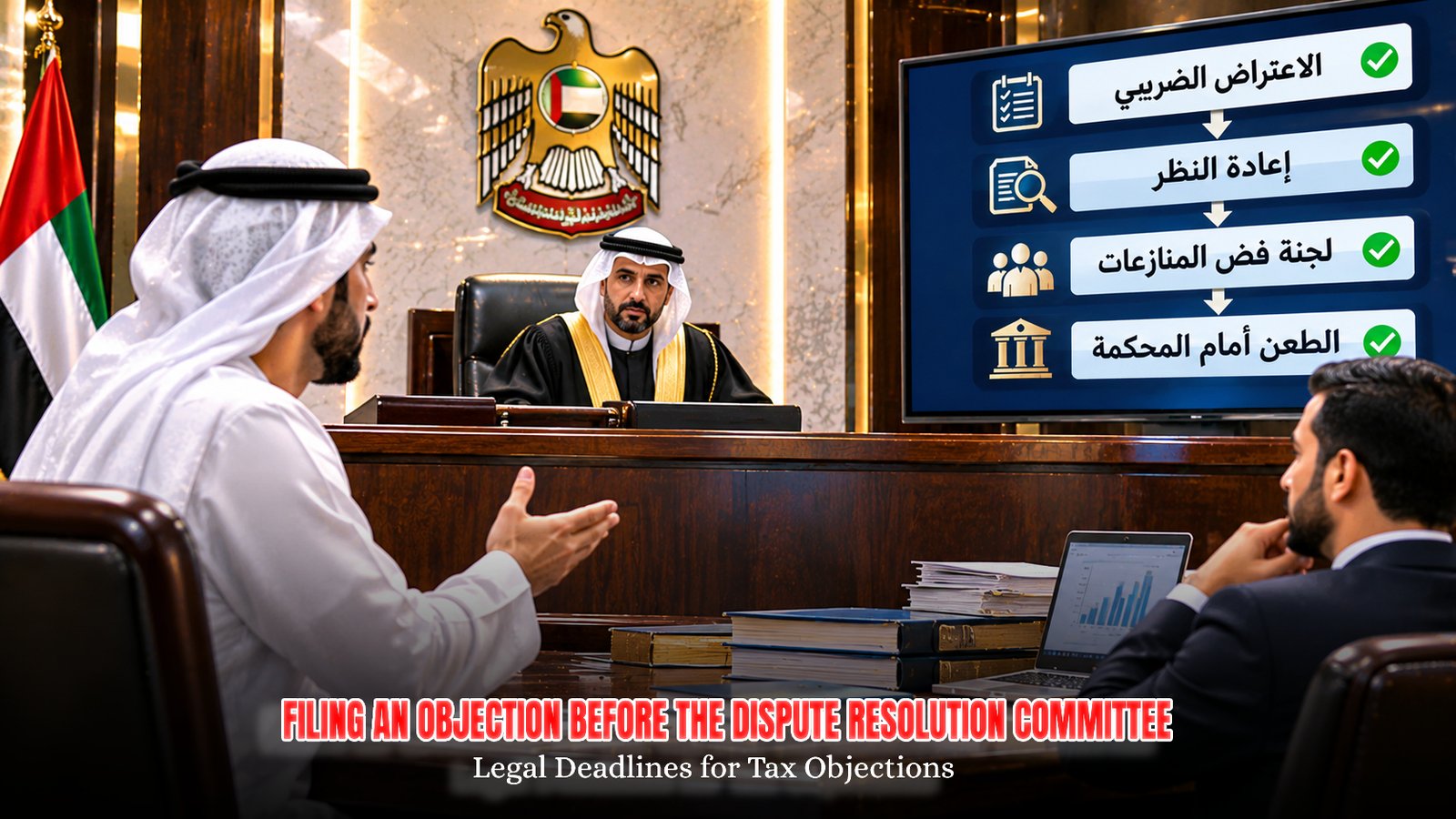
Federal Decree-Law No. 28 of 2022 on Tax Procedures, as amended, regulates the different stages of tax disputes in the UAE. These may include a tax assessment review request, where this route is selected, a reconsideration request submitted to the FTA, an objection before the Tax Disputes Resolution Committee, and, where the statutory requirements are satisfied, an appeal before the competent court.
Deadlines are particularly important in tax disputes in Dubai. Each stage has its own time limit, and failure to satisfy admissibility requirements, including payment of the disputed tax at the legally prescribed stage, may result in the rejection of the relevant application or objection.
In this guide, Legal Consultant Mohammed Jasem explains how to challenge a Federal Tax Authority decision in Dubai, the difference between a tax assessment review and reconsideration, the applicable deadlines, the required documents, and the conditions for referring a dispute to the Tax Disputes Resolution Committee and the competent court.

How to Challenge a Federal Tax Authority Decision in Dubai
Objections against Federal Tax Authority decisions are governed by the federal legislation applicable throughout the UAE, particularly:
- Federal Decree-Law No. 28 of 2022 on Tax Procedures, as amended.
- Cabinet Decision No. 74 of 2023 concerning the Executive Regulation of Federal Decree-Law No. 28 of 2022, as amended.
The appropriate objection procedure depends on the nature of the decision issued by the Authority. The main routes can be summarised as follows:
- Where the dispute concerns a tax assessment: The taxpayer may submit a tax assessment review request under Article 28 or, where permitted by law, proceed directly with a reconsideration request.
- Where the dispute concerns another FTA decision: The taxpayer may submit a reconsideration request against all or part of the decision under Article 29.
- Where the taxpayer disagrees with the FTA’s reconsideration decision: The taxpayer may submit an objection to the Tax Disputes Resolution Committee, provided the admissibility requirements are satisfied.
- Where the Committee issues a decision: An appeal may be filed before the competent court in the circumstances permitted by law.
These procedures should not be confused with one another, as each stage has a different competent authority, deadline, and set of legal requirements.
Have You Received a Tax Decision and Are Unsure How to Challenge It?
A tax decision may concern Value Added Tax (VAT), Corporate Tax, Excise Tax, a tax assessment, or an administrative penalty.
Identifying the type of decision is the first step in determining the correct legal procedure.
Before submitting any application, it is important to:
- Review the decision and the date on which it was notified.
- Identify the relevant tax period.
- Examine the documents and records relied upon by the FTA.
- Determine the appropriate legal procedure without missing any statutory deadline.
What Is the Difference Between a Tax Assessment Review, Reconsideration and an Objection Before the Committee?
These procedures are not interchangeable. They represent distinct stages within the UAE tax dispute resolution system.
1. Tax Assessment Review Request
Article 28 of the Tax Procedures Law regulates the tax assessment review process.
A person who has received a tax assessment may request the FTA to review all or part of that assessment, including the administrative penalties associated with it.
The request must:
- Be supported by clear reasons.
- Be submitted within 40 business days from the date the person is notified of the tax assessment and the related administrative penalties.
This procedure allows the taxpayer to explain the grounds for challenging the assessment and submit supporting documents.
It is important to note that a tax assessment review is not the only available route in every case. According to the FTA’s published guidance, a taxpayer may be able to bypass this procedure and submit a reconsideration request directly against the assessment and related penalties, subject to the applicable legal provisions.
2. Reconsideration Request Against an FTA Decision
Article 29 of the Tax Procedures Law regulates reconsideration requests.
Any person may submit a reconsideration request against all or part of a decision issued by the Federal Tax Authority in relation to that person.
The request must:
- Clearly state the factual and legal grounds for reconsideration.
- Explain why the decision is disputed.
- Be submitted within 40 business days from the date the person is notified of the decision.
Where the decision concerns a tax assessment for which a review request has already been submitted, a reconsideration request may only be filed after the FTA has issued its decision on the review request, or after the legally prescribed period for deciding that request has expired, taking into account any lawful extension notified to the applicant.
3. Objection Before the Tax Disputes Resolution Committee
An objection before the Tax Disputes Resolution Committee is a subsequent stage following the reconsideration process.
Under Article 31, the Committee has jurisdiction to consider objections against FTA decisions concerning reconsideration requests. It may also consider reconsideration requests on which the Authority has not issued a decision in accordance with the applicable legal provisions.
Therefore, identifying the current stage of the dispute is essential before submitting another application. This helps avoid choosing an inappropriate procedure or submitting the objection to an authority that lacks jurisdiction.
Which Law Regulates Objections Against Federal Tax Authority Decisions?
The UAE tax objection system is based on several federal legislative instruments, including:
- Federal Decree-Law No. 28 of 2022 on Tax Procedures, as amended.
- Cabinet Decision No. 74 of 2023 concerning the Executive Regulation of Federal Decree-Law No. 28 of 2022, as amended.
- Decisions regulating the formation, jurisdiction and procedures of the Tax Disputes Resolution Committees.
- Decisions issued by the Federal Tax Authority concerning deadlines and procedures falling within its authority.
Federal Decree-Law No. 17 of 2025 was also issued to amend certain provisions of the Tax Procedures Law and came into effect on 1 January 2026.
Among other matters, this amendment addressed provisions relating to the recovery of credit balances and limitation periods. It did not replace the provisions governing the main stages of tax assessment review, reconsideration, objections before the Committee, and judicial appeals.
Accordingly, taxpayers should refer to the legislation currently in force when handling a tax dispute. Older explanations should not be relied upon without checking whether the relevant provisions have been amended.
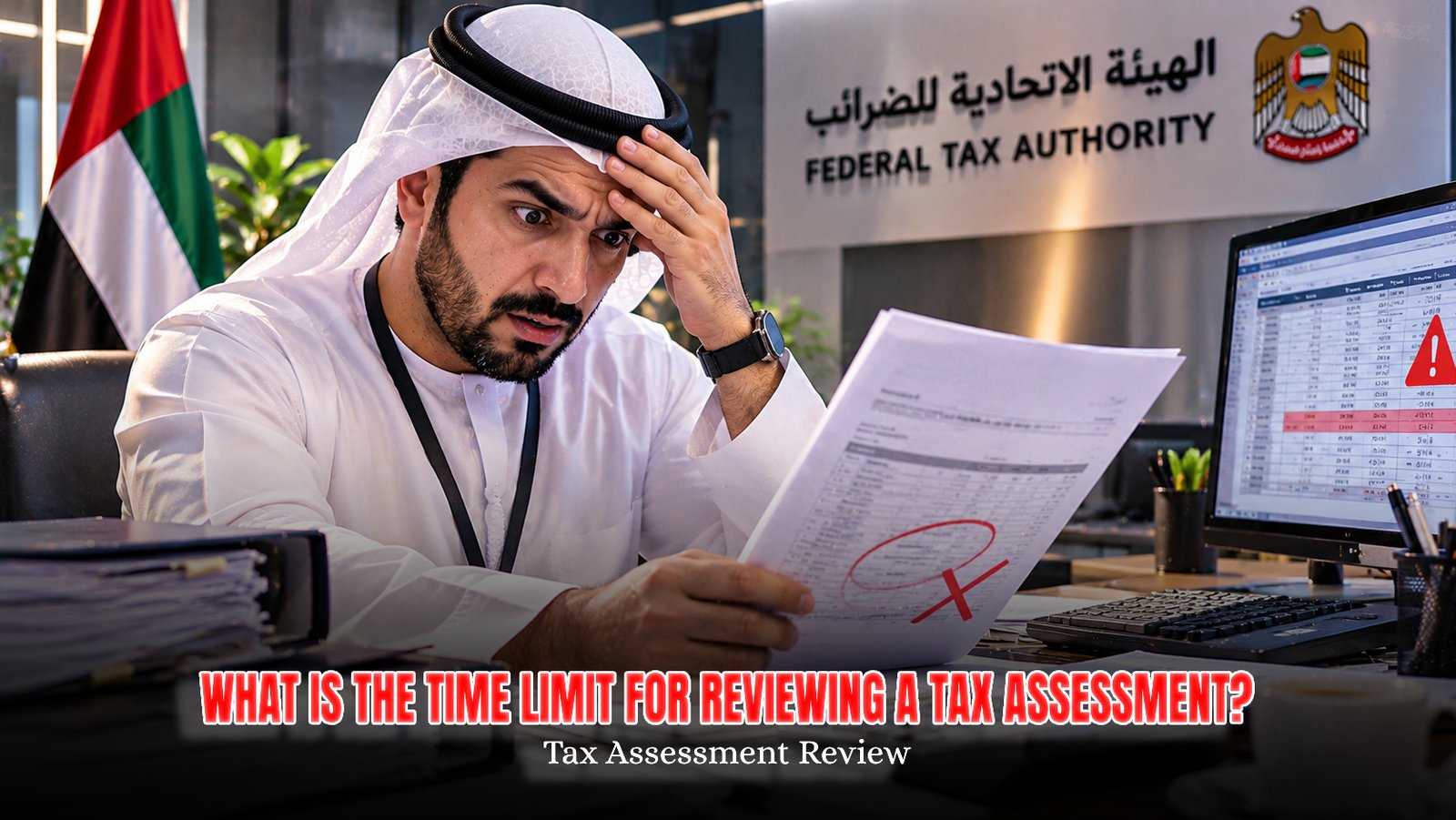
What Is the Deadline for Submitting a Tax Assessment Review Request?
Under Article 28 of the Tax Procedures Law, a tax assessment review request must be submitted within 40 business days from the date the person is notified of the tax assessment and the associated administrative penalties.
The request must explain the reasons for challenging the assessment, including:
- The specific parts of the assessment being disputed.
- Why the assessed amount or the basis used by the FTA is considered incorrect.
- The supporting documents and evidence.
Under the statutory provisions, the FTA must review and decide on the request within 40 business days from the date of receipt. The applicant must be notified of the decision within five business days from the date it is issued.
Extensions may apply in circumstances permitted by the relevant legislation. Therefore, any official notification of an extension should be checked before calculating the deadline for proceeding to the next stage.
If the taxpayer disagrees with the outcome of the review, or if the FTA does not issue a decision within the applicable period, taking into account any extension, the taxpayer may be entitled to submit a reconsideration request, subject to the relevant legal requirements and deadlines.
What Is the Deadline for a Reconsideration Request Against an FTA Decision?
Article 29 of the Tax Procedures Law establishes a deadline of 40 business days from the date the person is notified of the FTA decision to submit a reconsideration request.
The request may challenge the entire decision or only part of it, provided that the applicant clearly explains the reasons for the challenge.
It is important to distinguish between:
- The deadline within which the taxpayer must submit the reconsideration request.
- The period within which the FTA must decide on that request.
These are separate legal time limits.
An extension of the deadline for submitting a tax assessment review or reconsideration request may also be available in the circumstances specified under Federal Tax Authority Decision No. 1 of 2025, concerning cases in which the deadline for accepting such requests may be extended.
However, an extension is not automatic. The relevant conditions must be satisfied, and the extension request must be submitted in accordance with the prescribed procedures.
How to Submit a Reconsideration Request Through EmaraTax
The Federal Tax Authority allows taxpayers to submit reconsideration requests electronically through the EmaraTax portal.
The general steps are as follows:
- Log in to the applicant’s account through the EmaraTax portal.
- Open the taxpayer’s profile.
- Navigate to the Other Services section.
- Select Reconsiderations.
- Choose New Request.
- Complete the required information and identify the decision being challenged.
- Explain the factual and legal grounds for reconsideration.
- Attach the relevant supporting documents and evidence.
- Review the information, submit the request, and retain proof of submission.
The FTA states that the reconsideration service is available electronically around the clock and that submitting the request is free of charge.
The published service information also identifies accepted file formats, including PDF, Excel, Word, JPG, PNG and JPEG. The applicable file-size and attachment limits should be checked on the service page at the time of submission.
Submitting the request electronically is not enough on its own. Applicants should ensure that all information and supporting documents are complete and retain confirmation of the submission and its date.
Is Every Message From the Federal Tax Authority Eligible for Reconsideration?
No. Not every notification or communication issued by the FTA constitutes a formal decision that can be challenged through a reconsideration request.
The Authority explains that the service is intended for official decisions issued by the FTA concerning the applicant.
Responses to general enquiries, complaints, or requests for clarification are not necessarily formal decisions eligible for reconsideration through the same service.
Therefore, the nature of the document should be checked before starting the procedure. It is important to establish whether the document is an official tax decision or merely an administrative communication or response.
How Long Does the FTA Take to Respond to a Reconsideration Request?
Article 29 of the Tax Procedures Law provides for an original period of 40 business days for deciding a reconsideration request, calculated from the date the request is received. The applicant must be notified of the decision within five business days from the date it is issued.
Separately, the FTA’s published reconsideration service information indicates that the expected completion period may reach 45 business days from receipt of a complete application, and that the response period may be extended.
It is therefore important to distinguish between:
- The statutory period specified in the legislation.
- The estimated service-completion period published by the FTA.
- Any lawful extension applicable to the particular request.
The mere passage of 45 business days should not automatically be treated as meaning that every procedure has expired. The applicant should verify the date of receipt, the status of the request, and whether any extension has been formally applied or communicated.
What Happens If the FTA Does Not Issue a Decision on the Reconsideration Request?
The absence of a decision from the FTA does not necessarily mean that the request remains pending without any legal remedy.
Under the Tax Procedures Law, the Tax Disputes Resolution Committee has jurisdiction to consider reconsideration requests on which the FTA has not issued a decision, subject to the applicable statutory conditions and deadlines.
Before proceeding to the Committee, the taxpayer should verify:
- The date on which the reconsideration request was submitted.
- Whether the application was complete and satisfied the relevant requirements.
- The statutory period allowed for the FTA to decide.
- Whether an extension was applied to the request.
This verification is important because referral to the Committee must be based on the legal conditions that permit it, rather than simply on the applicant’s personal assessment that the response has been delayed.
When Can a Tax Dispute Be Referred to the Tax Disputes Resolution Committee?
Under Article 31 of the Tax Procedures Law, the Tax Disputes Resolution Committee considers objections against FTA decisions relating to reconsideration requests. It also considers reconsideration requests on which the Authority has not issued a decision in accordance with the law.
A dispute may therefore proceed to the Committee in two main circumstances:
- The FTA has issued a decision on the reconsideration request, and the taxpayer disagrees with the outcome.
- The FTA has not issued a decision within the applicable statutory period, taking into account any relevant extension, and the legal conditions for referral to the Committee have been satisfied.
The objection before the Committee is subject to separate admissibility requirements. These include having first submitted a reconsideration request to the FTA, complying with the applicable deadline, and paying the full amount of tax under dispute.
What Is the Deadline for Filing an Objection Before the Tax Disputes Resolution Committee?
Article 32 of the Tax Procedures Law establishes a deadline of 40 business days for objecting to an FTA decision concerning a reconsideration request. The period begins from the date the person is notified of the FTA’s decision.
The objection should identify:
- The decision being challenged.
- The relief or outcome requested.
- The factual and legal grounds for the objection.
- The supporting documents and evidence.
Failure to submit a reconsideration request to the FTA beforehand, failure to pay the full amount of tax under dispute, or missing the applicable deadline may result in the objection being rejected as inadmissible under the law.
Where the dispute concerns a reconsideration request on which the FTA has not issued a decision, the taxpayer must first verify that the statutory conditions allowing the Committee to consider the matter have been satisfied. In that situation, the deadline should not be calculated as though an FTA decision had already been issued.
What Are the Conditions for an Objection to Be Accepted by the Tax Disputes Resolution Committee?
Having a disagreement with the FTA is not, by itself, sufficient to ensure that an objection will be accepted.
The Tax Procedures Law establishes conditions that must be checked before submitting an objection. The main requirements include:
- Submitting a reconsideration request to the FTA before referring the dispute to the Committee, subject to the Committee’s jurisdiction over reconsideration requests on which the FTA has not issued a decision in accordance with the law.
- Filing the objection within 40 business days from notification of the FTA decision concerning the reconsideration request.
- Paying the full amount of tax under dispute.
- Submitting the objection using the approved form and procedures.
- Providing the information and supporting documents required to examine the dispute.
A distinction must be made between payment of the disputed tax and payment of administrative penalties.
Article 32 requires payment of the full amount of tax under dispute for the objection to be accepted by the Committee. This requirement should not be incorrectly interpreted as a general obligation to pay all administrative penalties at this stage without a specific legal basis.
Must the Disputed Tax Be Paid Before Filing an Objection With the Committee?
Yes. Under Article 32 of the Tax Procedures Law, payment of the full amount of tax under dispute is a condition for the acceptance of an objection before the Tax Disputes Resolution Committee.
The provision states that an objection will not be accepted if the full disputed tax has not been paid.
However, this requirement should not be confused with the rules governing administrative penalties. At this stage, the payment requirement concerns the disputed tax itself, while administrative penalties are subject to their own applicable legal provisions, including the requirements governing judicial appeals.
Before filing the objection, the taxpayer should carefully review the amounts stated in the tax decision, identify the tax amount under dispute, and ensure that proof of payment is available.
What Documents Are Required for an Objection Before the Tax Disputes Resolution Committee?
The objection file should present a clear and consistent account of the dispute, enabling the Committee to identify the challenged decision, understand the grounds for the objection, and review the supporting evidence.
Depending on the nature of the dispute, the file may include:
- The applicant’s identification details and address.
- A copy of the FTA decision.
- The reconsideration request previously submitted to the FTA.
- The FTA’s decision on reconsideration, or evidence establishing the legally relevant circumstances where no decision has been issued.
- A detailed memorandum explaining the facts, grounds of objection, and requested relief.
- Relevant accounting and tax records.
- Tax returns, invoices, and supporting documents related to the dispute.
- Evidence of payment of the full amount of tax under dispute.
- Power of attorney or legal representation documents, where the objection is submitted through a representative.
There is no single fixed list of documents suitable for every tax dispute. The required evidence depends on the type of tax, the relevant tax period, the nature of the decision, and the grounds on which it is challenged.
Which Tax Disputes Resolution Committee Has Jurisdiction Over a Tax Dispute in Dubai?
The Federal Tax Authority is a federal authority, and the UAE tax dispute resolution system is based on federal legislation rather than a separate tax system specific to the Emirate of Dubai.
Decisions regulating the formation of Tax Disputes Resolution Committees establish the territorial distribution of jurisdiction, taking into account the applicant’s address, the information recorded in the tax registration file, and the applicable jurisdictional rules.
Tax Disputes Resolution Committees operate in Abu Dhabi, Dubai, and Sharjah. The competent Committee must be identified in accordance with the applicable territorial jurisdiction rules governing the individual or business.
Therefore, the fact that a company is headquartered or operates in Dubai does not, by itself, conclusively determine which Committee has jurisdiction. The taxpayer’s tax file and the applicable jurisdictional rules must also be reviewed.
What Happens After an Objection Is Submitted to the Committee?
Once an objection has been submitted and the applicable requirements have been satisfied, the competent Committee examines the application, the supporting documents, and the arguments presented by the parties before issuing its decision in accordance with the law.
Article 33 of the Tax Procedures Law provides that the Committee must decide on an objection within 20 business days from the date it receives the objection. The objector and the FTA must be notified of the decision within five business days from the date it is issued.
An extension may apply under the Executive Regulation when the relevant conditions are satisfied. Therefore, the applicable executive provisions and any official notification from the Committee should be reviewed when calculating the actual period in a particular case.
Depending on its assessment of the facts, documents, and legal arguments, the Committee may:
- Uphold the FTA’s position.
- Amend the decision.
- Cancel the decision in whole or in part.
Is a Decision of the Tax Disputes Resolution Committee Final?
The finality of a Committee decision depends on the total amount of tax payable and administrative penalties specified in that decision.
Under Article 33 of the Tax Procedures Law, a Committee decision is final where the total amount of tax payable and administrative penalties stated in the decision does not exceed AED 100,000.
Where the total amount exceeds AED 100,000, the decision may be challenged before the competent court within 40 business days from the date the person is notified of the decision, subject to the applicable legal requirements.
It is important not to consider the tax amount alone when applying the AED 100,000 threshold. The statutory provision refers to the total of the tax payable and administrative penalties specified in the decision.
Can a Tax Disputes Resolution Committee Decision Be Appealed Before a Court?
Yes. Article 36 of the Tax Procedures Law permits the FTA or the taxpayer, as applicable, to challenge a decision of the Tax Disputes Resolution Committee before the competent court within 40 business days from the date of notification of the Committee’s decision.
The law allows an appeal in circumstances including:
- Challenging all or part of the Committee’s decision.
- The Committee failing to issue a decision on an objection submitted to it in accordance with the law.
However, accepting a judicial appeal is subject to additional legal requirements.
These include providing evidence that the full amount of tax has been paid to the FTA and evidence that at least 50% of the administrative penalties determined under the Committee’s decision or the court judgment, as applicable, has been paid.
The required amount may be paid in cash to the FTA or secured through an approved bank guarantee in its favour, in accordance with Article 36.
These requirements must be distinguished from the conditions for filing an objection before the Committee. The requirement to pay 50% of the administrative penalties applies at the judicial appeal stage; it is not a general condition for accepting an objection before the Committee.
The taxpayer should therefore carefully examine the applicable appeal requirements and the amounts payable before commencing proceedings before the competent court.
What Common Mistakes Can Affect a Tax Objection Against an FTA Decision?
Errors in selecting the correct procedure or calculating statutory deadlines may affect the admissibility of an objection, even where the taxpayer has substantive grounds that deserve consideration.
Common mistakes include:
- Confusing a tax assessment review request with a reconsideration request.
- Assuming that a tax assessment review is mandatory in every case without checking the available legal route.
- Confusing calendar days with business days when calculating deadlines.
- Calculating a deadline from the date a decision was issued rather than the date of notification, where the law uses notification as the starting point.
- Submitting a reconsideration request without explaining the factual and legal grounds.
- Relying on a general statement of disagreement with the FTA without providing supporting evidence.
- Referring a dispute to the Tax Disputes Resolution Committee without satisfying the preceding procedural requirements.
- Failing to pay the full amount of tax under dispute before submitting an objection to the Committee.
- Confusing the tax payment requirement before the Committee with the requirement to pay a percentage of administrative penalties before a court appeal.
- Overlooking proof of notification, payment, and electronic submission.
- Failing to verify the territorial jurisdiction of the competent Committee.
- Ignoring the statutory requirements for a judicial appeal after the Committee has issued its decision.
Avoiding these mistakes can help protect the taxpayer’s procedural position and reduce the risk of an objection being rejected on admissibility grounds.
When Should You Seek Legal Assistance With a Tax Dispute in Dubai?
A tax dispute may involve substantial assessments, multiple tax periods, or complex commercial and accounting transactions. Such matters may require detailed legal analysis and careful examination of financial records and supporting evidence.
Seeking assistance from a lawyer or qualified tax professional may be particularly important in circumstances such as:
- A significant discrepancy between the tax assessment and the accounting records.
- Administrative penalties imposed in connection with alleged tax violations.
- An approaching deadline for submitting a reconsideration request or objection.
- A dispute involving the interpretation of a tax law provision.
- A dispute that has progressed from the FTA to the Tax Disputes Resolution Committee.
- The need to challenge a Committee decision before the competent court.
Legal assistance may include reviewing the tax decision, identifying the appropriate procedure, preparing the objection memorandum, organising supporting documents, checking admissibility requirements and deadlines, and assessing the available grounds for an appeal under UAE law.
Frequently Asked Questions About Tax Objections Against Federal Tax Authority Decisions in Dubai
How long do I have to submit a reconsideration request to the Federal Tax Authority?
The statutory deadline is 40 business days from the date the person is notified of the FTA decision, under Article 29 of the Tax Procedures Law. Any applicable legal provisions allowing an extension should also be considered.
What is the deadline for requesting a tax assessment review?
A tax assessment review request must be submitted within 40 business days from the date the person is notified of the tax assessment and the related administrative penalties, under Article 28 of the Tax Procedures Law.
Is submitting a reconsideration request to the FTA free of charge?
Yes. The FTA’s published reconsideration service information states that submitting the request is free of charge. This does not include any fees agreed with a lawyer or tax consultant for assistance in preparing the application.
Can I challenge only part of an FTA decision?
Yes. The law allows a reconsideration request against all or part of an FTA decision, provided the disputed part is clearly identified and the reasons and supporting evidence are explained.
Is every communication from the FTA eligible for reconsideration?
No. The document must be an official decision issued by the FTA concerning the applicant. General enquiry responses, complaints, and requests for clarification are not necessarily decisions eligible for reconsideration through the service.
Must I pay the disputed tax before objecting to the Tax Disputes Resolution Committee?
Yes. Article 32 of the Tax Procedures Law requires payment of the full amount of tax under dispute as a condition for accepting an objection before the Committee.
Must I pay 50% of the administrative penalties before filing an objection with the Committee?
No. The requirement to pay at least 50% of the administrative penalties relates to an appeal before the competent court under Article 36. It is not a condition for accepting an objection before the Tax Disputes Resolution Committee. At the Committee stage, Article 32 requires payment of the full amount of tax under dispute.
Can I submit a tax objection directly to the Dubai Courts?
The process does not generally begin by approaching the courts directly. The taxpayer must follow the stages established by the Tax Procedures Law, including the reconsideration process and the objection before the Tax Disputes Resolution Committee, before proceeding to the competent court where the legal requirements for an appeal are satisfied.
How long does the Tax Disputes Resolution Committee take to decide an objection?
Article 33 of the Tax Procedures Law provides an original period of 20 business days from receipt of the objection, subject to any extension that may apply under the Executive Regulation.
What should I do if the tax objection deadline is about to expire?
You should immediately identify the relevant decision, confirm the date of notification, and establish the current procedural stage. The appropriate request or objection should then be prepared using the approved procedure and accompanied by the necessary supporting documents.
If circumstances may justify an extension, the possibility of applying for one should be examined under the applicable rules. Approval should never be assumed.
The Next Step After Receiving a Tax Decision in Dubai
Addressing a tax dispute does not begin by submitting a general objection. It begins by identifying the nature of the decision and determining the procedural stage the matter has reached.
Depending on the circumstances, the appropriate step may be a tax assessment review request, a reconsideration request against an FTA decision, an objection before the Tax Disputes Resolution Committee, or an appeal before the competent court.
Statutory deadlines, admissibility requirements, and payment of the disputed tax are among the most important matters to verify before moving from one stage to another.
Reviewing the tax decision, confirming the notification date, analysing the reasons and supporting documents, and selecting the correct legal procedure are essential steps in protecting the rights of individuals and businesses under UAE legislation.
Legal Consultant Mohammed Jasem provides legal consultations concerning tax disputes and decisions in the UAE, taking into account the nature of the decision, the procedural stage, and the legal options available under the applicable legislation.
Legal Consultation for Tax Disputes in Dubai
If you or your business has received a tax assessment, administrative penalty, or another decision from the Federal Tax Authority, obtaining appropriate legal advice can help you identify the correct objection procedure and protect your position within the applicable statutory deadlines.
Contact Legal Consultant Mohammed Jasem to discuss your tax dispute and understand the legal options available under UAE law.
Legal Disclaimer: This article is provided for general informational purposes only and does not constitute legal advice. Tax dispute procedures, statutory deadlines, payment requirements, and admissibility conditions depend on the applicable legislation and the specific circumstances of each case. The relevant laws and FTA procedures should be verified before taking legal action.
Comments are closed