





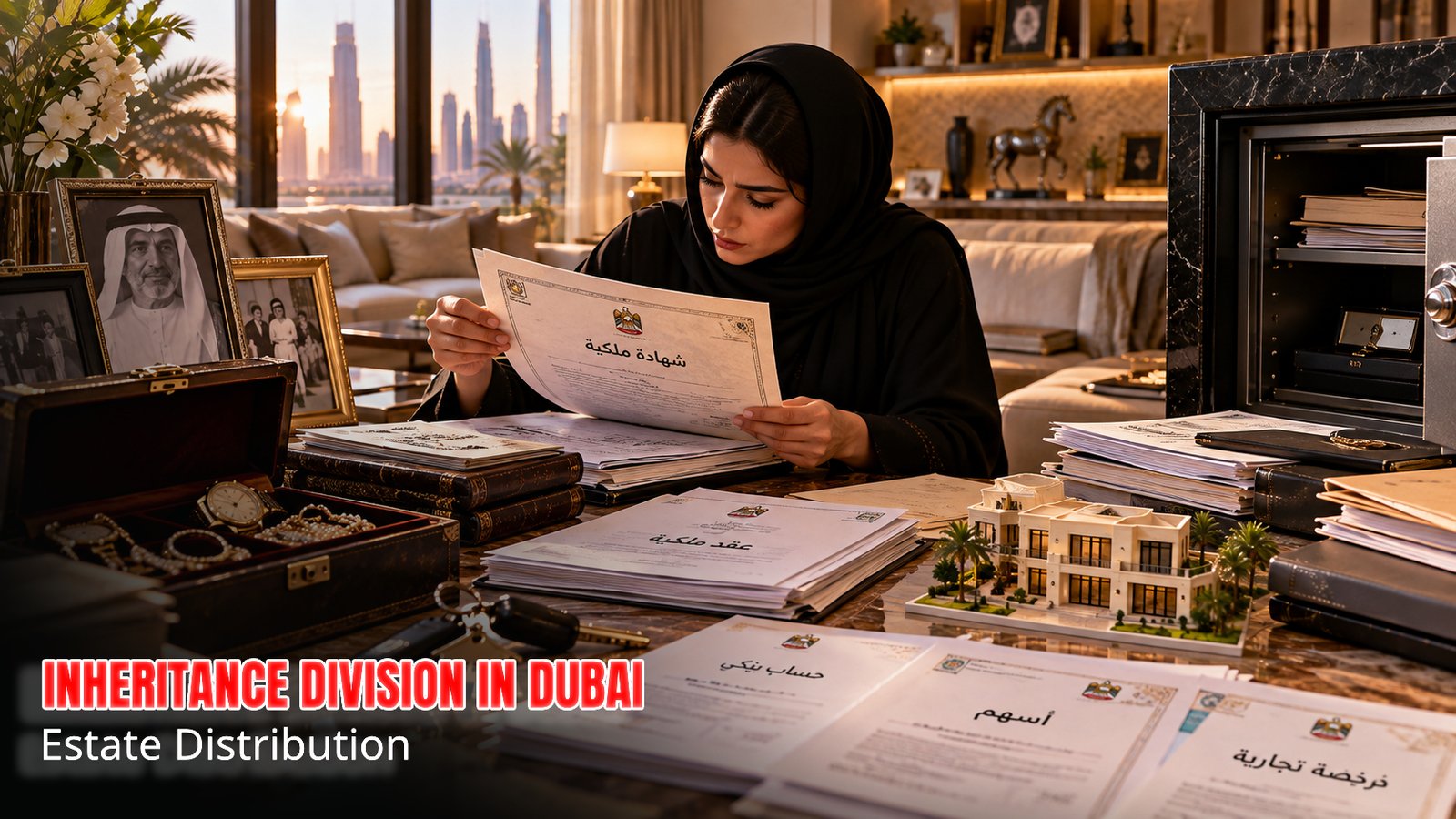
An inheritance lawyer in Dubai can assist heirs when an estate needs to be identified, managed, and divided. An estate may include real estate, bank accounts, vehicles, company shares, investments, and other financial assets.
Inheritance disputes may arise when one heir refuses to divide the estate, takes control of an inherited property or its income, hides estate assets, or when debts, wills, gifts, sales, or transactions made before the deceased’s death become disputed.
Inheritance and estate matters in Dubai must be handled according to the applicable legal procedures, beginning with establishing the death and identifying the heirs, followed by identifying the estate’s assets and liabilities, and ultimately completing an amicable or judicial division where an agreement cannot be reached.
Legal Consultant Mohammed Jasem provides legal assistance in inheritance and estate matters, including reviewing estate documents, heirship procedures, estate division, disputes between heirs, inherited property sales, and estates involving non-UAE nationals or non-Muslims.
When Do You Need an Inheritance Lawyer in Dubai?
You may need an inheritance lawyer in Dubai in several situations, not only when a court dispute has already started. Common situations include:
- One heir refuses to divide the estate or sell inherited property.
- One heir takes exclusive control of an estate property, bank account, or income.
- The estate includes real estate, companies, or commercial interests.
- One of the heirs is a minor, absent, or living outside the UAE.
- There is a will, gift, sale, or power of attorney issued before the deceased’s death.
- The deceased had outstanding debts or creditors’ claims.
- The heirs disagree about the assets included in the estate or their valuation.
- The estate belongs to a non-Muslim or expatriate who lived in Dubai.
- The heirs want to complete an amicable estate division or arrange a takharuj (inheritance relinquishment).
- An inherited property needs to be sold but one heir refuses to agree.
Obtaining legal advice at an early stage can help heirs understand the legal consequences before signing a settlement, waiver, or estate division agreement.
Dubai Probate Court: Where Are Inheritance Cases Filed?
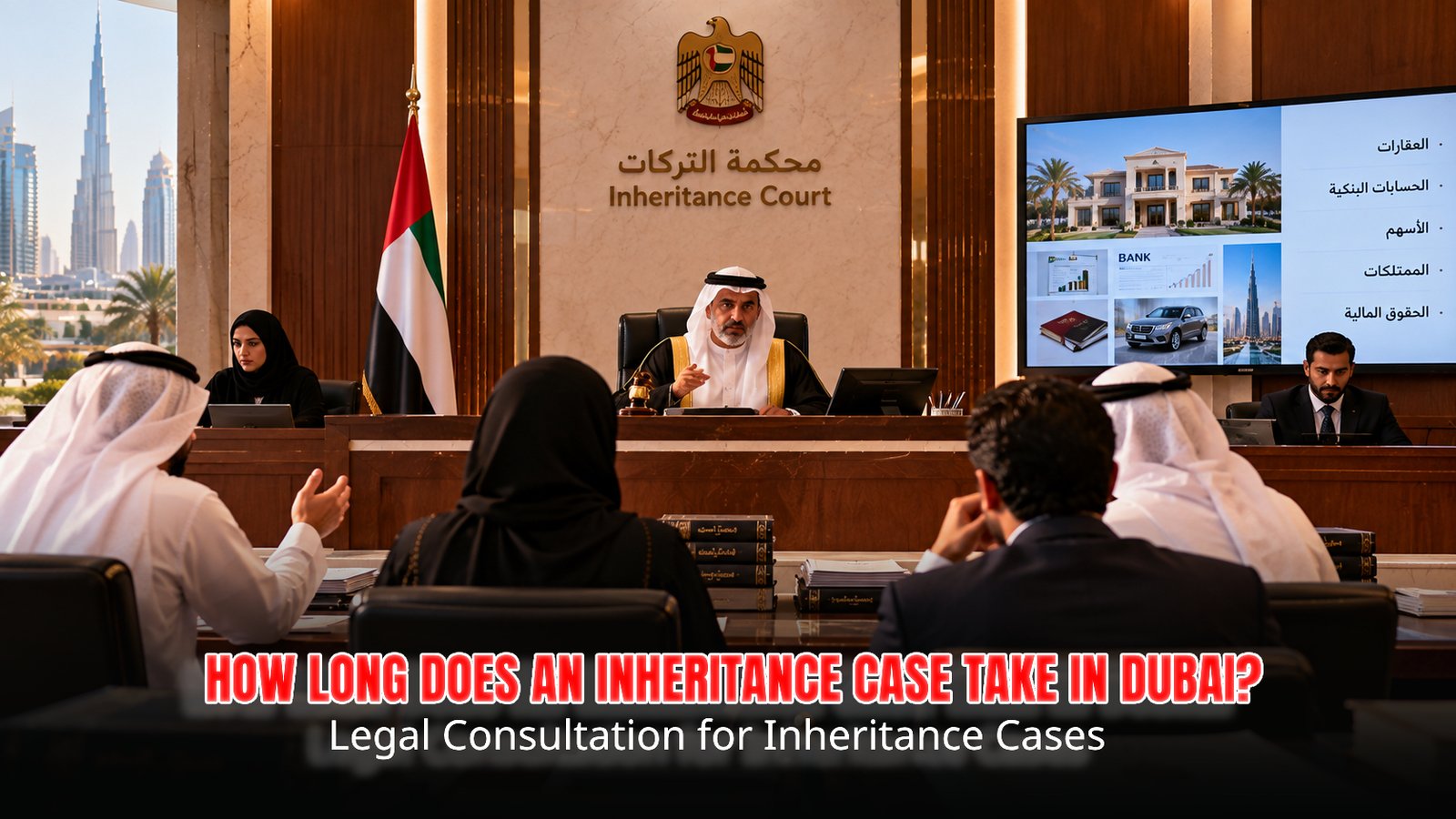
Dubai has a specialized Probate Court, established under Decree No. (25) of 2023. The court handles estate claims and claims relating to the division of property held in undivided shares that passed to heirs through inheritance.
Estate matters may initially proceed through the applicable preparatory procedures, where the assets, liabilities, and claims can be reviewed and the parties may be given an opportunity to reach a settlement.
If the heirs reach an agreement, the settlement can be documented according to the applicable procedures. If no agreement is reached, the matter can continue through the appropriate judicial process.
What Does an Inheritance Lawyer Do Before the Probate Court?
An inheritance lawyer may assist with:
- Identifying the appropriate legal procedure.
- Reviewing estate documents.
- Following up on heirship and estate inventory procedures.
- Reviewing the deceased’s debts and liabilities.
- Participating in settlement procedures.
- Reviewing estate division and inheritance relinquishment agreements.
- Preparing legal submissions and arguments.
- Representing an heir in court proceedings.
- Following up on the sale of inherited property when division is not practical.
Identifying the Heirs: The First Step in an Estate
Before distributing the estate or dealing with its assets, the heirs and their legal status must be established according to the applicable law.
An official document establishing the heirs is an important part of estate administration because banks, property authorities, and other relevant entities may require proof identifying the persons entitled to the estate.
Being an heir does not automatically mean that the person can independently dispose of all estate assets.
Heirs should therefore be careful before withdrawing money from the deceased’s bank account, selling a vehicle, dealing with inherited property, or relying on a power of attorney issued before the deceased’s death without first determining its legal effect.
How Can an Inheritance Lawyer Help Identify the Heirs?
A lawyer can assist with:
- Reviewing the heirs’ information.
- Identifying the required documents.
- Following up on heirship procedures.
- Determining which documents require translation or legalisation.
- Handling cases involving heirs who live outside the UAE.
- Reviewing the effect of a will or the applicable law on the estate.
Estate Inventory and the Deceased’s Debts Before Inheritance Division
Estate division does not begin simply by identifying the heirs.
The deceased’s assets, debts, and other liabilities should first be identified. The UAE Personal Status Law provides a legal order for dealing with estate-related rights before the remaining estate is distributed among the heirs. Under Federal Decree-Law No. (41) of 2024, the estate consists of the property and financial rights left by the deceased, with funeral expenses, debts, and the will addressed before the remaining estate is divided among the heirs.
The estate may include:
- Real estate.
- Bank accounts.
- Vehicles.
- Shares and company interests.
- Commercial licences and businesses.
- Investments.
- Amounts owed to the deceased.
- Movable assets.
- Other financial rights.
At the same time, the deceased may have outstanding debts and obligations that must be considered before determining the net estate available for distribution.
What Happens If a Debt Appears After the Estate Has Been Divided?
The discovery of a debt or other liability after the estate has been divided may lead to disputes between heirs and creditors.
For this reason, a comprehensive review of the estate’s assets and liabilities should ideally be completed before the heirs sign a final division agreement.
An inheritance lawyer can review the inventory, supporting documents, and relevant claims and advise on the appropriate legal steps.
Amicable Estate Division in Dubai
An amicable estate division can be an effective solution when the heirs agree on how the estate should be distributed without prolonged litigation.
However, the agreement should be clear and specific, particularly where the estate includes real estate, businesses, company shares, or substantial financial assets.
Before signing an estate division agreement, the heirs should consider:
- The value of the estate assets.
- Each heir’s legal share.
- Outstanding debts and liabilities.
- The legal status of inherited properties.
- Whether any heir is a minor.
- The existence of a will or inheritance relinquishment agreement.
- The procedures required to transfer ownership.
- The legal consequences of any waiver or relinquishment.
Can an Estate Division Agreement Be Challenged?
A dispute may arise where an estate division agreement contains a legal defect or where there is a legally recognized ground for challenging it under the applicable law.
One common risk is for an heir to sign a waiver or division agreement without fully understanding its legal consequences.
Another risk is completing a division without properly considering the legal position of all interested parties.
For this reason, it is advisable to have an inheritance lawyer in Dubai review the agreement before it is signed.
What Is Takharuj in Inheritance?
Takharuj refers to an arrangement under which an heir relinquishes or exits their inheritance interest in return for consideration or under legally agreed terms.
It should be treated as a legal transaction with direct consequences for the rights of the heirs, rather than simply as an informal family agreement.
An inheritance lawyer can assist with:
- Reviewing the value of the heir’s share.
- Determining the agreed consideration.
- Drafting the takharuj agreement.
- Verifying the legal capacity of the parties.
- Completing the required notarisation and registration procedures.
What Happens If One Heir Refuses to Divide the Estate?
One heir’s refusal to agree to an estate division does not necessarily mean that the estate must remain unresolved indefinitely.
Where an amicable agreement cannot be reached, judicial estate division may be pursued in accordance with the applicable procedures.
In Dubai, estate claims and claims for the division of inherited property held in undivided shares fall within the jurisdiction of the Probate Court according to the applicable legislation.
If physical division is not possible, or if dividing the property would substantially reduce its value, the appropriate legal solution may involve selling the property and distributing the proceeds among the heirs, depending on the circumstances and the court’s decision.
What If One Heir Takes or Hides Estate Assets?
If an heir takes, conceals, or disposes of estate assets, this may give rise to civil claims and, where the legal elements of an offence are established, potentially criminal liability.
However, a criminal allegation should not be made merely because of a family disagreement. The documents, nature of the transaction, and available evidence should first be carefully reviewed.
Selling Inherited Property in Dubai When One Heir Refuses
One of the most common inheritance disputes involves an heir who refuses to sell inherited property.
The property may be a family home, apartment, villa, or plot of land jointly owned by several heirs.
Dubai has specific rules governing the sale of certain inherited residential properties under Decree No. (23) of 2020, as amended by Decree No. (31) of 2023. The legislation provides procedures for situations where one or more heirs seek to sell qualifying inherited residential property and not all heirs agree.
Where disagreement continues, the applicable settlement procedures may need to be completed before the matter proceeds to the Probate Court.
Can One Heir Sell the Entire Inherited Property Alone?
An heir should not assume that being an heir gives them the right to sell the entire inherited property independently.
Where the property is jointly owned by several heirs in undivided shares, the rights of the other co-owners must be respected and the applicable legal procedures must be followed.
An inheritance lawyer in Dubai can review the title deed, the heirs’ respective shares, and the applicable procedure for sale or division.

What If the Estate Includes a Company or Business Interests?
An estate may include much more than a family home or bank account. It may contain:
- A company.
- Shares in a limited liability company.
- Stocks or securities.
- A commercial licence.
- A business establishment.
- Receivables owed by customers.
- Assets connected with a commercial activity.
In such cases, estate proceedings may need to be coordinated with corporate procedures so that a dispute between heirs does not unnecessarily disrupt the business.
Depending on the circumstances, possible solutions may include continuing the business, allowing one heir to exit, transferring or distributing interests, or selling the interests.
Deceased’s Bank Accounts as Part of the Estate
Bank accounts are often a significant component of an estate.
Transactions involving those accounts may be subject to the completion of the required legal and banking procedures.
Heirs should not assume that possessing a bank card, account information, or login credentials gives them the right to withdraw the deceased’s funds after death.
Funds held in the deceased’s accounts should be properly identified and included among the estate assets before distribution.
What If One Heir Hides the Deceased’s Bank Accounts?
An inheritance lawyer can review the legal position and advise on the appropriate procedures for identifying estate assets and protecting the rights of all heirs, subject to the powers available through the relevant authorities and judicial procedures.
What If One of the Heirs Is a Minor?
The presence of a minor heir can change how the estate must be handled because minors receive specific legal protections.
Adult heirs cannot simply assume that they can sign every document or complete every transaction affecting a minor’s inheritance rights.
The applicable requirements should be reviewed before:
- Selling inherited property.
- Dividing the estate.
- Completing a takharuj arrangement.
- Disposing of a minor’s inheritance share.
- Entering into a settlement affecting the minor’s rights.
An inheritance lawyer can help identify the approvals and procedures required in the particular case.
Inheritance for Non-Muslims and Expatriates in Dubai
Estates involving non-Muslims and expatriates require careful consideration of the law applicable to the particular estate before determining how the assets should be distributed.
Relevant factors may include:
- The deceased’s nationality.
- The deceased’s religion.
- Whether a will exists.
- Where the property is located.
- Where the deceased was resident.
- The law that the interested parties seek to apply.
The UAE has specific legal provisions dealing with civil personal status matters for non-Muslims, while other estates may be governed by different rules depending on the circumstances. Federal Decree-Law No. (41) of 2024 is the current federal Personal Status Law, while Federal Decree-Law No. (41) of 2022 remains relevant to civil personal status matters for non-Muslims under its applicable scope.
Accordingly, there is no single inheritance rule that should automatically be applied to every expatriate estate.
Can an Expatriate Make a Will Covering Assets in the UAE?
The answer depends on the applicable law, the nature and location of the assets, and the type and registration status of the will.
The will and applicable legal framework should therefore be reviewed before distributing the estate, particularly where the deceased owned real estate or other assets in more than one country.
How Much Does an Inheritance Lawyer Cost in Dubai?
There is no single fixed legal fee for all inheritance cases in Dubai.
Legal fees may vary depending on the nature of the estate and the scope of work required.
Factors that may affect legal fees include:
- The number of heirs.
- The value of the estate.
- The number of properties.
- The existence of companies or commercial interests.
- Whether the heirs are in dispute.
- The number of legal proceedings required.
- Whether the client needs legal advice only or court representation.
- Whether some heirs live outside the UAE.
- Whether additional translation, notarisation, or legalisation procedures are required.
It is advisable to agree on the legal fees and scope of representation in writing before work begins.
How Long Does an Inheritance Case Take in Dubai?
There is no single timeframe that applies to every inheritance or estate case.
Where all heirs agree on the division, the matter may be completed more quickly depending on the documents and procedures involved.
A disputed estate may take longer because of factors such as:
- The number of heirs.
- The size and complexity of the estate.
- The number of properties.
- Outstanding debts.
- The presence of a minor heir.
- The need for expert assessment or valuation.
- Disputes concerning the estate inventory.
- Related court proceedings.
Some procedures may also be subject to specific statutory deadlines. For this reason, an inheritance lawyer should review the case as soon as a dispute arises.
Documents an Inheritance Lawyer May Need
Before consulting an inheritance lawyer in Dubai, it is helpful to prepare as many of the following documents as possible.
Death-Related Documents
- Death certificate.
- The deceased’s identification details.
- Documents proving the relationship between the deceased and the heirs.
Heir Documents
- Names and details of all heirs.
- Passports or identification documents.
- Details of minor heirs.
- Details of heirs living outside the UAE.
Estate Documents
- Property title deeds.
- Bank account information.
- Vehicle documents.
- Company and shareholding documents.
- Commercial licences.
- Investment records.
- Other documents proving ownership of estate assets.
Debts and Liabilities
- Loan agreements.
- Financial claims.
- Cheques.
- Commercial liabilities.
- Pending claims or proceedings involving the deceased.
Wills and Previous Transactions
- Wills.
- Gifts.
- Sale agreements.
- Powers of attorney.
- Previous settlement or waiver agreements.
Common Mistakes in Dubai Inheritance Cases
Common mistakes that may lead to prolonged disputes include:
- Signing a waiver before determining the value of the estate.
- Selling inherited property without completing the required legal procedures.
- Withdrawing the deceased’s money from a bank account without legal authority.
- Hiding an estate asset.
- Ignoring the deceased’s debts.
- Failing to identify all heirs.
- Ignoring the presence of a minor heir.
- Relying on an undocumented family agreement.
- Delaying action despite applicable legal deadlines.
- Starting proceedings without first establishing a complete estate inventory.
Why Should You Consult an Inheritance Lawyer Before Signing an Estate Agreement?
A family agreement may appear straightforward, but certain provisions in an estate division or takharuj agreement can have significant legal consequences.
Before signing, you should understand:
- What each heir will receive.
- Whether any debts have been excluded from the calculation.
- Whether the properties have been properly valued.
- Whether any estate assets have been omitted.
- Whether a minor heir is involved.
- Whether the waiver is final.
- Whether the agreement requires notarisation or registration.
- Whether all parties have the necessary legal capacity and authority.
Having an inheritance lawyer in Dubai review the agreement can help identify potential risks before they develop into litigation.
How Can Legal Consultant Mohammed Jasem Help With Inheritance Cases?
Legal Consultant Mohammed Jasem can assist clients in reviewing estate matters and identifying the appropriate legal procedures based on the circumstances of each case.
Services may include:
- Reviewing estate documents.
- Assisting with heirship procedures.
- Reviewing and documenting estate assets.
- Reviewing the deceased’s debts and liabilities.
- Assisting with amicable estate division.
- Preparing takharuj agreements.
- Handling disputes between heirs.
- Assisting with inherited property sales.
- Handling disputes concerning jointly owned property.
- Assisting with estates involving companies or commercial interests.
- Advising on estates involving non-Muslims and expatriates.
- Following up on judicial proceedings relating to the estate.
Important Time Limits in Estate Matters
Time limits vary depending on the type of procedure and the nature of the estate.
Some legal deadlines may be short and should not be overlooked.
Rather than relying on a general timeframe for all inheritance cases, the applicable legal procedure should first be identified, followed by determining when the relevant deadline begins to run.
An inheritance lawyer can review the procedural deadlines applicable to the estate before any legal action is taken.
Inheritance Lawyer in Dubai for Heirs Living Outside the UAE
An heir living outside the UAE does not necessarily have to attend every step of the estate process personally.
Where permitted by law and the applicable procedure, a power of attorney may be arranged authorising a lawyer in the UAE to follow up the estate matter on the heir’s behalf.
The power of attorney must satisfy the applicable legal and documentation requirements, particularly where it covers:
- Real estate.
- Sale.
- Takharuj.
- Estate division.
- Receipt of funds.
- Settlements.
Do You Have an Inheritance or Estate Dispute in Dubai?
If you are facing a dispute between heirs in Dubai, need assistance dividing an estate, or own inherited property that one heir refuses to sell, it is advisable to review the matter before signing a waiver or dealing with estate assets.
Legal Consultant Mohammed Jasem can review the estate documents and help determine the appropriate legal route, whether through an amicable settlement and estate division or through the competent judicial procedures.
Consult an inheritance lawyer in Dubai before dividing the estate or signing a waiver.
Frequently Asked Questions
What Does an Inheritance Lawyer in Dubai Do?
An inheritance lawyer reviews the estate, examines heir and asset documents, assists with heirship and estate inventory procedures, advises on estate division, and represents heirs in disputes and judicial proceedings relating to the estate.
How Much Does an Inheritance Lawyer Cost in Dubai?
Legal fees vary depending on the value and complexity of the estate, the number of heirs, the assets involved, whether a dispute exists, and the scope of legal services required.
Where Are Inheritance Cases Filed in Dubai?
Dubai has a specialized Probate Court with jurisdiction over estate claims and claims for the division of property held in undivided shares that passed to heirs through inheritance, subject to the applicable jurisdictional rules and procedures.
What Should I Do If One Heir Refuses to Divide the Estate?
If the heirs cannot reach an agreement, judicial estate division may be pursued according to the applicable legal procedures. The nature of the estate assets should first be reviewed to determine whether physical division is possible or whether sale and distribution of the proceeds is more appropriate.
Can One Heir Sell Inherited Property Alone?
An heir should not assume that they can sell the entire inherited property independently. Where the property is jointly owned by several heirs, the rights of the other heirs and the applicable legal procedures must be respected.
Can an Heir Withdraw Money From the Deceased’s Bank Account?
An heir should not assume that they can withdraw the deceased’s funds simply because they have access to the account or possess the deceased’s banking credentials. The funds form part of the estate and the required legal procedures should be completed before distribution.
What Happens If One of the Heirs Is a Minor?
The presence of a minor heir may require additional safeguards and procedures to protect the minor’s inheritance rights. Certain transactions involving the minor’s share may require specific approvals.
Can I Appoint an Inheritance Lawyer in Dubai From Outside the UAE?
Yes, where permitted by the applicable law and procedure, an heir living outside the UAE may arrange a power of attorney authorising a lawyer in the UAE to handle the estate matter on their behalf, subject to the applicable notarisation and legalisation requirements.
Is Inheritance Different for Non-Muslims?
The applicable rules may differ depending on the deceased’s status, the applicable law, the existence of a will, the nature of the assets, and where those assets are located. Each estate should therefore be assessed individually.
Legal References
- Federal Decree-Law No. (41) of 2024 on the Issuance of the Personal Status Law.
- Federal Decree-Law No. (25) of 2025 Promulgating the Civil Transactions Law.
- Federal Decree-Law No. (41) of 2022 on Civil Personal Status.
- Federal Decree-Law No. (42) of 2022 Promulgating the Civil Procedure Code.
- Decree No. (25) of 2023 Establishing the Probate Court in the Emirate of Dubai.
- Decree No. (23) of 2020 Regulating the Sale by Heirs of Residential Real Property in the Emirate of Dubai, as amended by Decree No. (31) of 2023.
- Law No. (15) of 2017 Concerning the Administration of Estates of Non-Muslims and Execution of Their Wills in the Emirate of Dubai.
- Law No. (17) of 2022 Concerning the Endowment and Minors’ Trust Foundation in Dubai.
- Law No. (9) of 2020 Concerning the Regulation of Family Ownership in the Emirate of Dubai.
Legal Disclaimer
This article is provided for general legal information and educational purposes only. It does not constitute legal advice for any specific case.
Inheritance rights, procedures, and obligations may vary depending on the facts of the estate, the identity and status of the heirs, the nature and location of the assets, the existence of a will, and the law applicable to the estate. UAE legislation and procedures may also be amended from time to time.
Inheritance Lawyer in Dubai
Legal Consultant Mohammed Jasem assists clients with inheritance and estate matters, including estate division, disputes between heirs, inherited property, takharuj, and estates involving companies or multiple assets, according to the circumstances of each case and the applicable legal procedures.
Comments are closed